Searching Case Laws & Precedent on Legal Query.....!
Analysing the retrieved Case Laws
Scanned Judgements…!



Searching Case Laws & Precedent on Legal Query.....!
Analysing the retrieved Case Laws
Scanned Judgements…!
Section 306 IPC and Mens Rea - Conviction under Section 306 of IPC requires clear mens rea and positive act of instigation or aiding in suicide; absence of such act leads to acquittal. The court emphasizes that without direct instigation, no conviction can be made under Section 306 ["2025 Supreme(Online)(Kar) 9953"], ["2025 Supreme(Online)(Mad) 21557"].
Bail and Acquittal in Various Cases - Several cases involve petitions for regular bail under the Bharatiya Nyaya Suraksha Sanhita (BNSS). Courts consider factors such as detention period, absence of recovery, and case background, often granting bail or rejecting it based on investigation status and case specifics ["2025 Supreme(Online)(Guj) 11903"], ["2025 Supreme(Online)(Kar) 9794"], ["2025 Supreme(Online)(Chh) 9647"], ["2024 Supreme(Online)(GAU) 7780"], ["2024 Supreme(Online)(GAU) 4255"].
Specific Case Outcomes - Some petitions for quashing FIRs or for bail are allowed, especially when investigation is near completion, or when the accused have been detained for considerable time without substantial evidence. For instance, FIR quashing in Delhi under Sections 306/317(2) BNS was granted based on settlement ["2025 Supreme(Online)(Del) 5406"].
Legal Principles on Acquittal and Bail - Courts highlight that acquittal or bail depends on the absence of evidence proving guilt, especially the lack of mens rea or positive acts. The cases reinforce that meticulous analysis isn't always necessary before trial if evidence is insufficient or case facts do not support conviction ["2025 Supreme(Online)(Mad) 21557"].
Analysis and Conclusion:The compilation of cases indicates that under the Bharatiya Nyaya Suraksha Sanhita, courts are cautious in granting bail or acquitting defendants when evidence of intent or act is weak or absent, especially under serious sections like 306 IPC. Many petitions for bail are granted considering detention duration and lack of recoveries, while FIR quashings occur upon settlement or procedural grounds. Overall, the main points stress the importance of mens rea, actus reus, and procedural fairness in cases related to charges under Sections 306, 317, and related provisions.
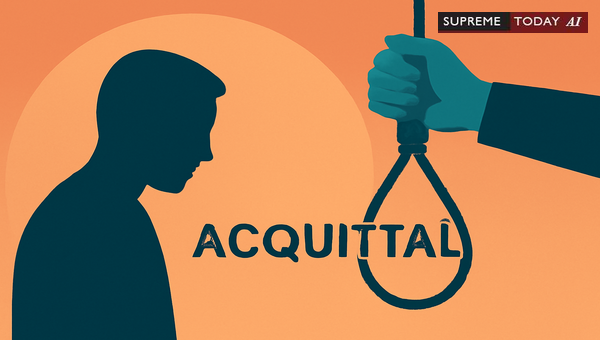
In the evolving landscape of Indian criminal law, the (BNS) has replaced the (IPC), bringing nuanced interpretations to offenses like under Section 306. Coupled with Section 317(2), which often appears in cases involving cheating or related breaches, acquittals under these provisions highlight critical evidentiary thresholds. If you're searching for BNS 306 & 317(2) acquittal bharatiya Nyaya Sanhita, this post unpacks the legal principles, court rulings, and practical takeaways.
This analysis draws from recent judgments, emphasizing that acquittals are typically upheld when prosecutions fail to prove essential elements like or . Note: This is general information, not specific legal advice. Consult a qualified lawyer for your situation.
mirrors IPC Section 306, punishing with rigorous imprisonment up to 10 years and a fine. Conviction demands proof of or that directly leads to the suicide. Mere emotional distress, harassment, or relationship breakdowns do not suffice without clear intent. 2025 1 Supreme 443
, often invoked in fraud or breach of trust scenarios, addresses punishments for offenses like involving concealment or cheating. It frequently surfaces in bail and acquittal contexts alongside other sections, as seen in cyber fraud and gang-related cases. 2025 Supreme(Online)(ALL) 698
Courts stress that , a principle extending to acquittal evaluations where evidence is lacking. 2025 Supreme(Online)(ALL) 698
Acquittals under Section 306 are routinely upheld when evidence lacks the necessary (guilty mind) and active acts of instigation. As clarified in judgments, for a charge under (and its equivalents under BNS), there must be a clear , , or to the victim to commit suicide. 2025 6 Supreme 557
In one pivotal case, the set aside a conviction because the evidence did not establish that the accused actively instigated or aided the victim's suicide. 2025 1 Supreme 443
Courts consistently rule that discord in relationships does not equate to abetment unless paired with . The judgment by K. Vinod Chandran, J., underscores: Instigation involves a mental process of deliberately encouraging or aiding the act, and without positive acts, conviction cannot be sustained. 2025 6 Supreme 557
This principle carries over to BNS, maintaining IPC standards for proof of mental and physical acts leading to suicide.
An acquittal order stands unless evidence overwhelmingly proves guilt. Appellate scrutiny focuses on whether trial findings align with evidence. 2024 7 Supreme 763
In the context of 306 317(2) bns acquittal, courts acquit when active roles are unproven, especially in combined charges involving fraud under 317(2).
Recent bail decisions under BNS illuminate acquittal trends, as weak evidence often leads to liberty restoration.
These cases show courts' reluctance to sustain charges without direct proof, mirroring Section 306 acquittals.
While acquittals are common sans proof, exceptions exist:- Direct Instigation Proven: Convictions stand if evidence shows active aid. 2025 1 Supreme 443- Mental State Crucial: Evidence of mental state, intent, or active encouragement is crucial; mere harassment... insufficient. 2025 6 Supreme 557- : Acquittals maintained unless prosecution meets this high bar. 2024 7 Supreme 763
In fraud-heavy 317(2) cases, custodial needs may delay bail, but acquittals follow evidentiary gaps. 2024 0 Supreme(P&H) 1330
In summary, BNS upholds acquittals when core elements falter, preventing wrongful convictions. Stay informed on these trends, but always seek professional counsel for case-specific guidance.
References:1. 2025 6 Supreme 557: Standards for abetment under BNS.2. 2025 1 Supreme 443: Acquittal for lack of .3. 2014 3 Supreme 554: Non-interference with acquittals.4. Other sources as cited.
#BNS306 #AbetmentSuicide #LegalAcquittal


The petitioner has filed this petition under Section 483 of Bharatiya Nagarika Suraksha Samhita, 2023 (BNSS) seeking regular bail in Crime No.86/2024 for the offences punishable under Sections 103, 238, 49, 329(4), 75, 3(5) of the Bharatiya Naya Samhita (BNS). ... 2. ... Admittedly, in order to attract Section 306 of IPC, there has to be clear mens rea to commit the offence. ... In th....

It is submitted that as per gang chart, applicant is shown involved in two cases bearing Case Crime No.486 of 2024, under Sections 310(2), 311/317(3) BNS and Case Crime No.209 of 2024, under Sections 309(4)/317(2) BNS in which she has already been enlarged on bail in Bail Application No.2121 of 2024 ... , then, the trial court shall initiate proceedings against him, in accordance with la....

No.11993013250240 of 2025 registered with Kandla Marine Police Station, Kachchha East Gandhidham, for the offence under Sections 305(c), 306, 317(4) and 61(1) of BNS. ... [2.0] The present application is filed under Section 483 of the Bharatiya Nyaya Suraksha Sanhita, 2023 (for short “BNSS”) for regular bail in connection with FIR being C.R. ... Subsequently, Section 317(4) of #HL_STAR....

Section 306 of the Bharatiya Nyaya Sanhita , 2023. 5. ... Therefore, it is not necessary that a meticulous analysis of the case should be done before the trial to find out whether the case would end in conviction or acquittal. ... 2. Heard the learned counsel appearing for the petitioner and the learned Government Advocate (Crl.Side) appearing for the first respondent.

Sections 75(2) and 351(2) of Bharatiya Nyaya Sanhita 2023. Pass any other Order/directions as this Hon’ble Court deems appropriate in the interest of justice.” ... We, the Deponent No's 1 and 2 are the Petitioner and the Respondent No.2 in this Petition respectively. We are well conversant with the facts and Circumstances of the Case and we are Competent to Swear to this Affidavit. 2.

Raipur (C.G.) for the offence punishable under Sections 317 (2), 317(4) and 317(5) and 111 of Bharatiya Nyaya Sanhita (for short ‘ BNS ’). ... Raipur (C.G.) for the offence punishable under Sections 317 (2), 317(4) and 317(5) and 111 of Bharatiya Nyaya Sanhita , is rejected. ... Case of the prosecu....
(2), 317 (4), 317(5) read with Section 3 (5) of BNS, 2023, is hereby rejected. ... at Police Station- Bhatgaon, District- Sarangarh- Bilaigarh (C.G.), for the offence punishable under Sections 111, 317(2), 317 (4), 317(5) read with Section 3 (5) of BNS, 2023. ... 2. ... This is the First bail application filed unde....

157/2024 under Section 3(5)/303(2)/317(2) of BNS, 2023 r/w Section 11(1)(a)(b)(d) of Prevention of Cruelty to Animal Act, 1960 and r/w Section 13(1)/14 of Assam Cattle Preservation Act, 2021. ... Case No. 157/2024 under Section 3(5)/303(2)/317(2) of BNS, 2023 r/w Section 11(1)(a)(b)(d) of Prevention of Cruelty to Animal Act, 1960 and r/w Section 13(1)/....

Case No.199/2024 under Sections 303(2)/317(2) of Bharatiya Nyaya Sanhita (BNS) r/w Sections 21(b)/27/29/20(b)(ii)(B)/22(a) of NDPS Act. ... By filing this petition under Section 483 of the Bharatiya Nagarik Surakshya Sanhita, 2023 the accused-petitioner, namely, Hamida Bibi has prayed for grant of bail in connection with

The petition is allowed, and the FIR No. 217/2025, dated 08.07.2025, registered at P.S Seelampur, Delhi under section CRL.M.C. 5858/2025 Page 3 of 4 Signature Not Verified Digitally Signed 306/317(2) BNS & Sections 43 /66/72 of IT Act were also invoked. Bharatiya Nagarik Suraksha Sanhita , seeking quashing of FIR No. 217/2025, dated 08.07.2025, registered at P.S Seelampur, Delhi under Section 306 #HL_STAR....

1. By way of the present application under Section 482 of the Bharatiya Nagarik Suraksha Sanhita, 2023 (for short “BNSS”), the applicant has prayed for anticipatory bail in the event of arrest in connection with the FIR being C.R. No. 11214020250174 of 2025 registered with Kamrej Police Station, Surat Rural, for the offences punishable under Sections 303(1), 316(3), 316(4), 317(1), 317(2), 317(4), 318(3), 61(2)(a) and 54 of BNS. RULE. Learned APP waives service of notice of R....

3. Learned Advocate appearing on behalf of the applicant submits that the applicant has nothing to do with the offence and he is falsely implicated in the offence. The applicant is in jail since 02.08.2024. It is submitted that the applicant is named in the FIR solely on the basis of suspicion, as there was a dispute regarding a monetary demand between the applicant and the deceased. There is no iota of evidence connecting the applicant to the offence, and there is also no eyewitness, despite ....
4. Learned APP appearing on behalf of the respondent-State has opposed the present application and requested to dismiss the present application for regular bail on the ground that applicant has received money and the accused impersonated themselves as CID officials and this is an offence of digital arrest and in collusion and in connivance of co-accused, cyber fraud has been committed and having received account details from various people and providing same to one chinese gang, many people ha....

(2)Whoever, except in the case provided for by sub-section (1) of section 122 voluntarily causes hurt, shall be punished with imprisonment of either description for a term which may extend to one year, or with fine which may extend to ten thousand rupees, or with both. 10. Section 115(2) of the Bharatiya Nyaya Sanhita, 2023, [hereinafter referred as ‘BNS’ for short] is the corresponding provision to Section 323 of IPC. The same reads as under: 323.Punishment for voluntarily c....

FIR No. Dated Police Station Sections 132 29.09.2024 Dakha, District Ludhiana Rural 115(2), 117 (2), 190, 191(3), 351(2) and 351(3) of the Bharatiya Nyaya Sanhita, 2023 (For short “BNS”) (110 and 117 (4) of BNS added later on) 2024, he received a message through his friend that Manjit Kaur wanted to meet him at Baba Chicken, Mullanpur. On the same day, on receipt of this information, the complainant went to meet ....


An indispensable Tool for Legal Professionals, Endorsed by Various High Court and Judicial Officers
Please visit our Training & Support
Center or Contact Us for assistance

Scan Me!
India’s Legal research and Law Firm App, Download now!


For Daily Legal Updates, Join us on :



 Back to top


