


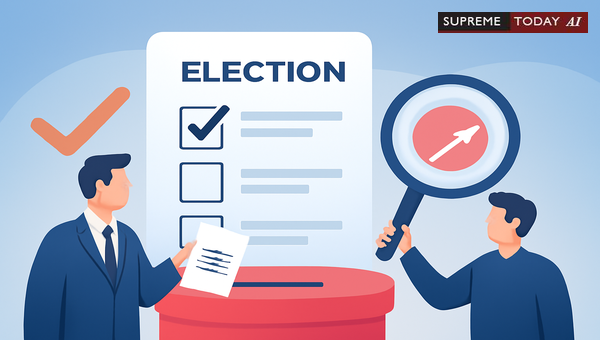
Can an Election Body Reverse Its Own Declaration?
In the world of associations, societies, cooperatives, and other bodies conducting elections, a common question arises: once an election has been declared by the competent authority, can that same body later state or declare otherwise? This issue often surfaces in disputes over local elections, panchayat polls, or society office-bearers, where initial results are challenged post-declaration. Understanding the legal finality of such declarations is crucial for candidates, members, and officials alike.
This blog post delves into the legal principles governing election declarations, drawing from judicial precedents and statutory frameworks primarily in the Indian context. We'll explore whether unilateral reversals are permissible and outline proper remedies. Note: This is general information and not specific legal advice. Consult a qualified lawyer for your situation.
The Core Question
The question at hand is straightforward yet legally nuanced: Once an election is declared by any body of any association, can it state by the same body? In essence, after a or election commission announces results, does that body retain the power to modify, cancel, or re-declare the outcome without following due process?
Main Legal Finding
Generally, once an election has been declared by a competent authority or body, that declaration signifies the conclusion of the election process unless specific statutory provisions or circumstances permit modification, cancellation, or review. Without such provisions, the declaring body cannot unilaterally state the candidate as not elected or alter the results. The authority becomes —having fulfilled its office and lacking further power to act on the matter. 2024 Supreme(Online)(Bom) 7104
Key Points on Finality
- The is typically final and conclusive, barring or cancellation mechanisms. 2024 Supreme(Online)(Bom) 7104
- Subsequent attempts by the same body to alter results without prescribed procedures are impermissible. 2024 Supreme(Online)(Bom) 7104
- Challenges must go through election petitions or statutory reviews, not unilateral statements. 2024 Supreme(Online)(Bom) 7104 2016 0 Supreme(Bom) 1332
Detailed Analysis:
Election law emphasizes the sanctity of the declaration process to maintain democratic integrity and prevent chaos. Judicial precedents reinforce that the or equivalent authority loses the power to revisit results post-declaration.
For instance, a key judgment states: > Once the results are declared respondent No. 1 had no power to modify or alter the result of the election. It is well settled that the becomes after the results are declared and thereafter he cannot alter or modify the results of election. 2024 Supreme(Online)(Bom) 7104
This principle applies across various bodies, including those under cooperative societies acts or panchayat raj laws. The same ruling adds: > The impugned order passed by the 1st respondent cannot be sustained in law. It is an admitted position that the result was declared... and the respondent No. 1 had no power to modify or alter the result. 2024 Supreme(Online)(Bom) 7104
Furthermore: > The having once exercised his power of declaring the results of elections, cannot exercise it again unless the statute provides for or vests with him the right to do so. 2024 Supreme(Online)(Bom) 7104
Authority to Re-Declare: Statutory Limits
No inherent authority exists for the declaring body to re-declare results. Laws prescribe specific channels like election petitions. In cooperative society elections under the , challenges to nominations or results must follow election petitions, not writs unless exceptional circumstances exist. 2018 0 Supreme(Pat) 14 2010 0 Supreme(Pat) 1306
In one case, a nomination rejection due to alleged dues was upheld only after verification, but the court stressed: election disputes are remedied via petitions post-election, not interim halts. 2010 0 Supreme(Pat) 1306
Insights from Related Cases
Private Associations and
For non-statutory bodies like bar associations or professional institutes, courts often decline interference. Writ petitions under Article 226 are not maintainable if elections lack public character. For example, challenges to elections were dismissed as private matters. 2026 0 Supreme(Ker) 48
Similarly, in Institution of Engineers (India) disputes: > The election dispute with respect to office-bearers of the society is not in discharge of a public duty and, therefore, such an action cannot be held to be amenable to the under Article 226. 2023 0 Supreme(Del) 2495
Non-Interference Once Process Starts
Courts discourage halting ongoing elections. Preparation of electoral rolls is an intermediate stage, and once declared, results stand unless petitioned. In a society election appeal: interdicts on processes were set aside to prioritize expediency. 2025 0 Supreme(Kar) 1603
Post-Election Scrutiny Exceptions
Limited exceptions exist, such as post-declaration caste/status verification under , Section 136(2). The may refer complaints to a , but only for disqualification issues requiring evidence—not pure election disputes. 2023 0 Supreme(Pat) 764
This shows that while finality is the rule, statutes may empower review for specific disqualifications, but unilateral body actions remain invalid.
Exceptions and Proper Remedies
- Statutory Reviews: If laws like cooperative acts or panchayat rules explicitly allow reconsideration (e.g., via commissions), follow those procedures.
- Election Petitions: The for most challenges. Under various acts: > The election to any office of a body shall not be called in question except by an as prescribed. 2018 0 Supreme(Pat) 14
- Judicial Review: Only in exceptional cases of arbitrariness or jurisdictional errors, not routine disputes. Writs for private bodies are typically barred. 2023 0 Supreme(Del) 2495 2026 0 Supreme(Ker) 48
Unilateral reversals outside these are invalid and may invite legal challenges themselves.
Recommendations for Bodies and Members
- For Declaring Authorities: Treat declarations as final; document processes meticulously to withstand petitions.
- For Aggrieved Parties: File election petitions promptly rather than seeking body reversals.
- Best Practice: Adhere to statutory timelines and provide hearings where required to avoid pitfalls.
Conclusion and Key Takeaways
In summary, election declarations by associations or bodies are presumptively final. The same body typically cannot reverse or re-state results unilaterally, as affirmed in precedents like 2024 Supreme(Online)(Bom) 7104 and 2016 0 Supreme(Bom) 1332. Proper recourse lies in election petitions or statutory mechanisms, ensuring electoral stability.
Key Takeaways:- Declarations render the authority . 2024 Supreme(Online)(Bom) 7104- Use election petitions for challenges. 2016 0 Supreme(Bom) 1332 2010 0 Supreme(Pat) 1306- Private body elections often evade writ scrutiny. 2023 0 Supreme(Del) 2495
Stay informed on your governing statutes—finality upholds democracy, but exceptions demand careful navigation. For tailored advice, reach out to a legal expert.
References:1. 2024 Supreme(Online)(Bom) 7104: Core on and no power to alter.2. 2016 0 Supreme(Bom) 1332: Reinforces petition remedies.3. Additional cases: 2023 0 Supreme(Pat) 764, 2026 0 Supreme(Ker) 48, 2025 0 Supreme(Kar) 1603, 2023 0 Supreme(Del) 2495, 2018 0 Supreme(Pat) 14, 2010 0 Supreme(Pat) 1306.
#ElectionLaw, #LegalFinality, #AssociationElections















