SupremeToday Landscape Ad

AI Overview

AI Overview...

  • Huge Cash Payments by Allottees to Developers are Illegal and Raise Serious Concerns Several sources highlight that developers have withdrawn large sums of money through cash transactions, which are considered illegal and suspicious. For instance, ["2024 0 Supreme(Del) 528"] states, approximately Rs.22,35,00,000/- has been withdrawn by way of cash, and similarly, ["2024 Supreme(Online)(DEL) 10470"] reports, approximately a sum of ₹22,35,00,000/- has been withdrawn by way of cash. Such substantial cash withdrawals without proper documentation violate legal norms and raise questions about transparency and legality.

  • Transfer of Funds to Group Companies and Lack of Proper Documentation Multiple sources indicate that large sums were transferred to bank accounts of group companies, which may be linked to money laundering or misappropriation. ["2024 0 Supreme(Del) 528"] mentions huge sums of money were transferred to the bank accounts of the other group companies, raising concerns about financial irregularities.

  • Illegal and Unfair Contract Clauses Several agreements contain clauses deemed unfair and illegal, such as clauses that limit the rights of allottees after refunds or project delays. For example, ["2026 Supreme(Online)(P&H) 127"] states, After refund of the money paid by the Allotee(s), the Allotee(s) agrees that it shall not have any rights, claims etc. against the Developer, which is considered one-sided and unfair. Similarly, ["2024 Supreme(Online)(NCLAT) 1187"] notes that certain developer clauses are one-sided, unfair and is illegal.

  • Developer’s Failure to Pay Penalties and Penalty Enforcement Issues Multiple cases report developers' failure to pay penalties for delays or non-completion. ["2022 Supreme(Online)(Del) 7159"] mentions the developer demanding more money for project completion and not paying penalties despite delays. ["

    Sandeep Grover VS Sai Siddhi Developers - Consumer

    "] details that the developer did not pay the penalty and that the society had to en-cash bank guarantees, which indicates non-compliance with legal obligations.
  • Harassment and Financial Hardship to Allottees Due to Developer Defaults Several sources document the distress faced by allottees due to developer defaults, delays, and illegal demands. ["SH. RAHUL DOGRA & ANR. vs M/S ANSAL HITECH TOWNSHIPS LTD. - Consumer State"] highlights Flat purchasers suffer agony and harassment, and ["SH. RAHUL DOGRA & ANR. vs M/S ANSAL HITECH TOWNSHIPS LTD. - Consumer State"] emphasizes that allottees are entitled to rebates and timely conveyance, but delays and unfair practices cause hardship.

  • Legal Actions and Court Interventions Courts and consumer commissions have taken cognizance of these irregularities, directing developers to refund amounts, execute conveyance deeds, and pay costs. ["SH. RAHUL DOGRA & ANR. vs M/S ANSAL HITECH TOWNSHIPS LTD. - Consumer State"] states, The conveyance deed in favour of the allottees shall be executed within three months, and ["SH. RAHUL DOGRA & ANR. vs M/S ANSAL HITECH TOWNSHIPS LTD. - Consumer State"] emphasizes the importance of timely payments and legal compliance.

Analysis and Conclusion:The evidence across multiple sources conclusively indicates that large cash payments by allottees to developers are illegal and indicative of financial irregularities. The transfer of funds to group companies and the use of unfair contractual clauses further compound these issues. Courts and consumer forums have consistently mandated refunds, penalized non-compliance, and condemned illegal practices, underscoring that such cash transactions and developer misconduct are unlawful and subject to legal action.

Legality of Cash Payments to Developers in India: Tax Violations and RERA Compliance Risks

Huge Cash Payments to Developers: Illegal in India?

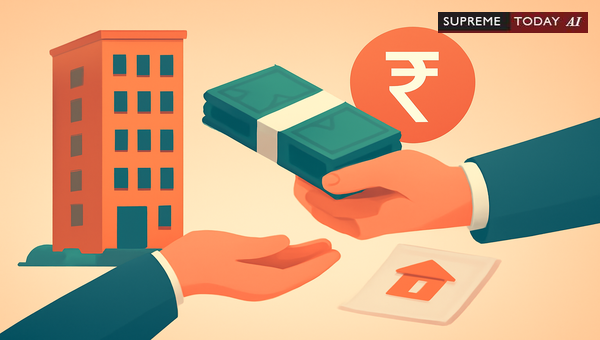
In the bustling real estate market of India, homebuyers often face pressure to make large cash payments to developers. But is this practice legal? The question Huge Cash Payment by Allottee to a Developer is Illegal strikes at the heart of many disputes. While it may seem like a quick way to secure a deal, such transactions frequently violate key laws, leading to unenforceability, tax penalties, and consumer disputes. This post breaks down the legal landscape, drawing from court judgments and statutes to help you navigate safely.

Disclaimer: This article provides general information based on legal precedents and is not specific legal advice. Consult a qualified lawyer for your situation.

Overview of the Issue

Real estate transactions in India are governed by strict regulations, including the Real Estate (Regulation and Development) Act, 2016 (RERA), the Consumer Protection Act, and Income Tax laws. Large cash payments—often exceeding Rs. 2 lakhs—by allottees (buyers) to developers raise red flags for several reasons:

  • Lack of traceability: Cash leaves no audit trail, making it hard to prove payments in disputes.
  • Tax violations: Prohibited under Section 269ST of the Income Tax Act, 1961.
  • Unfair practices: Developers may demand cash under duress, breaching agreements.

Court documents reveal instances where substantial cash transactions have occurred without proper documentation or approval. For instance, an amount of Rs. 8,23,50,000/- was drawn in cash by the petitioners over a period 2021 0 Supreme(Gau) 756. Similarly, a complainant alleged a cash payment of Rs. 17 lakhs, but without receipts, it was deemed unproven

Madhumita Mitra VS Anand Jhawar - Consumer (2019)

.

Why Huge Cash Payments Are Typically Illegal

Violation of Income Tax Section 269ST

One primary hurdle is Section 269ST, which prohibits receiving Rs. 2 lakhs or more in cash from a person in a single day, transaction, or related events. Courts have struck down such claims outright:

The said alleged payment is hit by Section 269ST of the Income Tax Act, 1961, which mandates that no person/individual shall receive an amount of Rs.2 lakhs or more from another person/individual in a day. Further, the allegation that an amount of Rs.3.5 crores was paid in cash... is absolutely false. 2021 0 Supreme(Telangana) 150

In another case, payments exceeding Rs. 20,000 in cash for loans or repayments were ruled illegal, barring defendants from using them as a defense: Since it concerns payment of considerable amount far beyond Rs.20,000/- such alleged payment in cash is illegal 2014 0 Supreme(Cal) 446

Indian Chain Private Limited. VS Ajit Nain

.

This applies directly to allottees paying developers, as developers cannot legally accept such sums without banking channels.

Lack of Documentation and Proof

Without bank transfers or stamped receipts, courts dismiss cash claims. In one dispute, Rs. 1,00,000 paid in cash was acknowledged via receipt, but larger undocumented sums were denied: Now, the developer is denying the same as the amount was given in cash

Mayfair Housing VS Devendra Jagdish Jha

. Courts emphasize: payments must be verifiable to hold weight

Madhumita Mitra VS Anand Jhawar - Consumer (2019)

.

Developer Obligations and Allottee Rights

Developers must adhere to allotment agreements, RERA, and consumer laws. Failure invites liability:

  • Timely possession: Delays after receiving payments (even partial) constitute deficiency in service. Non-delivery of possession within stipulated period, after receipt of consideration of amount, amounts to deficiency in service as well as unfair trade practice

    Alan Querobius Fernandes VS Vaastu Developer (Heeral)

    .
  • Compensation rights: Allottees can claim interest on payments for delays 2020 4 Supreme 466. Courts have awarded interest on total consideration, rejecting developer denials of cash portions when proven

    Mayfair Housing VS Devendra Jagdish Jha

    .
  • Unfair terms: Clauses releasing developers from liability post-refund are scrutinized. After refund of the money paid by the Allotee(s), the Allottee(s) agrees that it shall not have any rights, claims etc. against the Developer—but courts protect buyers 2025 Supreme(Online)(P&H) 8425.

Under the Consumer Protection Act, allottees are consumers entitled to redress. Flat purchasers suffer agony and harassment, as a result of the default of the developer

SH. RAHUL DOGRA & ANR. vs M/S ANSAL HITECH TOWNSHIPS LTD. - 2023 Supreme(Online)(NCDRC) 662

.

Key Legal Precedents

Judgments consistently question undocumented cash:

  1. Coercion and unenforceability: Payments under threat are illegal

    P. U. D. A. VS MALVINDER KAUR - Consumer (2003)

    .
  2. RERA applicability: Applies to ongoing projects; developers can't override with contract interest rates. The Real Estate Regulation and Development Act applies to ongoing projects and governs existing agreements 2022 0 Supreme(P&H) 2243.
  3. Maintenance and rebates: Developers can't deny rebates or impose charges unilaterally 2022 0 Supreme(SC) 605.
  4. Fraud allegations: Huge cash collections without delivery lead to cheating probes 2014 0 Supreme(Ori) 433.

In a notable case, opponents admitted huge payments (Rs. 15,72,000) but delayed construction, held liable jointly

Alan Querobius Fernandes VS Vaastu Developer (Heeral)

1989 0 Supreme(SC) 658.

Risks for Allottees and Developers

  • For buyers: Risk losing money without proof; can't enforce agreements. Courts may side with developers denying cash.
  • For developers: Tax penalties, criminal liability under IPC Sections 405, 420 (cheating, breach of trust) 2021 0 Supreme(Telangana) 150. Investigations proceed if allegations prima facie hold.

RERA mandates 70% payments via escrow, minimizing cash risks.

Recommendations for Safe Transactions

To avoid pitfalls:

  • Use banking channels: Insist on cheques, NEFT, or RTGS for all payments. Obtain stamped receipts.
  • Verify RERA registration: Check project status on state RERA portals.
  • Document everything: Keep allotment letters, payment schedules. Demand possession letters.
  • Know your rights: Approach consumer forums or RERA for delays. Interest typically at 9-10% p.a. on payments.
  • Avoid cash entirely: Even small sums over limits are risky; courts view large cash suspiciously.

All payments made to developers should be documented through bank transactions or receipts to ensure legality and traceability 2021 0 Supreme(Gau) 756.

Conclusion and Key Takeaways

Huge cash payments by allottees to developers are generally illegal and risky, often violating tax laws and lacking enforceability. Legal precedents underscore documentation, compliance, and buyer protections under RERA and Consumer Acts. By sticking to transparent methods, you safeguard investments and avoid disputes.

Key Takeaways:- Cash over Rs. 2 lakhs hits Section 269ST—avoid it 2021 0 Supreme(Telangana) 150.- Prove payments or lose claims in court

Madhumita Mitra VS Anand Jhawar - Consumer (2019)

.- Demand possession; claim compensation for delays 2020 4 Supreme 466.- Consult professionals before signing.

Stay informed, transact smartly, and build with confidence in India's real estate sector.

References:- 2021 0 Supreme(Gau) 756

Madhumita Mitra VS Anand Jhawar - Consumer (2019)

2020 4 Supreme 466

P. U. D. A. VS MALVINDER KAUR - Consumer (2003)

1989 0 Supreme(SC) 658 2021 0 Supreme(Telangana) 150

Alan Querobius Fernandes VS Vaastu Developer (Heeral)

Mayfair Housing VS Devendra Jagdish Jha

2014 0 Supreme(Cal) 446

Indian Chain Private Limited. VS Ajit Nain

2022 0 Supreme(P&H) 2243 2025 Supreme(Online)(P&H) 8425

SH. RAHUL DOGRA & ANR. vs M/S ANSAL HITECH TOWNSHIPS LTD. - 2023 Supreme(Online)(NCDRC) 662

2022 0 Supreme(SC) 605 2014 0 Supreme(Ori) 433 #RealEstateLaw #CashPaymentsIndia #HomeBuyerRights
Chat Download
Chat Print
Chat R ALL
Landmark
Strategy
Argument
Risk
Chat Voice Bottom Icon
Chat Sent Bottom Icon
SupremeToday Portrait Ad
logo-black

An indispensable Tool for Legal Professionals, Endorsed by Various High Court and Judicial Officers

Please visit our Training & Support
Center or Contact Us for assistance

qr

Scan Me!

India’s Legal research and Law Firm App, Download now!

For Daily Legal Updates, Join us on :

whatsapp-icon Back to top