


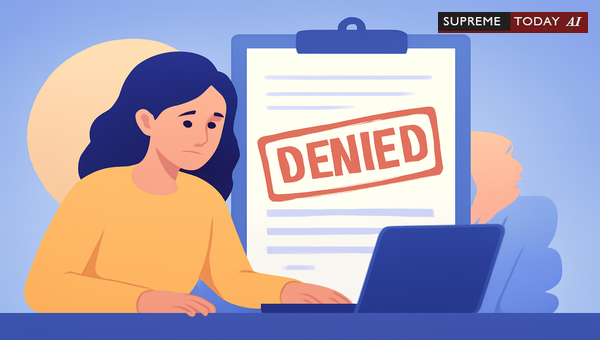
Denial of : Impact on Student Careers
In the competitive world of education and professional training, extensions for suitability—whether for courses, probation periods, or institutional approvals—can make or break careers. Imagine a nursing college upgraded to B.Sc. Nursing, yet denied an extension for suitability inspection, halting student admissions and progression. Or a probationary teacher whose short extension leads to termination, jeopardizing student education. The question arises: Can the non-grant of extension to suitability lead to career derailment for students?
This blog delves into the legal landscape, drawing from landmark judgments. Generally, such denials can be challenged if , discriminatory, or violative of constitutional rights, but valid policy reasons may uphold them. This is not legal advice; consult a professional for your case.
Main Legal Finding
Courts have ruled that the non-grant of extension to a candidate’s suitability or lien, when essential for career progression of students or employees, may be challenged as , unfair, and violative of . This holds especially true if extensions are granted in similar cases. Decisions impacting careers must follow fair, transparent, non- criteria. If based on extraneous considerations or inconsistent with prior decisions, they may be declared illegal and set aside2022 0 Supreme(SC) 1271.
Key Principles from Court Rulings
Indian courts emphasize equality and fairness in administrative actions:
- denial affecting careers violates Articles 14 and 16: Equal protection and opportunity in public employment or education cannot be undermined 2001 6 Supreme 22.
- Consistency is crucial: Selective grants of extensions amount to 2022 0 Supreme(SC) 1271.
- Extraneous considerations invalidate decisions: Inconsistent treatment renders actions unlawful 2022 0 Supreme(SC) 1271.
In 2022 0 Supreme(SC) 1271, the court noted: the refusal to grant extension when others in similar circumstances received it was and violative of Articles 14 and 16. It criticized the 's administrative decision as unsustainable, urging moulded relief over outright denial.
Detailed Analysis: Extensions in Educational Contexts
Suitability Extensions for Institutions and Student Admissions
Nursing institutions often face issues. In a case involving the Act, 1947, a petitioner running a GNM course upgraded to B.Sc. Nursing sought extension without a new suitability certificate. The court clarified: authority to grant recognition lies with the State Council, while compliance with regulations is mandatory2025 Supreme(Online)(Ker) 58987. Denials here, if inconsistent, could impact student careers by blocking admissions.
Similarly, for B.Ed. courses, non-grant of affiliation extensions risked student prospects. Courts directed regularization where students had pursued studies, balancing institutional disputes against career jeopardy 2021 0 Supreme(Guj) 943.
Probation Extensions and Teacher Impacts on Students
Probationary periods for educators directly affect students. Under , extensions are typically one year, but shorter ones may not invalidate terminations if . However, if the non-grant puts the career of the students... in peril by utilizing the services of the teachers who were unfit, it raises fairness issues 2013 0 Supreme(Del) 1397 2013 0 Supreme(Del) 1398.
The court in such cases held: satisfactory nature of services or otherwise by the management for grant of extension or the non-grant of extension of the probationary period and termination of services determines outcomes, but short extensions could be challenged if they harm student progression
VISHWA BHARTI PUBLIC SCHOOL AND ORS vs I NDER JEET SINGH AND ANR
.Admissions and Schedule Strictness
In postgraduate dental admissions, courts refused extensions despite vacant seats: Merely because the seats are lying vacant... is not a ground to grant extension of time... The schedule must be followed2022 0 Supreme(SC) 1091. Backdoor admissions were quashed to prevent perpetuating illegality, protecting merit-based student careers.
For MBBS students exhausting maximum periods, universities granted limited one-year extensions with penalties, but no further: To consider the grant of extension to students who have exhausted the maximum period prescribed for completion of courses2012 0 Supreme(Mad) 2773 2012 0 Supreme(Mad) 1759. Regulations were upheld as non-.
Exceptions and Limitations
Not all denials are challengeable:
- Valid, documented reasons: Genuine administrative exigencies or uniform policies hold 2022 0 Supreme(SC) 1271.
- : Differentiation with nexus to objectives is permissible 2022 0 Supreme(SC) 1271.
- Policy matters: Courts avoid interfering in service extensions based on suitability and requirements, e.g., for airmen: Grant of extension or its denial shall depend on the requirements of the service and also the suitability2025 Supreme(Online)(AFT) 294.
- No entitlement without compliance: Institutions cannot admit students sans approvals 2025 Supreme(Online)(Ker) 58987.
In probation cases, terminations within one year are valid without natural justice if 2010 0 Supreme(Del) 264.
Judicial Remedies and
Courts wield discretion to rectify injustices. In 2001 6 Supreme 22, denied extensions led to salary compensation. For students, interim relief prevents career derailment: Non grant of interim relief will render the petition infructuous and jeopardize the career of the students2021 0 Supreme(Guj) 943.
Under , seek writs emphasizing or arbitrariness.
Recommendations for Institutions and Affected Parties
To avoid litigation:
- Ensure transparency: Document criteria for extensions clearly.
- Maintain consistency: Apply rules uniformly across similar cases.
- Base on relevance: Avoid extraneous factors.
Aggrieved parties:
- Gather evidence of similar grants.
- Highlight career impacts on students/employees.
- File promptly under .
Administrative bodies should adopt fair policies; courts intervene where unjust 2022 0 Supreme(SC) 1271.
Conclusion: Balancing Fairness and Regulation
The non-grant of suitability extensions can profoundly affect student careers, but courts generally uphold challenges only against or discriminatory actions. Key takeaways:
- Prioritize fairness to comply with Articles 14/16 and natural justice.
- Valid policies protect schedules and standards.
- Seek judicial moulding for equitable relief.
This analysis draws from cases like 2022 0 Supreme(SC) 1271, 2001 6 Supreme 22, and others, illustrating evolving jurisprudence. For personalized guidance, consult a legal expert—this post offers general insights only.
References:1. 2022 0 Supreme(SC) 1271: refusals and consistency.2. 2001 6 Supreme 22: Compensation for unjust denials.3. Additional contexts from 2025 Supreme(Online)(Ker) 58987, 2022 0 Supreme(SC) 1091, 2013 0 Supreme(Del) 1397, etc.
#StudentCareers, #LegalRights, #AdministrativeLaw












