Searching Case Laws & Precedent on Legal Query.....!
Analysing the retrieved Case Laws
Scanned Judgements…!



Searching Case Laws & Precedent on Legal Query.....!
Analysing the retrieved Case Laws
Scanned Judgements…!
Advocate’s Death Does Not Halt Court Proceedings - When an employee or party to a case dies, the legal process generally continues unless specific rules or statutes explicitly provide otherwise. For example, in disciplinary cases, courts have held that proceedings cannot be continued or punitive actions imposed posthumously. The principle is that a deceased individual’s connection to worldly affairs ends upon death, preventing further disciplinary or employment-related actions against them (
SRI RAGHAVENDRA VARADHA.S Vs THE PRINCIPAL - Karnataka
, 2011(2) ADJ 643) references:SRI RAGHAVENDRA VARADHA.S Vs THE PRINCIPAL - Karnataka
, 2023 0 Supreme(All) 444.Legal Proceedings and Death of Parties - Civil procedures have specific provisions for handling the death of plaintiffs or defendants. Amendments to Order 22 Rule 4 of the Civil Procedure Code mandate that advocates must notify courts about a party’s death, and legal representatives can be substituted if the right to sue survives. If a party dies during proceedings and no substitution is made within stipulated time, the case or execution may abate or be dismissed. However, the death of a party generally does not stop ongoing court functions unless rules specify otherwise (2024 Supreme(Online)(CAT) 38, 2023 0 Supreme(P&H) 1753, 2023 0 Supreme(Chh) 550, 2023 0 Supreme(P&H) 270).
Court’s Power and Judicial Review - Courts have clarified that they do not possess appellate authority over disciplinary decisions, such as the imposition of 'dies-non' (periods of non-duty) or reinstatement orders, which are primarily administrative or disciplinary in nature. Judicial review is limited to examining whether principles of natural justice were followed and if the orders are within legal bounds. Orders treating periods of absence as 'dies-non' cannot be challenged on merit if they are within authority’s powers (2024 Supreme(Online)(CAT) 38, 2024 Supreme(Online)(CAT) 10737).
Main Insight - The death of an individual, whether an employee or a party to a proceeding, generally results in the termination of their connection with ongoing disciplinary or legal processes. Courts emphasize that proceedings against a deceased person cannot be continued or punitive measures imposed posthumously. However, civil procedures provide mechanisms for substitution and continuation of cases against legal representatives if the right to sue survives.
Conclusion - When an advocate or party dies, the functioning of the court or disciplinary proceedings cannot be arbitrarily stopped. Proceedings may continue against legal representatives or be dismissed if proper procedures are not followed, but the death itself generally halts any disciplinary action or employment-related penalties against the deceased individual.
References:-
SRI RAGHAVENDRA VARADHA.S Vs THE PRINCIPAL - Karnataka
-AMRIK SINGH vs STATE OF HARYANA - Punjab and Haryana
- 2023 0 Supreme(All) 444- 2024 Supreme(Online)(CAT) 38- 2024 Supreme(Online)(CAT) 10737- 2023 0 Supreme(P&H) 1753- 2023 0 Supreme(Chh) 550- 2023 0 Supreme(P&H) 270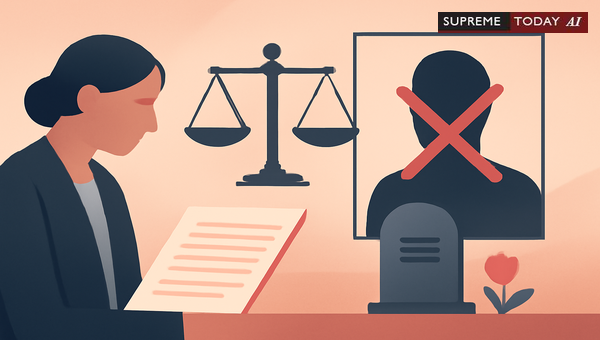
Imagine you're in the midst of a civil lawsuit, and suddenly the plaintiff passes away. The advocate steps up and informs the court: No contact, no instructions from the client. What does the court do next? This scenario raises critical questions about the continuation of proceedings, potential , and the advocate's role. In this guide, we'll break down the legal framework under the , drawing from key principles, case laws, and practical recommendations.
This is general information based on established legal precedents and should not be considered specific legal advice. Consult a qualified lawyer for your situation.
The question at hand is: What Court does where in a Civil Suit Plaintiff Dies and Advocate Pleads no Contact or no Instructions? Typically, this arises when the plaintiff dies during ongoing proceedings, leaving the advocate without updated instructions due to the demise.
Under Rule 3 of the CPC, if a plaintiff dies and the , the (heirs) must be brought on record within of the death's knowledge. Failure to do so may lead to 2024 0 Supreme(AP) 1530. The rule states: Procedure in case of death of one of several plaintiffs or of sole plaintiff.—(1) Where one of two or more plaintiffs dies and the right to sue does not survive to the surviving plaintiff or plaintiffs alone, or a sole plaintiff or sole surviving plaintiff dies and the , the Court... 2024 0 Supreme(AP) 1530 2023 0 Supreme(Chh) 550.
If the advocate pleads no contact or no instructions, the court generally:- Adjourn briefly to allow substitution of .- Proceed against the plaintiff if no steps are taken, but only after notice.- Dismiss or abate if timelines lapse without substitution 2023 0 Supreme(P&H) 1753.
Courts emphasize: This is because in routine course, such , if any, cannot be expected to know the pendency of Court proceedings. Therefore, the provision is required to be peeped into very carefully. 2023 0 Supreme(P&H) 1753 2023 0 Supreme(P&H) 270.
The death of a plaintiff does not automatically halt the suit if the . Legal heirs can step in via an application under . However, execution petitions or suits may abate if not addressed: But in any event the execution petition cannot be dismissed as abated. 2024 0 Supreme(AP) 1530.
An advocate's authority persists until formally terminated under : The appointment of a pleader remains in force until determined with the leave of the court or until the client or pleader dies 2006 0 Supreme(AP) 1077. Even post-client death, the advocate must inform the court and facilitate substitution.
Advocates cannot absent themselves without sufficient cause: Now, it cannot be gainsaid that an advocate has no right to remain absent from the court when the case of his client comes up for hearing. He is duty-bound to attend the case in court or to make an alternative arrangement. Non-appearance in court without 'sufficient cause' cannot be excused. 2021 0 Supreme(MP) 159 2020 0 Supreme(All) 64 2019 0 Supreme(All) 1536 2016 0 Supreme(Chh) 117.
Pleading no instructions due to death doesn't excuse inaction; the advocate should seek time for heirs or file for abatement.
If the advocate dies instead, proceedings don't stop. The client's authority continues via of the deceased advocate or a new appointment: The death of an advocate does not automatically halt court proceedings. The court can continue to function, and the case can proceed with the of the deceased advocate if necessary. 2006 0 Supreme(AP) 1077 1996 0 Supreme(AP) 996. In criminal cases, similar rules apply: In Criminal cases, the appointment of an Advocate shall be deemed to be in force until determined with the leave of the Court... or until the client or the Advocate dies 2014 0 Supreme(Bom) 2316.
: ruled that plaintiff death doesn't abate the suit if the ; can continue 2023 0 Supreme(AP) 145 2022 0 Supreme(SC) 1673.
: Advocate's authority endures until formal termination, even post-death, ensuring continuity 2006 0 Supreme(AP) 1077.
Additional precedents highlight no posthumous actions: In disciplinary contexts, proceedings against deceased parties halt, treating periods as (non-duty), but civil suits proceed via substitution
2024 Supreme(Online)(CAT) 38. Courts lack appellate power over such administrative decisions unless is violated 2024 Supreme(Online)(CAT) 10737.
When faced with this situation:1. Notify the Court Immediately: Advocate must report the death; delay risks adverse orders.2. File Substitution Application: Heirs apply under within ; possible for delay with cause.3. Appoint New Counsel: Client/heirs engage fresh advocate if needed 1996 0 Supreme(AP) 996.4. Monitor for Abatement: If no action, suit may abate, but revival possible under Rule 9.
Courts have discretion to balance justice and procedure, avoiding delays: Advocate’s Death Does Not Halt Court Proceedings as proceedings continue against if rights survive
.
Recommendations:- Inform heirs promptly about pending suits.- File applications to bring on record.- Track case status to meet procedural deadlines.- In advocate absence/death, clients should act swiftly to avoid proceedings.
The death of a plaintiff in a civil suit, coupled with an advocate's plea of no contact or instructions, triggers specific CPC mechanisms to ensure justice isn't derailed. Suits typically continue via substitution of legal heirs under , without automatic abatement if rights survive. Advocates bear a duty to facilitate this, unable to simply withdraw without cause. Similarly, an advocate's death doesn't pause proceedings.
Key Takeaways:- : Substitute heirs timely to avoid abatement 2024 0 Supreme(AP) 1530.- Advocate Duty: No unexcused absence; inform and arrange 2021 0 Supreme(MP) 159.- Court Flexibility: Proceedings adapt, prioritizing continuity 2006 0 Supreme(AP) 1077.
Stay proactive in litigation to navigate these challenges. For tailored advice, reach out to a legal professional.
References: 2006 0 Supreme(AP) 1077 1996 0 Supreme(AP) 996 2022 0 Supreme(SC) 1673 2023 0 Supreme(AP) 145 2024 0 Supreme(AP) 1530 2023 0 Supreme(P&H) 1753 2023 0 Supreme(Chh) 550 2021 0 Supreme(MP) 159
2024 Supreme(Online)(CAT) 38 #CivilSuitDeath #LegalProceedings #CPCGuide


Learned counsel for the petitioner submits that the petitioner was working as Attender in the first respondent-College and while working, as such, he submitted application seeking voluntary retirement It is admitted fact that the petitioner was and said period of dies-non would not count as service. ... Rule 8 (14-A) of KCSRs defines 'dies-non': Dies-non means non-duty period or pe....

promotion and at this belated stage he is stopped to agitate under the in the same Centre as Draftsman (Mechanical) never objected to his 634 IN THE HIGH COURT

As soon as a person dies, he breaks all his connection with the worldly affairs. It cannot be said that the chain of employment would still continue to enable employer to pass an order, punitive in nature, against the dead employee. 7. ... In such view of the matter, the Court proceeded to decide the case on merits. 5. Learned counsel for the petitioner submitted that husband of petitioner was working on the post of Jr. ....

When the train stopped in Sukhi Sewania Station, the appellant and other passenger of the train came out from the Train. ... Doing so would amount to invoking the principle of contributory negligence which cannot be done in the case of liability based on "no fault theory". We may in this connection refer to the judgment of this Court in United India Insurance Co. ... Proviso (b) provides that no compensation shall be payable if the passeng....

But in any event the execution petition cannot be dismissed as abated. ... Procedure in case of death of one of several plaintiffs or of sole plaintiff.-(1) Where one of two or more plaintiffs dies and the right to sue does not survive to the surviving plaintiff or plaintiffs alone, or a sole plaintiff or sole surviving plaintiff dies and the right to sue survives, the Court ... are not parties to ATC No.2 of 2003 and with....

This is because in routine course, such legal representatives, if any, cannot be expected to know the pendency of Court proceedings. Therefore, the provision is required to be peeped into very carefully. ... — (1) Where one of two or more defendants dies and the right to sue does not survive against the surviving defendant or defendants alone or a sole defendant or sole surviving defendant dies and the right to sue survive....

This Tribunal cannot sit as a Court of appeal over a decision based on the finding of the appellate authority in a disciplinary proceedings. ... However, appellate authority modified the penalty and ordered reinstatement treating the period of absence as dies-non. Such an order cannot be the subject matter of judicial review. ... This contention of the respondents cannot hold good for two reasons. First....
This Tribunal cannot sit as a Court of appeal over a decision based on the finding of the appellate authority in a disciplinary proceedings. 7. ... However, appellate authority modified the penalty and ordered reinstatement treating the period of absence as dies-non. Such an order cannot be the subject matter of judicial review. ... It is seen from Annexure-A1 that they were performing duties as Loco Pilot and Assistant Lo....
This is because in routine course, such legal representatives, if any, cannot be expected to know the pendency of Court proceedings. Therefore, the provision is required to be peeped into very carefully. ... As per the amendment, where one of two or more plaintiffs dies and right to sue does not survive to the surviving plaintiff or plaintiffs alone, or a sole plaintiff or sole surviving plaintiff dies and the right to sue....

Procedure in case of death of one of several defendants or of sole defendant.—(1) Where oneof two or more defendants dies and the right to sue does not survive against the surviving defendant or defendants alone or a sole defendant or sole surviving defendant dies and the right to sue survives, the Court ... Merely because of the non- mentioning of the correct provision as Order 1 Rule 10 of the Code at the initial stage by the ad....

He is duty-bound to attend the case in court or to make an alternative arrangement. Non-appearance in court without "sufficient cause" cannot be excused. Now, it cannot be gainsaid that an advocate has no right to remain absent from the court when the case of his client comes up for hearing.

Now, it cannot be gainsaid that an advocate has no right to remain absent from the Court when the case of his client comes up for hearing. He is duty bound to attend the case in Court or to make an alternative arrangement. Non-appearance in Court without ‘sufficient cause' cannot be excused.
Now, it cannot be gainsaid that an advocate has no right to remain absent from the Court when the case of his client comes up for hearing. Non-appearance in Court without `sufficient cause' cannot be excused. He is duty bound to attend the case in Court or to make an alternative arrangement.

In (2008) 13 SCC 395 (Deptt. of Horticulture v. Raghu Raj) with reference to the solemn duty of lawyers to be present when the case is called out and assist the Court in dispensation of justice it was observed as follows :- “23. Now, it cannot be gainsaid that an advocate has no right to remain absent from the court when the case of his client comes up for hearing. He is duty-bound to attend the case in court or to make an alternative arrangement. Nonappearance in court witho....

In Criminal cases, the appointment of an Advocate shall be deemed to be in force until determined with the leave of the Court by writing signed by the client or the Advocate as the case may be, and filed in Court or until the client or the Advocate dies, or until all proceedings in the case are ended so far as regards the client."


An indispensable Tool for Legal Professionals, Endorsed by Various High Court and Judicial Officers
Please visit our Training & Support
Center or Contact Us for assistance

Scan Me!
India’s Legal research and Law Firm App, Download now!


For Daily Legal Updates, Join us on :



 Back to top


