


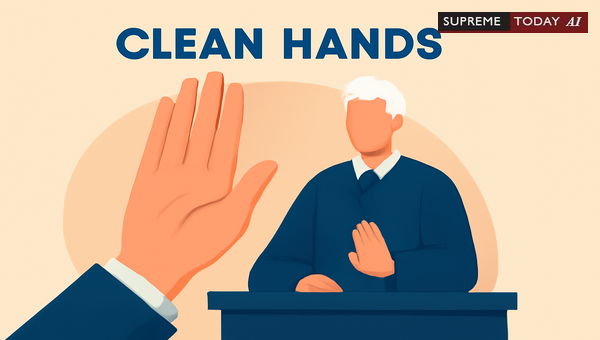
in India: Why Complainants Must Come with Clean Hands Disclosing All Details
In the realm of Indian jurisprudence, approaching the court isn't just about presenting your case—it's about doing so with absolute honesty. The age-old question, Complainant should Come with Clean Hands Disclosing all the Details, underscores a cornerstone principle: the . This ensures that only those who approach the judiciary with transparency and integrity receive relief. Whether filing a or seeking remedies in , failure to disclose can doom your case.
This blog delves into the doctrine's origins, applications, judicial precedents, and practical implications, drawing from established case law. Note: This is general information and not specific legal advice. Consult a qualified lawyer for your situation.
What is the ?
The is a fundamental principle in , requiring litigants to approach the court with clean hands—meaning honesty, full disclosure of facts, and no suppression or deceit. It is particularly vital when invoking the of under or the under of the Constitution. Courts do not act as fact-finders in such proceedings; they rely on the candor of the parties. 2022 0 Supreme(Ker) 144 2019 0 Supreme(Ker) 564
As articulated in judicial observations, One, who comes to the court, must come with clean hands and no should be concealed.
This extends beyond writs to various forums, including consumer disputes and civil suits, emphasizing that parties must reveal prior litigations, transactions, and all relevant details. 2022 0 Supreme(Telangana) 365
Core Elements of Clean Hands
- Full Disclosure: Litigants must narrate complete facts, including past dealings and litigations, to avoid misleading the court. 2013 0 Supreme(Bom) 2405
- Clean Heart and Mind: Beyond hands, courts expect a clean heart, clean mind/clean objective.
- Absence of : Any exaggeration, falsehood, or concealment signals bad faith, disqualifying . 2024 Supreme(Online)(MP) 23103 2024 0 Supreme(MP) 190
Consequences of Unclean Hands
Courts wield discretionary power and will not aid those who deceive them. If a complainant suppresses or makes false statements, relief is typically denied, and the petition may be dismissed outright.
- Dismissal of Claims: If a party does not come to the court with clean hands, they are not entitled to be heard or granted any relief.2022 0 Supreme(Telangana) 365 2015 7 Supreme 449
- Abuse of Process: In one case, the concluded that the complainant has not come up with clean hands; leading to rejection due to settled payments evidenced by receipts. 2019 0 Supreme(Ori) 474
- : A remarked, this comes to this conclusion that the complainant has not come with clean hands.
Suppression, such as hiding prior complaints or adverse orders, is viewed as an . 2024 Supreme(Online)(MP) 23103 2024 0 Supreme(P&H) 1023
Judicial Precedents Shaping the Doctrine
Indian courts have consistently upheld this principle through landmark rulings:
Benchmarks
- : The apex court held that a litigant who does not come with clean hands is not entitled to be heard, reinforcing full disclosure in writs. 2022 0 Supreme(Telangana) 365
- : Emphasized the duty to disclose full transaction details and past litigations, warning against misleading the court. 2013 0 Supreme(Bom) 2405
High Court and Tribunal Applications
- In unauthorized construction disputes, petitioners were rebuked for not coming with clean hands while protecting wrongdoings. 2023 0 Supreme(UK) 510
- A consumer complainant concealed prior litigation, leading to denial of relief.
Royal Sundaram Alliance Insurance Co. Ltd. VS Sumit J. Ramchandani - Consumer
- Complainant is always expected to come with clean hands. Even family relations in witnesses didn't excuse non-disclosure. 2011 0 Supreme(Pat) 2386
- In a DDA scheme case, allegations of unclean hands arose from delayed payments.
A. K. Sharma VS Delhi Development Authority, (through Chairman, DDA) - Consumer
- stressed: The person who approaches the Court should come with clean hands thereby disclosing all correct and relevant facts.2011 0 Supreme(Bom) 1042
These precedents illustrate the doctrine's broad sweep across civil, constitutional, and consumer law. 2025 Supreme(Online)(KAR) 3233 2025 Supreme(Online)(SCDRC) 3574
Integrating Integrity: Full Disclosure in Practice
Full Disclosure of Facts is non-negotiable. Courts demand revelation of previous complaints, orders, or facts impacting the case. Failure indicates intent. 2023 0 Supreme(Ker) 231 2024 0 Supreme(P&H) 373
Suppression and Concealment—hiding adverse details—undermines justice. Concealing or suppressing ... is considered .2024 0 Supreme(MP) 190
Litigants must approach with integrity and good faith, avoiding false claims. This is crucial in discretionary jurisdictions where courts grant relief only to the sincere. 2023 0 Supreme(P&H) 2624 2022 0 Supreme(All) 574
Recommendations for Litigants and Practitioners
To navigate this doctrine effectively:- Disclose Everything: Advise clients to reveal all facts and documents upfront. Partial truths invite dismissal.- Document Thoroughly: Keep records of transactions, payments, and prior proceedings as evidence of candor.- Strategic Planning: Assess disclosure risks before filing, especially in equity-based claims.- Seek Counsel Early: Lawyers should audit cases for 'clean hands' compliance to mitigate pitfalls.
Conclusion: Safeguarding Judicial Integrity
The stands as a bulwark for fairness in India's justice system. As courts repeatedly affirm, one who comes to the Court should not only come with clean hands, but must further come with clean heart, clean mind/clean objective.
Failure to disclose all details—be it in writs, consumer cases, or civil suits—typically results in denied relief, protecting the process from abuse.
Key Takeaways:- Always prioritize transparency to qualify for equitable remedies.- Suppression of equals unclean hands.- Judicial precedents like Ramjas Foundation guide consistent enforcement.
By embracing this principle, litigants uphold justice's sanctity. For tailored guidance, consult a legal professional.
References: 2022 0 Supreme(Ker) 144 2023 0 Supreme(UK) 510 2022 0 Supreme(Telangana) 365
Royal Sundaram Alliance Insurance Co. Ltd. VS Sumit J. Ramchandani - Consumer
2018 0 Supreme(Cal) 954 2013 0 Supreme(Bom) 24052019 0 Supreme(Ori) 474
2011 0 Supreme(Pat) 2386
A. K. Sharma VS Delhi Development Authority, (through Chairman, DDA) - Consumer
2011 0 Supreme(Bom) 1042 2024 Supreme(Online)(MP) 23103 2024 0 Supreme(MP) 190 2024 0 Supreme(P&H) 373 2024 0 Supreme(P&H) 1023 2023 0 Supreme(Ker) 231 #CleanHandsDoctrine, #IndianLaw, #LegalDisclosure















