


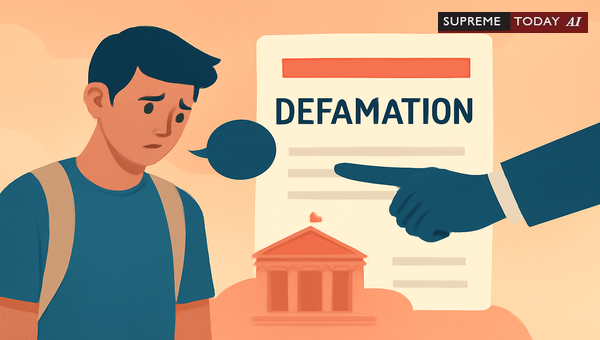
Legal Action Against Student for Badmouthing College
In today's digital age, a single social media post or public remark by a student can tarnish a college's reputation overnight. If a student utters bad words about your college—calling it corrupt, incompetent, or worse—institutions often wonder: How to take legal action against a student who said bad words about college? This question arises frequently amid rising cases of online trolling and verbal attacks. While colleges have rights to protect their goodwill, any response must balance legal grounds, procedural fairness, and potential backlash.
Important Disclaimer: This article provides general information based on legal precedents and is not specific legal advice. Consult a qualified attorney for your situation, as laws vary by jurisdiction, primarily focusing here on Indian law.
Understanding Defamation: Grounds for Legal Action
Defamation occurs when false statements harm someone's reputation. For colleges, student statements may qualify if they meet key criteria:
- False statements of fact about the college (e.g., accusing it of illegal practices without proof).
- Published to a third party (shared online, in groups, or publicly).
- Causing reputational harm, such as lost enrollments or donor confidence. 2021 0 Supreme(SC) 286
Under the Indian Penal Code, severe cases can escalate to (), allowing prosecution. For instance, if statements are malicious and intended to injure, colleges may file a criminal complaint. 1980 0 Supreme(SC) 43
However, not all bad words qualify. Opinions or fair criticism—like poor teaching quality—may be protected as free speech. Courts distinguish facts from opinions, dismissing baseless suits. 2021 0 Supreme(SC) 286
Step-by-Step Procedural Approach
Rushing to court can backfire, generating more publicity. Instead, follow a structured path emphasizing internal resolution first.
1. Internal Investigation and Disciplinary Measures
Colleges should leverage their authority under institutional regulations. Begin with:
- Thorough investigation: Gather evidence, witness statements, and the student's response to ensure . 1992 0 Supreme(SC) 440
- Opportunity to be heard: Provide the student a , as mandated in disciplinary guidelines. (applicable broadly to misconduct) empower Anti-Ragging or similar committees to probe, recommend actions, and ensure . 2022 0 Supreme(All) 1158 2022 0 Supreme(All) 1398
Appropriate sanctions include:- Warnings or apologies.- Suspension or expulsion if severe. 2009 0 Supreme(SC) 223
A student's remorseful affidavit can mitigate: Words can't describe how sorry I feel for bad-mouthing the very wise people who instilled the legal knowledge I carry. 2023 Supreme(Online)(Kar) 34500 This highlights reformative approaches over punishment. 2023 0 Supreme(All) 2865
Institutions maintain discipline but must proportion penalties to misconduct gravity. Courts uphold this: The authorities of the institute are responsible for the maintenance of discipline... the quantum of punishment awarded to the delinquent student. 2019 0 Supreme(Guj) 25
2. Escalating to Civil or Criminal Legal Action
If internal steps fail:
- Civil Suit: File for defamation seeking damages, injunctions to remove posts, and costs. Prove harm with evidence like enrollment dips.
- Criminal Complaint: Lodge FIR at police station under IPC Sections 499/500. 1980 0 Supreme(SC) 43
Always comply with to avoid judicial quashing. Students enjoy protections: fair hearings, proportionality, and no arbitrariness. 2023 0 Supreme(Telangana) 346 2023 0 Supreme(All) 2097 2024 0 Supreme(Ker) 1524
Limitations, Defenses, and Risks
Students aren't defenseless:
- : Genuine criticism isn't actionable. 2021 0 Supreme(SC) 286
- Judicial oversight: Excessive actions get challenged. Courts quash disproportionate penalties, stressing disciplinary measures should be proportionate, fair, and based on proper investigation. 2024 0 Supreme(Pat) 357 2025 0 Supreme(Ker) 1841
Aggressive suits risk —amplifying negativity. One case notes colleges must avoid overreach, as higher authorities' interference can be contested. 2023 0 Supreme(Telangana) 346
Verbal abuse or derogatory remarks trigger proceedings but require justification. Private misconduct demands documented steps. 2025 0 Supreme(Ker) 1841
Best Practices and Recommendations
To navigate effectively:
- Exhaust internals first: Use committees for credibility. 2022 0 Supreme(All) 1158
- Document everything: Evidence strengthens cases.
- Seek mediation: Amicable resolutions preserve harmony.
- Consult counsel: Evaluate statements' legality early.
- Prevent recurrence: Train on codes of conduct, as in DU elections: The College/University may also take appropriate disciplinary action against such violator. 2018 0 Supreme(Del) 2026
aligns with law: penal regimes for indiscipline promote parity. 2023 0 Supreme(All) 2865
Case Insights from Precedents
Real scenarios illustrate:- A student denied circulating content but apologized profusely, aiding resolution. 2023 Supreme(Online)(Kar) 34500- Harsh punishments deemed disproportionate were scrutinized. 2019 0 Supreme(Guj) 25- Physically challenged students' reliefs highlight procedural fairness. (https://supremetoday.ai/doc/judgement/01100048687)
Medical colleges, too, face upload delays but act swiftly under . 2025 0 Supreme(Bom) 1176
Conclusion and Key Takeaways
Colleges can pursue action against defamatory student statements, but success hinges on evidence, fairness, and strategy. Prioritize discipline over litigation to minimize harm.
Key Takeaways:- Verify defamation elements before acting. 2021 0 Supreme(SC) 286- Follow religiously. 1992 0 Supreme(SC) 440- Weigh publicity risks.- Document and consult experts.
By blending internal authority with legal recourse, institutions safeguard reputations while upholding justice. Stay vigilant—protect your college's name proactively.
References:- Indian Penal Code Sections 499/500. 1980 0 Supreme(SC) 43- Anti-Ragging Guidelines (Regs 23-24). 2022 0 Supreme(All) 1158 2022 0 Supreme(All) 1398- Various High Court/ judgments on student discipline.
#StudentDefamation, #CollegeLaw, #LegalActionCollege












