


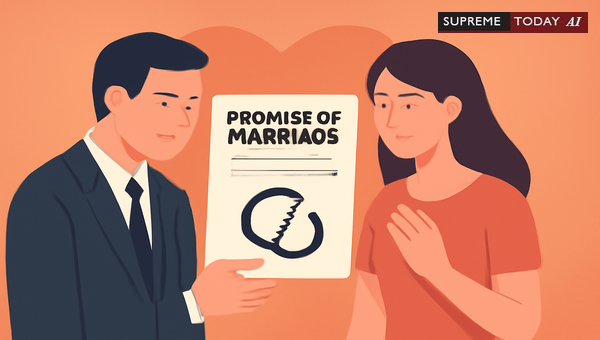
IPC 420 & 406: Does a Promise of Marriage Constitute Cheating?
In today's fast-paced world of relationships, promises of marriage can sometimes lead to heartbreaking disputes—and even courtrooms. Imagine this scenario: A woman gives money to a man who promises to marry her, only for the relationship to sour. She files a case under Sections 420 (cheating) and 406 () of the . But does the mere act of taking money on such a promise automatically make it a crime? The answer, as per numerous court judgments, is no—without proof of from the start. 2024 0 Supreme(SC) 883 2025 7 Supreme 539
This blog dives deep into the legal question: Complainant Filed Case under Sec 420 406 IPC where a Married Man Took Money from her on Promise to Get Married. We'll explore key court findings, the critical distinction between a breached promise and a false one, and insights from related cases. Note: This is general information based on judicial precedents and not specific legal advice. Consult a lawyer for your situation.
Understanding the Core Legal Issue
Sections 420 and 406 IPC are powerful tools against fraud, but they aren't catch-all remedies for broken hearts or unfulfilled promises. Section 420 deals with cheating—deceiving someone to deliver property through fraudulent means. Section 406 covers , where property is entrusted but dishonestly misappropriated. 2024 0 Supreme(SC) 883 2025 7 Supreme 539
The pivotal question courts ask: Was there fraudulent or at the time the money was given? If a man takes money sincerely intending to marry but later backs out (perhaps due to family pressure or changed circumstances), it's typically a civil matter, not criminal. Mere failure to follow through doesn't suffice. As one court noted: The intention to cheat must be established at the time of ; mere failure to fulfill a promise does not constitute cheating. 2024 0 Supreme(SC) 883
Key Elements Required for Conviction
1. Proof of from the Outset
Courts repeatedly stress that must exist when the happens, not retrospectively. In a landmark observation: Every act of breach of trust may not result in a penal offence unless there is evidence of manipulating act of . 2025 7 Supreme 539
Without this, cases crumble. For instance, in 2025 7 Supreme 539, proceedings were quashed because no initial fraud was proven, especially over a prolonged relationship without protests from the complainant.
2. vs.
There's a thin but crucial line:- : Made in good faith but not fulfilled (e.g., due to unforeseen issues). Generally civil, not criminal.- : Made with no intention of honoring it from day one. This can trigger IPC charges.
The distinction between and is critical; a made in good faith, especially over a long period, does not necessarily constitute an offence. 2025 7 Supreme 539
Impact of Relationship Duration
Long-term consensual relationships weaken cheating claims. Courts observe: The longer the duration of the physical relationship without protest or insistence on marriage, the less likely it is to be deemed based on or deception. 2007 5 Supreme 918 2025 1 Supreme 407 2015 0 Supreme(SC) 465
If years pass without demands for marriage or complaints, it suggests mutual consent rather than deception. This was key in quashing charges in 2025 7 Supreme 539, where prolonged conduct indicated no initial fraud.
Insights from Related Cases
Similar disputes appear across judgments:
In 2022 Supreme(Online)(Kar) 46463, courts clarified that a promise of marriage and breach of contract will not attract the provisions of . This reinforces that emotional breaches aren't automatically criminal.
Another case, 2023 Supreme(Online)(AP) 9600, involved registration under different sections like 498A IPC and , but highlights how complaints evolve—yet fraud under 420/406 needs specific proof, not just money exchange.
In 2024 Supreme(Online)(Ker) 90848, a under 420 IPC was based on investment promises in business, but the persuasion element mirrors marriage inducements: belief alone isn't enough without deceit proof.
dismissed 420 IPC claims where an agreement existed, noting no entrustment fraud if ownership was clear—analogous to money given for marriage without dishonest concealment.
Even in 2025 Supreme(Online)(Gau) 8097, charges under 420/406/34 IPC proceeded to trial, but pleas of not guilty underscore the on prosecution.
These cases show courts scrutinize intent rigorously, often quashing frivolous FIRs to prevent harassment. 2024 0 Supreme(SC) 883
Civil Remedies Over Criminal Action
When fraud isn't evident, civil suits for recovery or damages are preferable. Criminal proceedings can backfire, leading to quashing under for . 2025 7 Supreme 539
Courts discourage weaponizing IPC for personal vendettas: Initiating criminal proceedings without clear evidence of can cause undue harassment. 2025 7 Supreme 539
Exceptions: When Charges Stick
Rarely, if evidence shows deceit from the beginning—like concealing a prior marriage while taking money repeatedly—charges may hold. But allegations alone don't cut it; concrete proof (e.g., chats, witnesses) is vital. 2025 1 Supreme 407
Practical Recommendations
- For Complainants: Gather evidence of initial deceit, like false representations. Consider civil recovery first.
- For Accused: Challenge via if no fraud exists.
- Prevention: Document transactions clearly; avoid mixing romance with finances.
Prosecution must prove: (1) , (2) at inception, (3) Property delivery due to deception. 2024 0 Supreme(SC) 883
Conclusion and Key Takeaways
Filing under IPC 420/406 for money taken on marriage promise typically fails without proven at . Prolonged relationships and unprotested promises point to civil disputes, not crimes. Courts protect against misuse while upholding justice in genuine frauds.
Key Takeaways:- is mandatory—timing matters. 2024 0 Supreme(SC) 883 2025 7 Supreme 539- Long relationships suggest consent, not cheat. 2007 5 Supreme 918- Opt for civil remedies in breach cases.- Always seek professional legal counsel.
References:1. 2024 0 Supreme(SC) 883: Intent at essential.2. 2025 7 Supreme 539: Breach ≠ criminal offence without fraud.3. 2007 5 Supreme 918, 2025 1 Supreme 407, 2015 0 Supreme(SC) 465: Duration impacts deception claims.4. Additional: 2022 Supreme(Online)(Kar) 46463, 2023 Supreme(Online)(AP) 9600, etc.
Stay informed, stay cautious in matters of heart and wallet.
#IPCCheating, #MarriagePromiseLaw, #IPC420406












