


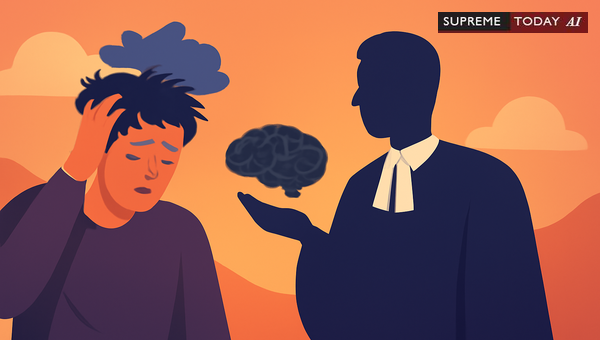
Criminal Liability for Persons of Unsound Mind: Key IPC Provisions
In the realm of criminal law, the principle that act without a guilty mind is no crime () is fundamental. But what happens when a person's mental condition prevents them from forming that guilty mind? This is where the defense of comes into play, particularly under Indian law. State the Relevant Provisions as to Criminal Liability for the Acts Committed by a Person of Unsound Mind—this question strikes at the heart of balancing justice with compassion for those suffering from mental illnesses.
This blog post delves into (IPC), , the cornerstone provision for such cases, while exploring the culpable state of mind, degrees of , and insights from landmark judgments. Whether you're a law student, legal professional, or someone navigating a personal situation, understanding these provisions can shed light on how courts assess criminal responsibility. Note: This is general information and not specific legal advice. Consult a qualified lawyer for personalized guidance.
The Culpable State of Mind in Criminal Law
Criminal liability hinges on the accused's , which includes , , , or in certain facts. 2020 0 Supreme(Ker) 734 As defined under the IPC, this mental element is assessed at the precise moment the offense is committed. 2021 0 Supreme(Ker) 746 implies a conscious direction toward a specific outcome, while denotes awareness of likely consequences. 2003 2 Supreme 720
, the broader category encompassing , illustrates this perfectly. Under , it involves:1. to cause death.2. to cause bodily injury likely to cause death.3. that the act is likely to cause death. 2023 5 Supreme 266
The IPC delineates three degrees of based on mental culpability:1. First degree: under .2. Second degree: Punishable under .3. Third degree: Punishable under . 2017 3 Supreme 654 2017 0 Supreme(SC) 992
However, for persons of unsound mind, this culpable state may be absent, leading to exemptions. 2025 0 Supreme(Raj) 2086
: Exemption for
provides: Nothing is an offence which is done by a person who, at the time of doing it, by reason of , is incapable of knowing the nature of the act, or that he is doing what is wrong or contrary to law.
This provision exempts individuals from criminal liability if their mental condition renders them unable to comprehend their actions. Key requirements include:- must exist at the time of the act.- It must impair cognitive faculties to the extent that the person cannot know the act's nature or its wrongfulness.
As clarified in judicial interpretations, It is only which materially impairs the cognitive faculties of the mind that can form a ground of exemption from criminal responsibility, the nature and the extent of the required being such as would make the offender incapable of knowing the nature of the act, or that he is doing what is wrong or contrary to law. 2019 0 Supreme(Mad) 2388 2004 0 Supreme(Raj) 25
A classic example: A common instance is, where a man fully believes that the act he is doing, e.g. killing another man, is done by the immediate command of God. 2019 0 Supreme(Mad) 2388
and Evidence
Under , the accused bears the burden to prove by a . However, courts must scrutinize the defense evidence carefully. State of mind before and after the act is relevant but not conclusive. 2004 0 Supreme(Raj) 25
Procedures under allow courts to order psychiatric evaluations. The (Section 3) further supports assessments of mental illness. Medical records, expert testimonies, and behavioral history are crucial.
In one case, the accused, suffering from schizophrenia, was sent to a mental hospital post-incident and exhibited abnormal behavior in court. The FIR noted her violent fury during the act, proving chronic unsoundness from disease of the mind. Her conviction under was set aside under Section 84. 2004 0 Supreme(Raj) 25
Landmark Cases on Insanity Defense
Absence of Intent in Altercations
In a hotel altercation over money, the appellant stabbed the deceased without premeditation. The court altered conviction from Section 302 to , emphasizing, Absence of premeditation and intent to kill during an altercation qualifies the act as not amounting to . 2025 0 Supreme(Raj) 2086
Rejection of Insanity Plea
must form a complete chain for conviction, but insanity requires clear proof of unsoundness at the time of the act. In a case, the plea failed due to lack of evidence, upholding Section 302 conviction. must form a complete and unambiguous chain pointing towards the guilt of the accused. The plea of insanity requires clear evidence of at the time of the act. 1987 0 Supreme(Cal) 101
and Mental State
While not directly insanity, cases like under highlight . To hold existence of criminal rashness or , it would have to be found out that the rashness was of such a degree as to amount to taking a hazard knowing that the hazard was of such a degree that the injury was most likely imminent. 2019 0 Supreme(All) 598
Presumption of in Statutes
Certain laws presume , rebuttable by the accused:- , , , . 2020 0 Supreme(Ker) 734- presumes it for the prosecution. 2020 0 Supreme(Ker) 734
For unsound mind, this presumption may not apply if Section 84 is established. In drug cases, Once the recovery of any contraband article from any person is proved as a fact, it will be no defence... because the presumption of culpable state of mind would then be sufficient. But insanity could rebut it. 2002 0 Supreme(Del) 1292
Intoxication offers limited defense: For intoxication to excuse a man... it must be of such a degree as to deprive a man of any kind of .
Practical Implications and Caregiver Advice
For families, managing mentally ill individuals requires vigilance. Courts and sources recommend:- Consulting government health websites or specialists.- Encouraging healthy lifestyles and support groups.- Planning backups for care.- Prioritizing safety—call emergency services if threatened. 2019 0 Supreme(Mad) 2388
Only a person who by reason of mental disease is prevented from controlling his own conduct or... deprived... of the power to rationalising on the moral conduct of the act, would be entitled to the benefit of this section. 1987 0 Supreme(Cal) 101
Key Takeaways
- exempts acts by persons of unsound mind incapable of knowing their nature or wrongfulness.
- Crucial time: At the act's commission; prove via medical evidence and circumstances.
- Distinguish from general culpable states in homicide (Sections 299-304 IPC).
- Burden on accused, but courts aid in evaluation.
- Presumptions in statutes can be rebutted, including via insanity.
Determining mental state is pivotal for offense classification and punishment. In summary, while degrees reflect varying , unsound mind nullifies liability entirely under specific conditions. 2017 3 Supreme 654 2017 0 Supreme(SC) 992
Stay informed, but always seek professional legal counsel for cases involving mental health and crime.
#InsanityDefense #IPCSection84 #CriminalLawIndia












