


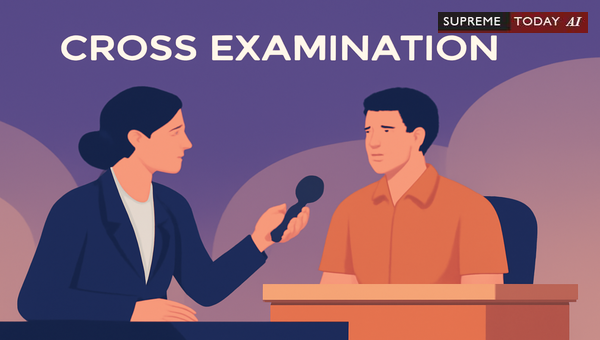
Guide to in Maintenance Cases
In family law disputes, particularly maintenance cases under provisions like in India, plays a pivotal role. It allows parties to test the credibility of witnesses, uncover inconsistencies, and strengthen their position. But how exactly does one conduct effectively in such cases? This guide explores the question: How can do Cross in Maintenance Cases, providing practical sample questions, procedural insights, and lessons from judicial precedents. Note that this is general information and not specific legal advice—consult a qualified lawyer for your situation.
The Importance of in Maintenance Proceedings
Maintenance cases often hinge on financial needs, income claims, and personal circumstances. Witnesses may testify about the petitioner's needs or the respondent's capacity to pay. helps challenge these claims, but it's not unrestricted. Courts balance the right to a fair hearing with enforcement of , sometimes conditioning cross on compliance like payment of dues. 2023 0 Supreme(Del) 5453
Generally, parties have a to cross-examine witnesses, but restrictions may apply for non-payment of interim maintenance or delays. For instance, courts have curtailed due to non-compliance, though such measures are often challenged. 2025 Supreme(Online)(Tel) 15959 2024 0 Supreme(P&H) 538 2023 0 Supreme(Ori) 101
Key Strategies and Sample Questions
Effective focuses on precision, inconsistencies, bias, and supporting evidence. Here are 10 targeted questions tailored for maintenance cases, drawn from common practices:
Confirm details: Can you confirm the exact date and time of the events you described, and how certain are you about those details?
Corroboration: You mentioned that you witnessed specific event. Were there any other individuals present at that time, and can you name them?
Inconsistencies: In your statement, you indicated that specific claim. However, in your previous testimony, you stated something different. Can you explain this inconsistency?
Bias check: Do you have any personal relationship with the petitioner or respondent that might influence your testimony today?
Source of knowledge: How did you come to know about the financial situation of the parties involved? Were you present during any discussions regarding maintenance?
Qualifications: Can you describe your qualifications or experience that give you the authority to speak on the financial needs of the petitioner?
Prior testimony: Have you ever provided testimony in a similar case before? If so, how did that outcome compare to what you are stating today?
Rebuttal witnesses: Are you aware of any other witnesses who have provided a different account of the events in question? If yes, how do you reconcile those differences?
Accuracy measures: How do you ensure that your recollection of events is accurate? Have you documented any of your observations?
Evidence support: Is there any evidence, such as documents or records, that supports your claims regarding the maintenance needs of the petitioner?
These questions aim to elicit admissions, expose weaknesses, and build a record for appeals. In one case, during , a witness deposed falsely and stated under oath that she's not working anywhere and stated that 'Now I am not employed'. 2023 0 Supreme(Del) 5453
Legal Procedures Governing
follows procedural rules under the and . For appeals, allows without full court fees. 2023 0 Supreme(Chh) 546 Courts often link cross to compliance, such as depositing arrears. 2025 0 Supreme(Jhk) 553 2022 0 Supreme(Pat) 898
In practice:- Interim stages: Courts may postpone cross until maintenance is paid. Failure leads to . 2023 0 Supreme(Ori) 101 2024 0 Supreme(Mad) 2476- Restrictions: Non-payment can justify curbs, but only for willful defaults, not mere delays. 2024 0 Supreme(P&H) 538 2025 Supreme(Online)(Tel) 15959- Enforcement: Orders set timelines, e.g., commence cross after costs payment.
One snippet notes: The entire was with regard to the maintenance case. P.W.1 was cross-examined at length, but nothing useful came to be elicited. 2022 0 Supreme(AP) 111 This highlights that thorough cross may not always yield results but is essential.
Court Insights and Common Challenges
Judicial trends show courts upholding cross rights while enforcing payments. In multiple cases, restrictions were set aside on revision, directing cross to begin on specific dates. 2024 0 Supreme(Mad) 2476 2025 Supreme(Online)(Tel) 15959
Key insights:- Harassment claims: Respondents allege serial cases to harass, but cross reveals separations or non-payments, e.g., he has not paid any maintenance for fooding since . 2024 0 Supreme(Jhk) 141- Limits on irrelevant cross: Courts disallow cross on unknown matters: We do not know how a can be permitted in respect of something that a witness claimed to be unaware of. 2017 0 Supreme(AP) 429- Balancing act: Gravity of non-compliance affects procedural rights, akin to furlough denials. 2013 0 Supreme(Bom) 1759
Parties challenge curbs via appeals, emphasizing fair opportunity. Courts direct early trials amid maintenance disputes. 2023 0 Supreme(Del) 5453
Other precedents question applicability: We do not see how it can be of any assistance to the respondents in the facts of these cases. 2009 0 Supreme(Ker) 920 2007 0 Supreme(Gau) 757
Practical Tips for Conducting Cross
- Prepare thoroughly: Review prior statements for inconsistencies.
- Stay focused: Target financial claims, needs, and capacity.
- Document everything: Seek admissions on records.
- Comply first: Pay dues to avoid restrictions.
- Appeal wisely: Use .
In disputes, witnesses admit facts during cross, e.g., instituting police cases. 2024 0 Supreme(Jhk) 141
Conclusion and Key Takeaways
in maintenance cases is a powerful tool but requires compliance and strategy. Typically, courts allow it post-payment of arrears or costs, safeguarding procedural fairness. Key takeaways:- Use targeted questions to challenge credibility and evidence.- Expect conditions like dues clearance; non-compliance risks curbs.- Draw from precedents: Restrictions must be justified. 2024 0 Supreme(P&H) 538 2025 Supreme(Online)(Tel) 15959- Always prioritize documentation and consistency.
Parties can effectively do cross by adhering to procedures and leveraging these insights. For tailored advice, engage a family law expert. This evolving area underscores balancing enforcement with justice.
#CrossExamination, #MaintenanceCases, #FamilyLaw















