


Is CTOS Debt Reporting Defamatory in Malaysia?
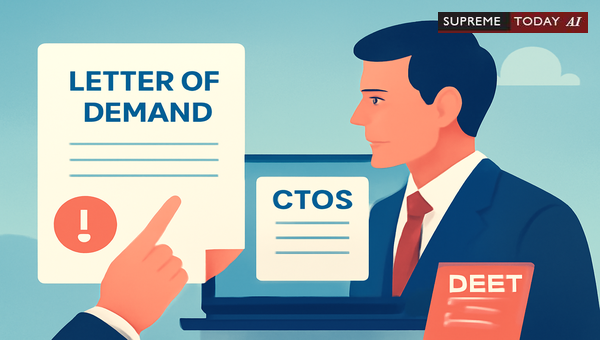
In today's credit-driven economy, disputes over debt reporting to agencies like CTOS are common. Imagine sending a letter of demand for an unpaid debt, then reporting it to CTOS—could this trigger a lawsuit? Many debtors wonder: Can reporting a debt in CTOS based on a letter of demand amount to ?
This question touches on core principles of Malaysian law, credit reporting practices, and the balance between creditors' rights and individuals' reputations. While reporting debts is a standard collection tool, it's not a free pass for inaccuracies. This post breaks down the legal landscape, drawing from key cases and statutes to provide clarity—but note, this is general information, not specific legal advice. Consult a lawyer for your situation.
Understanding Under Malaysian Law
in Malaysia protects a person's good name and reputation against that lower them in the eyes of right-thinking members of society. As established in case law, occurs when a defendant publishes words or matters containing against the plaintiff's reputation to a third person
.
Key elements include:- : The statement must be shared with a third party, like a credit bureau.- : The imputation must be untrue.- : It must harm reputation, not just cause hurt feelings. Hurt feelings or emotional distress alone do not constitute
.
The governs civil claims, with the plaintiff bearing the initial burden to prove the statement is defamatory, refers to them, and was published—on the . Defendants can then raise defenses like , where they must prove the statement's truth
.
Does Reporting a Debt to CTOS Constitute ?
No, reporting a debt to CTOS based solely on a letter of demand does not, by itself, amount to —provided the information is accurate and not malicious. Courts view such reports as statements of fact about a financial obligation, not defamatory falsehoods. The accuracy of the reported information is crucial; truthful reporting is generally a defense against claims
.
The Role of the Letter of Demand
A letter of demand is an official notice asserting a legitimate debt. When reported to CTOS, it reflects a factual claim, especially if the debt is genuine. Reporting a debt based on a letter of demand is a statement of fact, not necessarily defamatory, especially if the debt is genuine and the report is accurate
.
In one case, the court emphasized that credit agencies owe a duty to report accurately. The defendant was liable for negligence in failing to correct inaccuracies but the claim failed because the information was true
. Similarly, acknowledgment of a debt without evidence of malice undermines claims: The lies with the claimant to establish that the report was false and malicious
.
and Justification Defense
Plaintiffs must first show defamatory nature. Defendants counter with truth. In a notable case, a company sued over a report claiming it owed RM85,000. The court awarded RM200,000 in damages (general, aggravated, exemplary) because defendants failed to prove the truth, ruling the defamatory and reputation-harming
.
The plaintiff in a case must prove the defamatory nature of statements, while the defendant must establish justification through truth, failing which damages are awarded
. This highlights: truth is an .
CTOS reports are widely accessible—Beliau juga mengakui sesiapa juga boleh mengakses kepada Laporan CTOS (P1) ini... Laporan CTOS ini boleh diakses oleh sesiapa sahaja
—amplifying potential harm if inaccurate, but not defamatory if true.
Exceptions: When It Could Be Defamatory
While generally safe, risks exist:- False information: If the debt doesn't exist or is exaggerated, it's untrue and potentially defamatory.- : Reporting knowing it's false, or with reckless disregard, shifts liability. If the report contains false information or is made with , it could potentially amount to .- Disputed debts: If notified of inaccuracies and ignored, negligence may arise, as in cases where plaintiffs sent correction letters but reports persisted
.- No mere emotions: Hurt feelings alone do not constitute ; the plaintiff must prove that the was false and damaging to reputation
.
International contrasts, like U.S. debt collection letters promising non-reporting for old debts 2022 Supreme(US)(ca7) 109, underscore Malaysia's focus on accuracy over promises.
Practical Implications for Creditors and Debtors
For Creditors:
- Verify debts before reporting.
- Base reports on documented evidence like letters of demand.
- Respond promptly to disputes—CTOS requires updates.
For Debtors:
- Dispute inaccuracies in writing to CTOS and the reporter.
- Gather evidence of payment or invalidity.
- Monitor your CTOS report, as it's publicly accessible.
Ensure that any credit reporting is based on verified and accurate information... If disputing a debt, communicate clearly and document all correspondences
.
Key Case Insights
: Duty to accuracy; true reports non-defamatory.
: Protects reputation, not feelings; requires .
: Debt acknowledgment negates malice claims.
: Failed justification leads to damages; public CTOS access noted.
These cases affirm: Truthful, good-faith reporting prevails.
Conclusion: Key Takeaways
Reporting a debt to CTOS via a letter of demand typically does not amount to if accurate and non-malicious. Malaysian law prioritizes truth as a defense, shielding legitimate credit practices while penalizing falsehoods. Always prioritize verification to avoid pitfalls.
Takeaways:- Truth is your strongest shield.- Document everything.- Seek legal advice for disputes—outcomes depend on facts.
Stay informed, report responsibly, and protect your credit health. For personalized guidance, contact a Malaysian legal professional.
This article is for informational purposes only and does not constitute legal advice.
#CTOSDefamation, #MalaysiaLaw, #DebtReporting














