


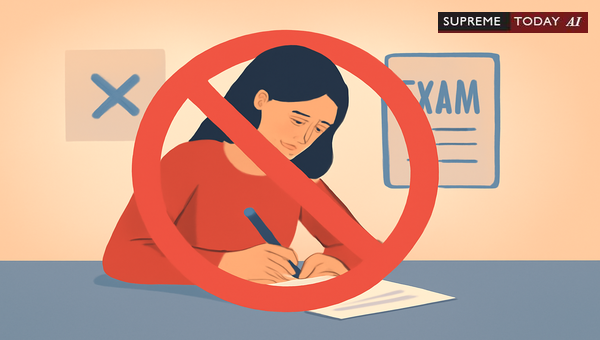
Defending Exam Malpractice & 419/420/467/471 Charges
In the high-stakes world of competitive exams, accusations of malpractice can derail careers and futures. Imagine being charged under —like the —alongside (), 420 (cheating), 467 (), and 471 (using forged documents). Common scenarios include possession of chits, impersonation, or alleged forged papers. A frequent query from accused students or professionals is: 3/6 exam act 419/420,467,471 charge bahas me kese bahas karen?—or, in English, How to argue these charges in court?
This post outlines proven defenses, drawing from key judicial precedents. Note: This is general information based on case law and not specific legal advice. Consult a qualified lawyer for your case.
Main Legal Strategy: Challenge Evidence and Intent
The cornerstone of defense in these cases is lack of direct evidence of malpractice, doubts on seizure or proof of materials, absence of from the start, and failure to prove specific contraventions like leakage or forgery2003 2 Supreme 386 2015 0 Supreme(AP) 250 2020 0 Supreme(Pat) 486 2009 4 Supreme 399. Courts often quash proceedings under or if allegations are vague, materials unrelated to the exam, or seizures dubious. Emphasize that the totality of evidence shows no guilt, and no stigma should attach without proof 2003 2 Supreme 386.
Key Defenses at a Glance
- Doubt on Seizure/Proof: Question if offending material (e.g., chit) was truly recovered from your possession—like from the floor vs. pocket. If unrelated to the exam or unused, withholding results is unjustified 2003 2 Supreme 386.
- No Specific Malpractice: Mere possession or negligence doesn't trigger Sections 3/6 (or analogous 5/8). Prove no divulgence, leakage, or sharing 2015 0 Supreme(AP) 250.
- Cheating/Forgery Lacks Ingredients: No fraudulent intent at inception for 420; no proven personation or forgery of 'valuable security' for 419/467/471 2009 4 Supreme 399.
- Procedural Safeguards: Use replies denying intent; signatures under fear don't imply guilt. Committees must consider explanations 2020 0 Supreme(Pat) 486.
Detailed Analysis: Building Your Case
Challenging Exam Act Charges (Sections 3/6)
Public exam acts penalize specific malpractices, not mere allegations. Argue absence of active use or leakage. In a ruling, proceedings were quashed due to controversy over a slip of paper: Whether found on floor or from pocket—Offending paper was neither related to exam nor used by candidate: We have some doubts if the material (slip of paper) was really seized in the manner in which it is alleged to have been seized. We leave the matter at that. The candidate cleared meritously, and direct results were ordered without stigma 2003 2 Supreme 386.
Analogous to AP Act Sections 5/8: Mere negligence in performing invigilation duties, does not attract the offence... In absence of any allegation that the petitioner herein has committed the offence set out in of the Act, she cannot be subjected to prosecution. Extend this to candidates—no proof of divulging info or means quashing 2015 0 Supreme(AP) 250.
In (Unfair Means Case) defenses, deny bringing materials: There was no intention from my side to use that piece of paper... I did not write anything using that piece of paper. Demand answer sheet evaluation; punishment can't bar merit-based results 2020 0 Supreme(Pat) 486.
Defending /420/467/471
For cheating (420/419), prove no dishonest intent from the initial promise: existence of a fraudulent or at the time of making initial promise... from the very beginning. No inducement in exam proxies or admit cards suffices 2009 4 Supreme 399. alone isn't cheating without .
Forgery (467/471) requires 'valuable security' like exam papers—isolated slips don't qualify. Other cases reinforce lack of evidence leads to acquittal. For instance, in a forgery-cheating case, the court acquitted due to no evidence connecting the revisionist with the person who had opened the account and presented the forged cheques2022 0 Supreme(UK) 200. Similarly, proceedings were quashed when ingredients weren't met: Offence under can only be initiated if registration officer... initiates prosecution... F.I.R. do not disclose that any criminal offence was committed2016 0 Supreme(All) 353.
In espionage-forgery contexts, convictions hinged on strong proof like witness testimonies—but lack thereof led to acquittals of co-accused 2016 0 Supreme(Del) 1960. Apply here: demand invigilator reports, CCTV for cross-examination.
Systemic vs. Isolated Incidents
Prosecution may claim possession equals intent—rebut with non-use and clean record. Courts limit actions to systemic leaks: Cancellation... justified only in cases where sanctity of exam is found to be compromised at a systemic level... Leak... restricted to isolated incidents... Material on record does not... substantiate allegation that there has been widespread malpractice. One chit? Insufficient 2024 5 Supreme 705.
Related precedents on charges show quashing for vague FIRs or unproven links, even in non-exam forgery cases under 419/420/467/468/471 2021 0 Supreme(All) 1170 2025 Supreme(Online)(Chh) 6210.
Exceptions, Limitations, and Counterarguments
- Systemic Leak: Possible cancellation, but isolated cases don't warrant it 2024 5 Supreme 705.
- Signed Form: Irrelevant if under duress: I was not ready to sign... but out of my natural fear... I signed2020 0 Supreme(Pat) 486.
- No Compensation: Quashing doesn't yield damages without malice 2003 2 Supreme 386.
Counter prosecution: They may allege —demand proof beyond possession.
Practical Recommendations
- File Quash Petition (S.482 CrPC/Art.226): Highlight seizure doubts, no use, prior clean exams.
- Bail/ Defense: Submit scripts; argue no guilt.
- Evidence Tactics: CCTV, witness cross-exam on recovery.
- Timeline: Pre-trial motions; appeal convictions citing precedents.
Key Takeaways
- Focus on evidence gaps and intent absence for quashing.
- Precedents like 2003 2 Supreme 386 show doubts alone can end cases.
- Isolated incidents rarely justify punishment.
Stay proactive—early legal intervention preserves futures. This overview draws from reported judgments; outcomes vary by facts. Seek professional counsel.
References
- 2003 2 Supreme 386: Quashing on seizure doubts/non-use.
- 2015 0 Supreme(AP) 250: No negligence/mere allegation.
- 2020 0 Supreme(Pat) 486: defenses/explanations.
- 2009 4 Supreme 399: intent requirements.
- 2024 5 Supreme 705: Systemic malpractice threshold.
- 2022 0 Supreme(UK) 200, 2016 0 Supreme(All) 353: Acquittals/quashing for lack of proof in forgery/cheating.












