Searching Case Laws & Precedent on Legal Query!
Scanned Judgements…!



Searching Case Laws & Precedent on Legal Query!
Scanned Judgements…!
Definition of Domestic Violence - Domestic violence under the Protection of Women from Domestic Violence Act, 2005, is broadly defined in Section 3. It includes acts, omissions, or conduct that cause harm or injury, including mental, physical, emotional, verbal, economic violence, or harassment related to dowry or unlawful demands ["2025 Supreme(Online)(All) 1915"], ["2024 Supreme(Online)(AP) 2172"], ["2022 Supreme(Online)(Kar) 44118"], ["2022 Supreme(Online)(Kar) 39196"], ["2022 Supreme(Online)(MAD) 11899"], ["P.Arun Prakash vs S.Sudhamary - Madras"], ["2024 Supreme(Online)(Ker) 83463"].
Respondent's Relationship - The respondent must be in a domestic relationship with the aggrieved person, which includes persons related by blood or marriage, or living together in a shared household. The law clarifies that any person in such a relationship can be liable under Section 3 ["2025 Supreme(Online)(All) 1915"].
Legal Proceedings and Reliefs - Proceedings under the Act can be initiated when domestic violence is disclosed in a complaint or petition. Reliefs sought under Sections 18-22 include protection orders, residence orders, monetary relief, and custody. The court examines the overall facts and circumstances to determine if acts qualify as domestic violence ["2024 Supreme(Online)(AP) 2172"], ["2025 Supreme(Online)(Mad) 61991"].
Scope and Limitations - Not all allegations qualify as domestic violence; the facts and conduct must meet the criteria under Section 3. For example, mere verbal or emotional abuse may not suffice unless it causes harm or harassment as defined. Some cases involve quashing complaints if allegations do not meet the legal definition ["2025 Supreme(Online)(Mad) 61991"].
Legal Procedure and Court Considerations - Courts are expected to handle domestic violence cases judiciously, with some cases being subject to revision or quashing under Section 482 Cr.P.C. if allegations are not substantiated or do not meet criteria. Family Courts and special courts for DV cases are involved in trial and enforcement ["2023 Supreme(Online)(MAD) 32566"].
Punishment and Enforcement - Breach of protection orders or any violation of orders under the Act can attract punishment, emphasizing the protective and punitive framework of the law ["2022 Supreme(Online)(MAD) 11899"].
Analysis and Conclusion:Cases related to domestic violence under the Protection of Women from Domestic Violence Act, 2005, involve a broad legal framework that defines domestic violence to include various acts causing harm—mental, physical, or economic—by persons in a domestic relationship. The law provides for civil remedies such as protection and residence orders, with the respondent's relationship to the aggrieved woman being central. Courts carefully evaluate allegations to determine if they meet the statutory criteria, and proceedings can be quashed if allegations are unfounded. The legal process emphasizes protection, enforcement, and appropriate punishment for violations, ensuring a comprehensive approach to addressing domestic violence ["2025 Supreme(Online)(All) 1915"], ["2024 Supreme(Online)(AP) 2172"], ["2022 Supreme(Online)(Kar) 44118"], ["2025 Supreme(Online)(Mad) 61991"], ["etc."].
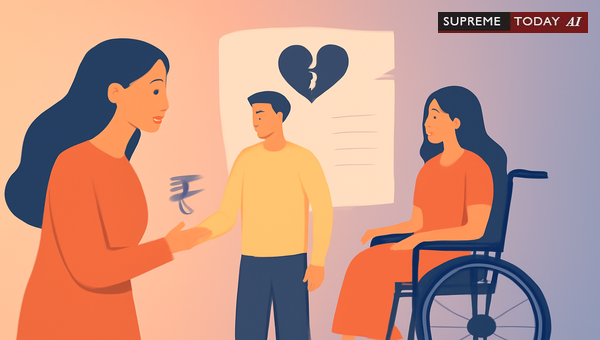
In family law disputes, scenarios like a wife filing cases of under and against her husband and in-laws, only to enter a new love marriage without divorcing, raise complex legal questions. What legal remedies are available to the husband and in-laws? This blog post analyzes the situation under Indian law, focusing on the , 2005 (PWDVA), provisions, and the implications of or relationships in the nature of marriage.
Note: This is general information based on case law and statutes. It is not specific legal advice. Consult a qualified lawyer for your case.
When a wife initiates proceedings for (typically under ) and (under or personal laws), she alleges harassment and financial dependency. However, if she subsequently enters a love marriage or live-in relationship without dissolving the first marriage, it opens doors for counter-remedies. This could constitute under , , or misuse of protective laws.
Courts emphasize a broad interpretation of domestic relationships under , which includes relationships in the nature of marriage. Yet, this does not shield the wife from consequences of her actions. Husbands can seek quashing of false cases, divorce, and even criminal action. 2025 0 Supreme(Gau) 435
PWDVA protects women in a , defined as living together in a —related by marriage or akin to it. Section 2(f) covers those who live or have, at any point of time, lived together. Judicially, this includes the , not just physical presence. In , the held that the words 'live or' include the , allowing claims even if the woman is absent but retains marital rights.
However, if the wife forms a new relationship, it may undermine her claims. Courts scrutinize genuine intent and prevent misuse.
An () includes any woman subjected to violence in a domestic setup, even divorced or separated ones. But remedies for respondents (husband/in-laws) include challenging the claim if the wife has abandoned it for a new life. The right to residence is equitable, rooted in her family contributions, per in .
Key takeaway: Husbands can argue the wife forfeited her by entering a new marriage-like relationship.
is claimable by wives, including divorced ones, if violence occurred during marriage. Courts award it based on —equal status considering earnings. In one case, the court noted the respondent was admittedly earning Rs.8,000/- per month and was also receiving under , stressing parties must prove actual incomes for fair quantum. 2025 Supreme(Online)(P&H) 1708
For husbands facing such claims:- Counter with wife's income/new relationship: If she's in a new love marriage, her partner's support may reduce or deny .- Post-divorce persistence: Claims survive divorce if violence is proved during marriage, but provides divorce grounds. 2018 0 Supreme(Gau) 436 2020 0 Supreme(Raj) 806
List of defenses:- Prove misuse of 498A (false dowry allegations).- File for divorce on / grounds ().- Seek adjustment based on her earnings. 2025 Supreme(Online)(P&H) 1708
Entering a love marriage without divorcing is ()—punishable by 7-10 years imprisonment. This is a strong remedy:- Criminal complaint: Husband can file FIR against wife and her new partner.- Divorce petition: Grounds under (, ).- Quash DV/498A cases: High Courts quash if proceedings are frivolous post-new relationship evidence.
PWDVA's liberal view of extends to her new setup, but doesn't bar husband's remedies. Courts clarify divorce doesn't end DV liability if violence predates it, yet new facts like shift equity. 2020 0 Supreme(Raj) 806 2018 0 Supreme(Gau) 436
DV Act focuses on bodily injuries per Section 3, as Perusal of , unambiguously clarifies that all such offences as contemplated are relatable to bodily injuries. Non-physical claims may falter.
Women have a in , expanded to beyond cohabitation. But equity cuts both ways—husband's contributions and wife's misconduct () are considered. in protects against unlawful eviction but allows challenges.
DV claims persist post-divorce if rooted in past violence. However:- New relationship impacts: Courts may deny residence/ if wife has alternative support.- Liberal interpretation aids protection but not abuse.
2025 0 Supreme(Gau) 435
Case insights:- Divorced women retain rights if violence proved. 2018 0 Supreme(Gau) 436- requires scrupulous proof of earnings.2025 Supreme(Online)(P&H) 1708
In-laws can seek discharge if no direct involvement proved.
In cases where a wife files and then enters a love marriage without divorce, husbands have robust remedies via charges, divorce, and case quashing. PWDVA offers broad protection but courts balance equity, scrutinizing misuse and earnings. 2025 0 Supreme(Gau) 435
2025 Supreme(Online)(P&H) 1708
Key takeaways:- includes , but new ties weaken claims.
- hinges on and proven need. 2025 Supreme(Online)(P&H) 1708- provides criminal and civil leverage. 2020 0 Supreme(Raj) 806- Seek prompt legal aid to counter false allegations.
This progressive jurisprudence promotes justice while curbing abuse. For tailored advice, contact a family law expert.
References:- 2025 0 Supreme(Gau) 435
2018 0 Supreme(Gau) 436 2020 0 Supreme(Raj) 806
2025 Supreme(Online)(P&H) 1708
#DowryLaw #FamilyLawIndia #LegalRemedies


The proceeding under Domestic Violence Act can be initiated when the domestic violence as mentioned in Section 3 of Domestic Violence Act is committed by the respondent who is living in domestic relationship with the aggrieved person. ... living together with aggrieved person in a shared household and then commits domestic violence in....

When, the complaint/petition discloses any domestic violence then the person aggrieved proceed against the respondent or against any person related to her or in domestic relationship. 8. ... The relief that claimed under Sections 18 to 22 of the Act, in pursuance of committing domestic violence under Section 3 of the Act. ... Definition of domestic violence#HL....

domestic violence by the respondent. ... … (g) “domestic violence” has the same meaning as assigned to it in section 3” Section 2(g) defines ‘domestic violence’ as is ... Section 2(g) defines what is domestic violence. These provisions read as follows: “2. Definitions. ... Domestic violence as defined under ....
domestic violence by the respondent. ... … (g) “domestic violence” has the same meaning as assigned to it in section 3” Section 2(g) defines ‘domestic violence’ as is ... Section 2(g) defines what is domestic violence. These provisions read as follows: “2. Definitions. ... Domestic violence as defined under ....

It was also only recorded by the Court that respondent No.1 was admittedly earning Rs.8,000/- per month and was also receiving maintenance under Domestic Violence Act. ... The rival claimants must scrupulously bring on record their actual respective earning capacities in order for the Court to arrive at quantum of maintenance which is just and fair in terms of principle of equistatus. ... We make it clear that maintenance in all c....

Section 3 of Domestic Violence Act is extracted hereunder: 3. Definition of domestic violence. ... Even the allegations that are made in Paragraph no.14, as rightly contended by the learned counsel for the petitioner, would not qualify or amount to “domestic violence” as defined under Section 3 of the Domestic Violence Act. a href="./.. ... In the ....

Violence Act Cases, Coimbatore. ... Violence Act Cases, Coimbatore. ... Respondents Prayer: Civil Revision Petition is filed under Article 227 of the Constitution of India, to call for the records in D.V.A.No.183 of 2022 on the file of the Special Court for Trial of Domestic Violence Act Cases ... The copy of the Domestic Violence#HL_EN....
Definition of domestic violence. ... Some of the allegations are categorized under verbal and emotional abuse, economical violence, dowry related harassment and other kinds of emotional violences in the complaint. ... In fact the Protection of Woman from Domestic Violence Act 2005 does not contemplate any limitation. ... The Act of 'Domestic Violence'....
Perusal of Section 3 of the Domestic Violence Act, unambiguously clarifies that all such offences as contemplated are relatable to bodily injuries and other related offences. ... the Family Courts Act and Domestic Violence Act. ... Conjoint reading of Section 44 of the Indian Penal Code and Section 3 of the Domestic Violence Act portrays the nature of injuries for initi....

to her to meet any unlawful demand for any property or valuable security or is on account of failure by her or any person related to her to meet such demandDefinition of domestic violence. ... Section 3 of the Act 2005, which is extracted above, defines ‘Domestic Violence’. ... The standard of proof is different in civil and criminal cases. In civil cases it is preponde....


An indispensable Tool for Legal Professionals, Endorsed by Various High Court and Judicial Officers
Please visit our Training & Support
Center or Contact Us for assistance

Scan Me!
India’s Legal research and Law Firm App, Download now!


For Daily Legal Updates, Join us on :



 Back to top


