


What Is ? Unmasking India's Cyber Scam
In an era dominated by digital communication, a new threat has emerged that's preying on fear and urgency: . If you've received a frantic call from someone claiming to be a police officer accusing you of a crime and demanding immediate payment to avoid arrest, you might have encountered this scam. But what is exactly? Is it a legitimate law enforcement tactic or a sophisticated cyber fraud?
This blog post dives deep into the concept, separating myth from reality. We'll explore its definition as a scam, contrast it with genuine digital tracking tools used by Indian authorities, examine the legal framework, and provide practical advice to protect yourself. Note: This is general information, not legal advice. Consult a qualified lawyer for personalized guidance.
The True Nature of : A Cybercrime Tactic
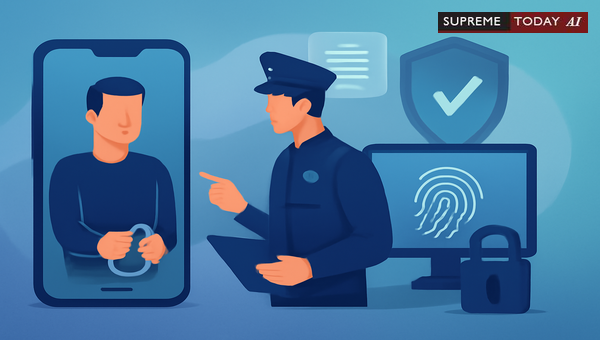
refers to a scam or cybercrime tactic where perpetrators impersonate law enforcement authorities to threaten individuals with arrest through digital means, often to extort money or personal information. It is a sophisticated form of cyber fraud that leverages digital communication channels to create fear and manipulate victims. 2025 Supreme(Online)(Bom) 156097 2025 0 Supreme(Raj) 1205
Unlike traditional scams, exploits the credibility of institutions like the police or . Scammers contact victims via calls, WhatsApp, or emails, alleging involvement in serious crimes like money laundering or terrorism. They demand ransom payments, often in or via , under threats of immediate . Sources highlight that the applicant was not involved in the Cyber Crime and cheating by . No offence, as alleged is committed by the present applicant. 2025 Supreme(Online)(MP) 9689
How Scams Operate
Scammers follow a calculated playbook:- Initial Contact: A call from a spoofed number posing as a government official, claiming your involvement in a case (e.g., drug trafficking or financial fraud).- Fear Induction: They share evidence like fake case numbers or manipulated audio/video, insisting on secrecy to avoid embarrassment.- Escalation: Victims are told they're under digital surveillance and must stay on video calls, mimicking custody. Demands escalate to payments for bail or clearance.- Payment Extraction: Funds are transferred to untraceable accounts.
Scammers typically contact victims via calls or electronic messages, falsely claiming that the individual is under investigation or involved in criminal activity, and threaten immediate arrest unless certain demands (like ransom payments) are met. 2025 0 Supreme(Raj) 1205
These scams target all demographics, with rising cases reported across India. like helps investigators trace perpetrators: is, by definition, data about...
2024 Supreme(US)(ca2) 196
Legitimate Digital Tools in Indian Law Enforcement
Confusion arises because authorities do use digital technology for tracking offenders, but this is worlds apart from scams. in the Indian judiciary system refers to using data systems to track (POs) and criminals efficiently.
The number of POs in surged from 13,500 in to over 28,000 in , prompting proposals for dedicated cells for tracking. These facilitate real-time data exchange among states. 2021 0 Supreme(Del) 2113
Key initiatives include:1. Digital Police Portal: Launched by the in , it connects police services and allows public access to PO details for identification. 2021 0 Supreme(Del) 8312. Evidence Collection: Digital data like call records is vital: plays a crucial role in criminal investigations. 2015 0 Supreme(Kar) 746 2019 0 Supreme(Cal) 9453. Challenges: Fake profiles and cybercrimes complicate efforts. 2021 0 Supreme(HP) 506
Real arrests follow strict protocols, not video threats.
Legal Framework Governing Arrests in India
Indian law does not recognize as house arrest via video. Arrests are governed by the , soon transitioning to .
- : Possible only with recorded reasons. When police may ... Arrest may be made only if the Investigating Agency records specific reasons as to why the arrest is necessary. 2025 6 Supreme 227
- Summons: Under , can be electronic with digital signature, but non-compliance doesn't trigger automatic arrest.
- : Allows arrests in exceptional circumstances, potentially including digital tracking. 2023 0 Supreme(Mad) 1441
- Women Arrests: Special rules apply; police cannot touch unless female officer present. 2018 0 Supreme(Bom) 719
Courts emphasize warrants: Accordingly, the respondents should not arrest the petitioner for such, without having obtained a first. 2023 Supreme(SRI)(CA) 863
admissibility requires scrutiny: Hence, the digital information has to be treated with due suspicion and more stringent test has to be applied to it... 2018 0 Supreme(P&H) 2623
Challenges and the Role of
While technology aids enforcement, it fuels scams. reveals file origins: GLEISNER, III, EDISCOVERY & § 4:13 types ()...
Investigations rely on preserved data: examined digital material that was responsive to the search ... 2024 Supreme(US)(ca2) 196
Sections like 24/25/29/35 of the Digital laws address cyber offenses.
- Supreme(BD)(SC) 14255
Precautions and Countermeasures
Protect yourself:- Verify Calls: Real police don't demand payments over phone/video. Contact local station directly.- Preserve Evidence: Don't delete calls/messages; report to cybercrime.gov.in.- Awareness: Legal frameworks have been strengthened worldwide to combat scams. Victims are advised not to delete or modify ... 2025 0 Supreme(Raj) 1205- Inter-State Cooperation: Recommended for tracking. 2021 0 Supreme(Del) 2113
Recommendations:- Invest in police training and portals.- Clear guidelines for . 2021 0 Supreme(Del) 831
Key Takeaways
- is primarily a scam, not official procedure. Legitimate tracking exists but requires warrants.
- Always demand verification; threats without process are red flags.
- is crucial for busting scams and real cases.
- Stay vigilant: Report suspicious activity immediately.
scams exploit digital fears, but knowledge of real laws empowers you. By understanding the divide between fraud and lawful enforcement, you can navigate safely. Share this to spread awareness!
Word count: 1028. Sources cited are for informational purposes; verify with official channels.
#DigitalArrestScam #CyberFraudIndia #LegalAwareness















