




Can Company Directors Be Held Vicariously Liable for a Driver's Causing Death?
Introduction
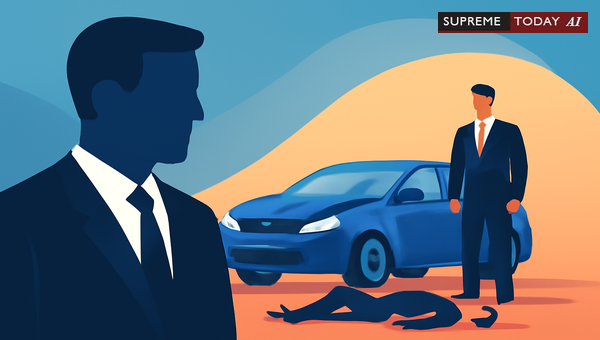
Imagine a tragic accident where a company-owned vehicle, driven by an employee, results in a fatality due to rash and negligent driving. The question arises: In case of death by of driver, whether directors of the company be held vicariously liable? This is a critical concern for business owners, directors, and legal professionals in India, where corporate liability intersects with criminal law under provisions like for causing .
While companies can be held vicariously liable for employees' acts within the scope of employment, directors are not automatically on the hook. Indian courts have consistently emphasized that personal liability hinges on specific roles and responsibilities. This blog post delves into the key principles, relevant case laws, and exceptions, drawing from established precedents to provide clarity. Note: This is general information, not legal advice. Consult a qualified lawyer for specific cases.
Overview of for Directors
The cornerstone of corporate law in India is the principle of : a company is distinct from its directors and shareholders. Directors, especially non-executive ones not involved in daily operations, are generally shielded from personal liability for the company's torts or crimes. However, may attach if directors are proven to be in charge of and responsible for the conduct of the business of the company at the time of the offense.
This principle, often invoked under , extends analogously to other statutes, including those governing rash driving and negligence. Mere designation as a director does not imply liability. As established in precedents, directors are not automatically liable for the company's offenses unless they are shown to be in charge of or responsible for the conduct of the company's business at the time the offense was committed. 2022 6 Supreme 740
In the context of a driver's negligent act causing death, the company may face prosecution, but directors' liability requires evidence linking them to the oversight of the vehicle's operation or transport affairs.
Key Legal Principles Governing Director Liability
1. Requires Active Responsibility
Directors can only be held vicariously liable if they were in charge of and responsible for the company's business at the relevant time. By reason of the said provision, a person although is not personally liable for commission of such an offence would be vicariously liable therefor. ... Hence, the Company and its two Directors being incharge of the day to day affairs of the first accused company are liable... 2024 0 Supreme(Mad) 1841
Similarly, It was, therefore, necessary, to aver as to how the director of the company was in charge of of the company or responsible to the affairs of the company. 2022 7 Supreme 899
For a company driver, this means proving the director managed fleet operations, driver hiring, or compliance with road safety protocols.
2. Specific Allegations Are Mandatory
Complaints must contain specific averments about the director's role. General claims like they are directors fall short. Directors Not Responsible for Daily Affairs - Merely holding the position of director does not automatically entail liability under the NI Act or similar statutes unless they are in charge of and responsible for the conduct of the company's business at the relevant time. 2025 0 Supreme(Ori) 68 2024 0 Supreme(Guj) 769 2025 0 Supreme(Del) 733 2023 0 Supreme(AP) 937
3. Protection for
, focused on governance rather than operations, are typically not liable. , who do not engage in the daily operations of the company, are typically not liable for offenses committed by the company. Their role is more about governance rather than management.
2022 6 Supreme 740
Non-executive or , who do not participate in day-to-day management, are generally not liable unless evidence shows their involvement or responsibility for the specific offence. 2025 0 Supreme(Del) 733 2025 0 Supreme(Ori) 68
4. on Prosecution
The prosecution bears the onus to demonstrate responsibility. The lies on the prosecution to establish that a director was in charge of and responsible for the company's conduct at the time of the offence. Without such proof, liability cannot be attributed. 2025 0 Supreme(Ori) 68 2024 0 Supreme(Guj) 769
5. Exceptions: Fraud, , or Direct Involvement
Liability may arise in cases of fraud, , or gross negligence. Directors may be held liable if they are found to have engaged in fraudulent activities or if they have neglected their duties to the extent that it constitutes . 1986 0 Supreme(Ori) 166
The ex-directors are guilty of and ... The directors who were controlling the affairs of the company are liable to the company jointly and severally. 2006 0 Supreme(Raj) 3126
Even former directors may escape if they ceased involvement before the incident: It is not in dispute that various respondents ceased to be directors from dates... 2014 0 Supreme(AP) 261
Relevant Case Law Insights
Managing Director's Liability: A managing director cannot be held liable for an offense committed by the company without an allegation that he was responsible for the day-to-day business affairs. 1994 0 Supreme(P&H) 741
: The clarified, are not involved in daily affairs and thus cannot be held liable unless specific involvement is demonstrated.
In-Charge Directors: Even an individual not holding a particular designation in the Company, but who was at the helm of affairs at the relevant time can be held liable. 2023 0 Supreme(Del) 4286
Fraud Cases: Directors can be held liable if they defraud the public using the corporate structure of the company.
Company vs. Directors: The company is liable for prosecution despite non-prosecution of the director or Directors responsible for the management of the affairs of the company. 2008 0 Supreme(SC) 806
In driver negligence scenarios, courts apply similar scrutiny, quashing proceedings against directors lacking transport oversight.
Additional Context from Precedents
Under analogous laws, directors of private companies may face broader responsibility: Even under the , the Directors of a Private Company are liable and responsible for the running of the affairs of a Company. 2021 0 Supreme(Ker) 164
The defendants No.2, 3 and 4 are the Directors of the Company and are responsible for the day to day affairs of the company and are liable for the same. 2018 0 Supreme(P&H) 4496
However, for non-managing directors, under Section 141 of the NI Act applies when a person was in charge of and responsible for the company's conduct; absence of such responsibility means no liability. 2025 0 Supreme(Guj) 1541
2023 0 Supreme(AP) 937
Specific averments or evidence are necessary to prove a director's responsibility; mere assertions are insufficient. 2025 0 Supreme(Ori) 68 2025 0 Supreme(Del) 733
Conclusion and Key Takeaways
In summary, directors not responsible for daily affairs, particularly non-executive ones, cannot be held personally liable for a company driver's causing death unless specific evidence shows they were in charge of relevant operations. The legal framework prioritizes proof of active involvement over positional titles.
Key Takeaways:- Require Specific Proof: Complaints must detail directors' roles in vehicle/driver management.- Distinguish Roles: Executive directors face higher scrutiny than non-executives.- Exceptions Apply: Fraud or can pierce protections.- Proactive Steps: Companies should document director responsibilities clearly; directors, maintain records of non-involvement.
References: 2022 6 Supreme 740 1989 0 Supreme(Cal) 539
1986 0 Supreme(Ori) 166 1994 0 Supreme(P&H) 741 2024 0 Supreme(Mad) 1841 2022 7 Supreme 899 2023 0 Supreme(Del) 4286 2025 0 Supreme(Ori) 68 2024 0 Supreme(Guj) 769
This analysis underscores the nuanced balance in Indian corporate criminal liability. For tailored advice, seek professional legal counsel.
#DirectorLiability, #VicariousLiability, #CorporateLawIndia















