


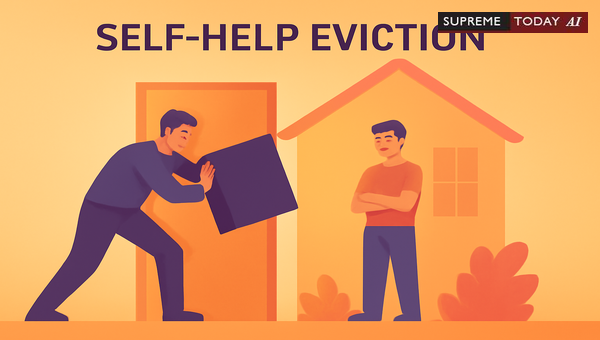
No Dispossession Without
Disclaimer: This article provides general information on legal principles and is not a substitute for professional legal advice. Consult a qualified lawyer for advice specific to your situation.
In property disputes, a fundamental question often arises: No One should Dispossess Without Authority of Law Even the Possession of Person is Not Lawful. This principle underscores a cornerstone of the —no individual, not even the true owner, can forcibly evict or dispossess someone from property without following due legal procedures. Whether the possession is lawful or not, like force or clandestine actions are strictly prohibited.
This blog post explores this vital legal doctrine, drawing from key judicial precedents and analyses. We'll break down the main findings, key points, detailed explanations, exceptions, and practical recommendations to help you navigate possession disputes effectively.
The Core Legal Principle: Protection Against Unauthorized Dispossession
The law firmly establishes that dispossession must occur only through the authority of law. As articulated in multiple judgments, no person, including those in possession, should be dispossessed without following the 1991 0 Supreme(SC) 472 1973 0 Supreme(SC) 338 2006 6 Supreme 706. Even if possession lacks legal title or is wrongful, forcible removal contravenes the .
For instance, the in 1991 0 Supreme(SC) 472 held: No one including the true owner has a right to dispossess the trespasser by force if the trespasser is in ... unless he is evicted in due course of law. This protects , which refers to continuous and peaceful occupation, regardless of its origin.
Similarly, 2018 0 Supreme(AP) 795 reinforces: The law respects possession even if there is no title to support it... No one is permitted to take law in one's own hands and to dispossess the person in actual without due course of law.
Key Points from Judicial Precedents
Here are the essential takeaways:
- Dispossession without authority of law is prohibited, regardless of the possession's legality 1991 0 Supreme(SC) 472 1973 0 Supreme(SC) 338 2006 6 Supreme 706.
- requires a legal basis (e.g., ownership, lease), distinguishing it from mere protected against wrongful dispossession 1991 0 Supreme(SC) 472 1995 0 Supreme(SC) 799 2006 6 Supreme 706.
- Self-help or forcible dispossession is discouraged; legal procedures must be followed 1991 0 Supreme(SC) 472 1973 0 Supreme(SC) 338.
- Even cannot be forcibly taken; due process is paramount 1991 0 Supreme(SC) 472 1973 0 Supreme(SC) 338.
- Law respects possession sans title, but no one can act as judge in their own case 2016 0 Supreme(P&H) 2491 1987 0 Supreme(Del) 310.
These principles prevent lawlessness and ensure disputes are resolved judicially.
Detailed Analysis: Dispossession Through Due Process
Settled vs.
Possession is categorized into types: (backed by title, lease, or statute) and juridical/ (protected against force but not conferring ownership). A tenant holding over post-lease expiry may enjoy protection but lacks 2006 6 Supreme 706.
2023 0 Supreme(UK) 283 clarifies: The law ought not to benefit a person who in a clandestine manner takes possession of the property of the owner in contravention of law... Yet, even such possessors in settled occupation cannot be dispossessed summarily.
Prohibition on
Courts repeatedly condemn vigilante actions. In 1991 0 Supreme(SC) 472, the object of protective provisions like is to discourage people from taking law into their own hands. Echoing this, 2016 0 Supreme(Cal) 1005 states: No person is allowed to take the law in his own hand and dispossess the person from without following .
2016 0 Supreme(P&H) 2491 adds: No-one is permitted to take law in one's own hands... No person can be allowed to become a judge in his own case.
Judicial Opinions Reinforcing the Rule
- in 1973 0 Supreme(SC) 338: The possession of a licensee, though unlawful, is protected until he is lawfully ejected.
- 1987 0 Supreme(Del) 310: No person can be allowed to become a judge in his own case.
- Additional sources like 2024 0 Supreme(Pat) 91
- Current Civil Cases
emphasize courts protecting via and restoration against even true owners.
Exceptions and Limitations
While broad, protections have boundaries:
- Unlawful acquisition (e.g., land grabbing) offers no shield against legal action, but dispossession still requires process 2004 4 Supreme 364 2023 0 Supreme(UK) 283.
- Protected categories like holdover tenants or licensees need court orders for eviction 1991 0 Supreme(SC) 472 2006 6 Supreme 706.
- Illegal dispossession by authorities without notices or orders is invalid 2024 Supreme(Online)(TEL) 1785 2025 0 Supreme(AP) 572.
- claims demand proof of continuous, hostile occupation, not automatic rights from unauthorized stay 2023 0 Supreme(Kar) 690.
Self-help remains universally prohibited 2018 0 Supreme(AP) 795 2006 0 Supreme(Cal) 301.
Legal Remedies and Court Oversight
Victims of illegal dispossession can seek:- to restore possession.- Damages for unlawful acts.- under constitutional provisions for due process violations 2025 0 Supreme(AP) 572 1988 0 Supreme(SC) 337.
intervene to curb arbitrary evictions, ensuring powers are exercised lawfully 1974 0 Supreme(SC) 257.
Practical Recommendations
- For owners/landlords: Obtain court orders or eviction notices; avoid force.
- For possessors: Document to claim protection.
- For authorities: Follow statutory procedures strictly.
- Always prioritize legal channels to uphold the .
Conclusion: Upholding the
In summary, the judiciary consistently affirms that no one should be dispossessed without authority of law, even if their possession is not lawful. This doctrine, rooted in precedents like 1991 0 Supreme(SC) 472 1973 0 Supreme(SC) 338, fosters order and fairness. Possession, particularly if settled, enjoys interim protection until lawful eviction.
By adhering to due process, we prevent chaos and respect constitutional safeguards. If facing a property dispute, seek expert guidance promptly.
References
- 1991 0 Supreme(SC) 472: Core on due process.
- 1973 0 Supreme(SC) 338: protection.
- 2006 6 Supreme 706: Lawful vs. .
- 2004 4 Supreme 364: Unlawful occupation.
- 1987 0 Supreme(Del) 310: No self-judging.
- Additional: 2018 0 Supreme(AP) 795, 2016 0 Supreme(P&H) 2491, 2023 0 Supreme(UK) 283, etc.















