


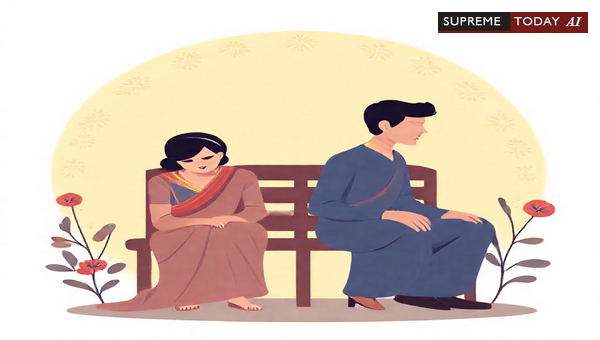
What Compensation Can a Divorced Wife Claim From Her Husband for Cruelty Suffered During Marriage?
A question that arises frequently in Indian matrimonial disputes is whether a divorced wife can seek compensation from her husband for the cruelties she suffered at his hands during the marriage. The short answer, under Indian law, is yes — though the route to that compensation runs through specific statutory provisions and depends on proving cruelty to a particular legal standard. This article explains how cruelty functions as a ground for divorce, how compensation flows through alimony and maintenance, and what a wife must actually establish to succeed.
Cruelty as a Ground for Divorce and Compensation
Cruelty is a recognised ground of divorce under of the . A wife who obtains a on this ground can simultaneously seek under of the same Act — this is the principal compensation mechanism available to a divorced wife. In one case cited before the Supreme Court, a on the ground of cruelty was coupled with a one-time lump sum alimony award of Rs. 40 Lakhs to the wife 2014 0 Supreme(SC) 700.
Importantly, cruelty may be mental or physical, intentional or unintentional. The Supreme Court in clarified that cruelty is a of one which is adversely affecting the other 1987 0 Supreme(SC) 852. Crucially, intention is not an essential element — relief cannot be denied merely because there was no deliberate or wilful ill-treatment 1987 0 Supreme(SC) 852 and 1973 0 Supreme(Del) 54.
The Test
Not every unpleasant episode qualifies as cruelty. The conduct complained of must be — something more serious than the — such that the petitioner cannot reasonably be expected to live with the other spouse 2007 2 Supreme 498 and 2005 1 Supreme 626. Physical violence is not absolutely essential; a consistent inflicting immeasurable mental agony and torture, including verbal abuse and insults disturbing mental peace, may well suffice 2007 2 Supreme 498.
The Supreme Court in declined to frame a comprehensive definition, observing that human behaviour is too complex to assimilate in one definition — what is cruelty in one case may not be in another 2025 0 Supreme(HP) 120 and 2007 3 Supreme 26. That judgment nonetheless listed illustrative instances of , including sustained unjustifiable conduct affecting physical and mental health, unilateral refusal of intercourse without valid reason, unilateral decisions not to have children, and long periods of continuous separation indicating the matrimonial bond is beyond repair 2025 0 Supreme(HP) 120.
Beyond the Hindu Marriage Act framework, courts have recognised cruelty in broader contexts. Economic abuse — such as coercing a spouse to transfer money — has been treated as justifying divorce 2025 0 Supreme(Ker) 760. Under the , Section 22 expressly empowers courts to award monetary compensation for domestic violence; courts have upheld awards of Rs. 5 Lakhs against husbands
M. A. Rafi Ahamed VS Vaseela Banu
2024 0 Supreme(Mad) 2306.Criminal Conviction Is Not Required
A common misconception is that a wife must first obtain a criminal conviction under before claiming cruelty in matrimonial proceedings. The Supreme Court in rejected this, holding that the in a criminal case under is distinct from the standard in a divorce petition under Section 13(1)(ia) of the Hindu Marriage Act 2022 0 Supreme(Telangana) 537.
The converse also holds: an acquittal in criminal proceedings does not by itself defeat a cruelty claim — nor, symmetrically, does acquittal of the wife automatically establish cruelty by the husband 2016 0 Supreme(P&H) 1393. That said, criminal proceedings under do result in convictions in appropriate cases, and courts have enhanced fines as compensation to cruelty victims while considering the husband's financial capability 2016 0 Supreme(MP) 1150.
A divorced wife can also seek maintenance under , which the courts have confirmed is available even to a divorced wife against her former husband 2019 0 Supreme(Guj) 399.
and Practical Limitations
The burden lies squarely on the party alleging cruelty. Vague allegations without dates, incidents, or corroboration will fail — as one judgment put it, flimsy acts or omission or using some threatening and harsh words that occasionally happen in day-to-day conjugal life cannot justify divorce 2025 0 Supreme(Pat) 194. Other key limitations include:
- Isolated incidents insufficient: married life must be reviewed as a whole; a few instances over years do not amount to cruelty 2025 0 Supreme(HP) 120.
- Sensitivity alone is not enough: cruelty is judged by the , not the petitioner's personal sensitivity 2002 1 Supreme 90.
- False allegations cut both ways: unfounded allegations of unchastity or dowry harassment made against a spouse can themselves constitute 2025 0 Supreme(Jhk) 461
Prasad Moorthygari VS Ram Kumari
. - Cumulative conduct matters: acts small in isolation may, taken cumulatively over time, fall within the purview of cruelty 2011 0 Supreme(Mad) 3122.
Steps a Wife Should Consider Taking
- Document specific incidents — dates, witnesses, messages, medical reports — rather than relying on generalized assertions 2007 0 Supreme(Ker) 659.
- File for divorce and alimony together — a petition under coupled with a claim under 2014 0 Supreme(SC) 700.
- Present the matrimonial relationship in totality, showing the of the husband's conduct 2011 0 Supreme(Mad) 3122.
- Consider parallel remedies — maintenance under Section 125 CrPC, or compensation under where applicable 2019 0 Supreme(Guj) 399
M. A. Rafi Ahamed VS Vaseela Banu
.
Key Takeaways
A divorced wife can generally seek compensation for cruelty through permanent alimony under of the , maintenance under Section 125 CrPC, or compensation under the . A criminal conviction is not a prerequisite, but the cruelty must be and proved with cogent, specific evidence. Because cruelty is assessed case-by-case on the totality of the matrimonial life, consulting experienced matrimonial counsel is strongly advisable — this article is general information and does not constitute legal advice for any individual case.
#DivorceLaw #CrueltyInMarriage #HinduMarriageAct #Alimony #MatrimonialDisputes












