


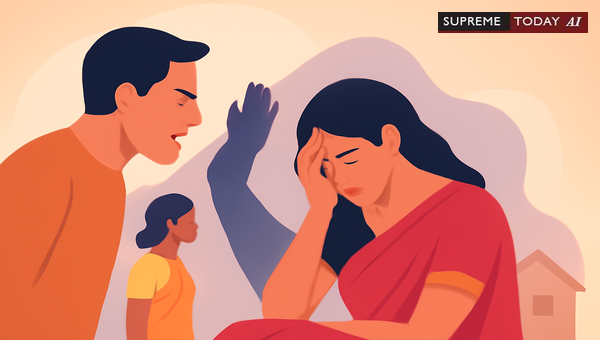
Wife's Demand for Separation from In-Laws: Does It Amount to Cruelty for Divorce?
In many Indian households, living with in-laws is a cultural norm, but tensions can arise when a wife demands to live separately with her husband alone. This raises a critical legal question: Does a wife demanding separation from her parents-in-law and wanting to stay with her husband alone amount to cruelty, allowing divorce in favor of the husband on that ground?
This issue frequently surfaces in matrimonial disputes under the , particularly on cruelty. While such demands are not automatically cruelty, persistent and unjustified conduct causing mental agony may tip the scales. This blog delves into the nuances, drawing from judicial precedents and legal analysis to provide clarity.
Understanding Cruelty in Matrimonial Law
Cruelty, a key ground for divorce, includes both physical and mental forms. Courts define it as conduct that causes of harm or makes . As held, Cruelty can be mental or physical, and all instances must be viewed cumulatively 2013 2 Supreme 80. The behavior must be grave, weighty, and persistent enough to make living together intolerable 2013 2 Supreme 80 1978 0 Supreme(Raj) 38.
Ordinary wear-and-tear of marriage, like minor disagreements, doesn't qualify. Instead, it requires acts inflicting significant mental pain or fear 2013 2 Supreme 80.
: Key Elements
- Cumulative Assessment: Isolated incidents may not suffice; courts evaluate the overall matrimonial conduct 2013 2 Supreme 80.
- : If the spouse fears harm to health or life, it's cruelty 1978 0 Supreme(Raj) 38.
- : Long separations with discord can reinforce cruelty claims 2013 2 Supreme 80 2018 0 Supreme(Jhk) 344.
Wife's Demand for Separation: Per Se Cruelty or Not?
Demanding separation from in-laws and insisting on living nuclear-style isn't inherently cruelty. Many modern couples prefer this without discord. However, context matters. If accompanied by acts causing mental harassment, humiliation, or fear—such as threats, abuse, or persistent harassment, it may constitute cruelty
.
For instance, if the wife's demand intends to harass the husband or his family, causing mental suffering, courts may view it gravely 2013 2 Supreme 80. Persistent refusal to live jointly, especially with harassment, can make cohabitation impossible
.
Insights from Case Law
Judgments illustrate this balance:- In one case, the husband's divorce petition under was allowed where the wife's unwillingness to stay contributed to cruelty findings 2023 0 Supreme(MP) 220. The court noted, The wife is not much willing to stay with the husband. Under these circumstances... the learned rightly has granted decree of divorce on the ground of cruelty 2023 0 Supreme(MP) 220.- Another upheld divorce for cruelty and when the wife refused cohabitation post-childbirth, amid family tensions 2023 0 Supreme(Chh) 35.- Long-term separation (e.g., over years) with refusal to reconcile has been deemed , leaving no option for the husband then to file a petition for divorce 2021 0 Supreme(Kar) 895.
Conversely, mere general allegations without evidence fail. Courts dismiss if no specific acts of harassment are proven 2008 0 Supreme(Mad) 1700.
Long Separation and
Extended separations exacerbate claims. Long separation, especially with continued discord and mental harassment, can be grounds for divorce due to 2013 2 Supreme 80 2018 0 Supreme(Jhk) 344. In cases spanning 10+ years, wives' refusals for mutual divorce despite a 'dead' marriage have justified unilateral relief 2024 0 Supreme(P&H) 1374.
Related precedents show:- Divorce granted to husband on cruelty where wife sought separation to avoid in-laws, causing emotional distress 2024 0 Supreme(MP) 334 2024 0 Supreme(P&H) 1374.- False reports or dowry demands by wife further solidify cruelty 2008 0 Supreme(Raj) 1039.
Application to Real Scenarios
Consider a wife pressuring separation without abuse: Courts typically won't grant divorce solely on this
. But if she files false complaints, threatens, or persistently harasses, it shifts to cruelty 2013 2 Supreme 80.
Husbands succeed when proving:- Mental Harassment: Threats or humiliation tied to the demand.- : Refusal to join despite opportunities 2023 0 Supreme(Chh) 380.- Cumulative Acts: Viewed holistically 1978 0 Supreme(Raj) 38.
One ruling affirmed, Admission on the part of wife regarding her unwillingness to join back her husband would itself amount to 2021 0 Supreme(Kar) 895. Yet, if the wife expresses willingness to live with husband (sans in-laws) without malice, relief may be denied
.
Additional Factors from Judicial Trends
Courts increasingly recognize nuclear family preferences but scrutinize motives. Pressures from in-laws can be cruelty against the wife, but her retaliatory isolation tactics may boomerang 2018 0 Supreme(Chh) 96. False allegations or dowry claims by wives have led to husbands' favorable decrees 2021 Supreme(Online)(Gau) 391.
In appeals, questions of law favoring husbands have resulted in divorce allowances 2023 0 Supreme(Mad) 1854. Family Courts often grant relief when evidence shows the marriage is untenable 2023 0 Supreme(Chh) 380.
Key Takeaways and Recommendations
- Not Automatic: Separation demand alone rarely suffices; needs harassment proof
.
- Document Everything: Gather evidence of threats, refusals, or mental agony.
- Holistic View: Courts assess full circumstances 2013 2 Supreme 80.
- Seek Counseling: Reconciliation attempts strengthen cases.
Disclaimer: This is general information based on precedents and not specific legal advice. Consult a qualified lawyer for personalized guidance.
In conclusion, while a wife's desire for privacy isn't cruelty per se, persistent conduct eroding the marriage may justify divorce for the husband. Judicial trends lean toward relief in irretrievable cases, prioritizing mental peace.
References
- 2013 2 Supreme 80: via cumulative acts.
- 1978 0 Supreme(Raj) 38: Grave, persistent conduct.
: Harassment accompanying demands.
- 2023 0 Supreme(MP) 220: Unwillingness as cruelty factor.
- 2024 0 Supreme(P&H) 1374: Long separation and refusal.















