


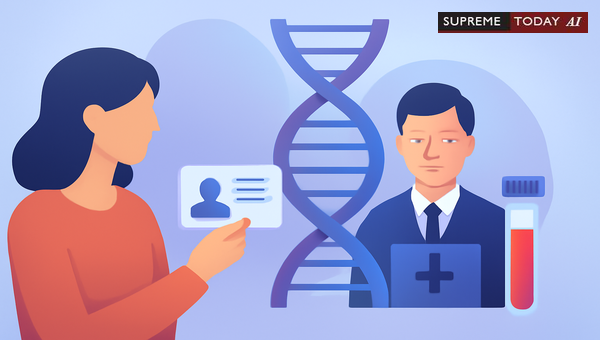
DNA Testing with Deceased Relatives in India: Legal Guide
In cases involving unidentified bodies, disputed inheritances, or paternity claims after someone's passing, DNA testing between relatives of the deceased often becomes pivotal. The question DNA Testing between Relatives Deceased arises frequently in family law, criminal investigations, and succession disputes in India. While DNA technology offers near-certain proof of biological ties, courts approach such tests with caution, balancing scientific reliability against privacy rights and procedural fairness.
This guide outlines the key legal principles, precedents, and practical considerations under Indian law. Note that this is general information based on judicial trends and should not be taken as specific legal advice—consult a qualified lawyer for your situation.
Overview of DNA Testing's Role
DNA testing is crucial for identifying deceased individuals when traditional methods like visual recognition fail due to decomposition or disfigurement. Courts recognize its scientific reliability for establishing biological relationships in criminal cases, paternity disputes, and inheritance claims. DNA tests are recognized as a reliable method for establishing biological relationships 2019 8 Supreme 689 2020 0 Supreme(MP) 927.
Failure to conduct or preserve DNA samples can weaken prosecutions or lead to identity disputes. For instance, proper preservation ensures samples reach accredited labs, avoiding evidentiary challenges 2021 0 Supreme(P&H) 617 2021 0 Supreme(Raj) 159.
Key Legal Principles and Importance
Identification of the Deceased
In criminal investigations, DNA matching with relatives' samples conclusively proves identity. The identity of the dead body was conclusively established from the DNA testing results of the skin sample of the body which matched with the blood samples of the biological sister of the deceased 2017 0 Supreme(UK) 291 2017 3 Supreme 709. Such matches, corroborated by dental records or other evidence, strengthen circumstantial cases.
Courts stress that neglecting DNA testing may hinder justice, especially in unidentified body cases 2021 0 Supreme(P&H) 617 2023 0 Supreme(Bom) 1198.
Establishing Biological Relationships
For living relatives claiming ties to the deceased—such as in succession or maintenance claims—DNA tests provide vital evidence. DNA parentage testing may provide evidence to show that a person has a biological connection with a deceased person and can be a proof in support of a succession claim 2013 0 Supreme(P&H) 1001. This is particularly relevant in where siblings or children dispute shares.
Judicial Precedents on Ordering DNA Tests
Indian courts do not order DNA tests routinely. A strong is required, with the burden on the party seeking the test. In Teeku Dutta v. State (2004 SCC Online Del 31), affirmed by the in , the denied a brother's application to test a deceased's daughter's paternity, holding that DNA test is not to be directed as a matter of routine but only in deserving cases 2023 0 Supreme(P&H) 2543 2023 0 Supreme(P&H) 1152.
Similarly, in a case (), the approved discretion but emphasized limits 2023 0 Supreme(P&H) 2543. Courts must ensure that orders for DNA tests are justified by a demonstrated need and should not infringe on privacy without necessity 2023 0 Supreme(P&H) 2543.
Privacy and Constitutional Safeguards
(right to privacy) and () factor heavily. Courts weigh truth-seeking against stigma or intrusion. The right to privacy was deemed not to outweigh the necessity for a fair adjudication of rights in the partition context 2024 0 Supreme(Mad) 2376, yet tests aren't compelled lightly.
In partition suits, DNA tests may be ordered if parentage is contested: The court upheld the Trial Court's order directing the DNA tests, emphasizing the necessity of establishing claims to property through appropriate means 2024 0 Supreme(Mad) 2376.
Under , birth during marriage presumes legitimacy, rebuttable only with strong evidence—not routine DNA orders 2013 0 Supreme(P&H) 1001.
Procedural Considerations
Court Authority and Discretion
Courts may order tests via if a exists, balancing parties' interests 2020 0 Supreme(MP) 927 2014 0 Supreme(P&H) 1697. Investigating agencies must preserve samples timely: viscera, skin, or teeth from the deceased matched against relatives
MR DEEKSHITH GOWDA Vs THE STATE OF KARNATAKA
2023 Supreme(Online)(Mad) 91011.Forceful sample collection doesn't violate rights if legally ordered: Obtaining of samples forcefully—This will not violate right against or infringe the right of privacy 2013 0 Supreme(P&H) 1001. Accuracy is 99.99%, making it admissible under the 2013 0 Supreme(P&H) 1001.
Limitations and Exceptions
Tests aren't needed if other evidence suffices, or if they risk presumptions like legitimacy. The plaintiff has not established a strong for the DNA test 2023 0 Supreme(P&H) 2543. In mass disasters, relationship testing identifies remains efficiently 2013 0 Supreme(P&H) 1001.
Practical Recommendations
- For Families and Claimants: Gather preliminary evidence (documents, witnesses) to build a before seeking court orders. Consent from relatives eases proceedings 2023 Supreme(Online)(Mad) 91011.
- Legal Practitioners: Advocate tests in unidentified deceased or disputed paternity cases, ensuring 2021 0 Supreme(P&H) 617.
- Investigators: Protocol for sample collection from bodies (e.g., uterus in pregnant deceased) and prompt lab submission
MR DEEKSHITH GOWDA Vs THE STATE OF KARNATAKA
.
Use accredited labs for reliability, as courts scrutinize reports.
Challenges in Real Cases
In murder probes, DNA from relatives confirmed identities despite poor sample conditions 2014 2 Supreme 46 2023 0 Supreme(Del) 349. Inheritance frauds highlight DNA's role: paternity frauds are committed... DNA test for establishing the paternity is a necessity 2013 0 Supreme(P&H) 1001.
Conclusion and Key Takeaways
DNA testing between relatives of the deceased is a powerful tool in India for identity confirmation and relationship proof, upheld in precedents like those emphasizing non-routine orders 2016 0 Supreme(SC) 1140 2019 0 Supreme(MP) 436. However, courts prioritize privacy, requiring strong justification.
Key Takeaways:- DNA is scientifically reliable (99.99% accurate) but not automatic—needs 2013 0 Supreme(P&H) 1001.- Essential for criminal IDs and civil claims, with proper preservation critical 2017 0 Supreme(UK) 291.- Balance privacy (Art. 21) against justice; burden on applicant 2023 0 Supreme(P&H) 2543.- Consult professionals; outcomes vary by facts.
References include 2021 0 Supreme(P&H) 617 2023 0 Supreme(Bom) 1198 2016 0 Supreme(SC) 1140 2020 0 Supreme(MP) 927 2014 3 Supreme 184 2019 0 Supreme(MP) 436 2014 0 Supreme(P&H) 1697 2023 0 Supreme(P&H) 2543 2024 0 Supreme(Mad) 2376 2023 0 Supreme(P&H) 1152 2017 0 Supreme(UK) 291 2017 3 Supreme 709.
This post provides general insights; laws evolve, so seek tailored advice.
#DNATestingIndia #InheritanceLaw #FamilyLaw















