


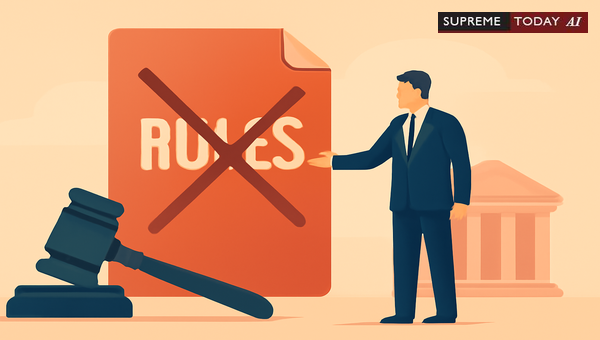
Does Absence of Rules Make Law ?
In the complex world of law, a common question arises: Does the absence of rules make the law ? This issue often surfaces in disputes over procedural gaps, administrative actions, and judicial oversight. While rules provide structure, their absence doesn't necessarily paralyze the underlying legal framework. This blog post delves into key legal principles from Indian jurisprudence, drawing on court precedents to clarify when laws remain enforceable despite missing rules.
Note: This article provides general information based on established cases and is not legal advice. Consult a qualified attorney for specific situations.
Understanding the Core Principle: Laws Endure Without Rules
The foundational rule is clear: the . Courts have consistently held that duties imposed by law must be discharged within a reasonable time, even without prescribed timelines. For instance, the , even if no time limit is prescribed by the rules 1970 0 Supreme(Kar) 109.
This principle ensures legal continuity. Rules are procedural aids—handmaidsof justice—designed to advance fairness, not to dictate a law's validity 2023 0 Supreme(Jhk) 665. Their liberal or stringent language serves justice, but gaps don't void the statute.
Key Scenarios Where Laws Stay Operative
Here are pivotal areas where this holds true:
's Oversight of Under , the maintains control over and judicial officers' service conditions, including discipline. This authority persists even in the absence of specific rules or laws governing the conditions of service of judicial officers 1985 0 Supreme(Cal) 94.
Executive Power's Limits Executives can address legislative gaps, but not contradict laws. The . However, such executive orders 2021 0 Supreme(Bom) 86 2012 0 Supreme(Mad) 1752. If a law occupies the field, executive actions can't make it .
Recruitment and Administrative Changes Statutory recruitment rules remain valid despite post amalgamations or instructions. Recruitment Rules maintain their validity and cannot be deemed simply due to the amalgamation of posts or the introduction of administrative instructions 2015 0 Supreme(Mad) 1685. Executive instructions can't supplant them, as 2025 0 Supreme(Guj) 1386.
Unauthorized Absence and Misconduct Mere absence from duty doesn't terminate service without . It must be proven willful: 2012 2 Supreme 254 1988 0 Supreme(J&K) 153.
Insights from Broader Jurisprudence
Court rulings reinforce that procedural voids don't dismantle laws. Notably, , and would not curtail the power conferred under the Act 2014 0 Supreme(AP) 1477. Similarly, 2010 0 Supreme(Pat) 773, allowing powers like notifying pollution control areas post-consultation.
In arbitration, clauses stay viable without explicit procedural rules or seats: the or incapable of being performed
.
Executive instructions fill silences but yield to law: 2024 0 Supreme(Cal) 1039. Rule-makers can't exceed enabling laws: 2023 0 Supreme(Chh) 304.
However, exceptions exist. Rules may be void if , like is, therefore, 2007 0 Supreme(Ker) 372, or if they exceed powers, rendering them 2004 0 Supreme(Kar) 635. assess law validity before referencing 2021 0 Supreme(Chh) 100.
Practical Implications for Businesses and Individuals
For Employers and Administrators
- Follow statutory rules over circulars; restructuring doesn't invalidate them 2025 0 Supreme(Guj) 1386.
- Use reasonable timelines for duties lacking specifics 1970 0 Supreme(Kar) 109.
- Ensure procedural fairness in discipline, especially absences 2024 0 Supreme(Cal) 1133.
For Litigants and Courts
- Invoke control where rules lag 1985 0 Supreme(Cal) 94.
- Challenge rules conflicting with parent laws 2023 0 Supreme(Chh) 304.
In banking or cooperatives, accounts require notice adherence, but laws govern recovery 2023 Supreme(Online)(CIC) 2814. Arbitration demands jurisdictional clarity to avoid nullity
.
Summary of Key Findings
- Laws Remain Operative: Main provisions apply; rules aid, not define, enforceability 1970 0 Supreme(Kar) 109.
- Judicial Authority Intact: control subordinates sans rules 1985 0 Supreme(Cal) 94.
- Legislative Supremacy: Executives supplement, don't override 2021 0 Supreme(Bom) 86 2012 0 Supreme(Mad) 1752.
- Essential: validates actions 2012 2 Supreme 254.
Recommendations
For Legal Practitioners: Anchor arguments in reasonable compliance and hierarchy, citing precedents like 2014 0 Supreme(AP) 1477.
For Clients: Heed obligations under laws, as rule gaps don't excuse them. Unauthorized acts risk misconduct findings 1988 0 Supreme(J&K) 153.
Conclusion: Over Absence
Ultimately, the absence of rules does not make the law . Laws derive force from statutes, with rules as enablers. Courts prioritize justice, filling gaps reasonably while upholding supremacy. As affirmed across cases, from pollution controls 2010 0 Supreme(Pat) 773 to service rules 2015 0 Supreme(Mad) 1685, legal frameworks endure.
This resilience underscores 's role. Stay informed, comply diligently, and seek counsel to navigate nuances.
References: 1970 0 Supreme(Kar) 109 1985 0 Supreme(Cal) 94 2021 0 Supreme(Bom) 86 2015 0 Supreme(Mad) 1685 2012 2 Supreme 254 1988 0 Supreme(J&K) 153 2012 0 Supreme(Mad) 1752 2023 0 Supreme(Jhk) 665 2025 0 Supreme(Guj) 1386 2014 0 Supreme(AP) 1477 2010 0 Supreme(Pat) 773
2024 0 Supreme(Cal) 1039 2023 0 Supreme(Chh) 304 #LawInoperative, #AbsenceOfRules, #LegalPrinciples















