


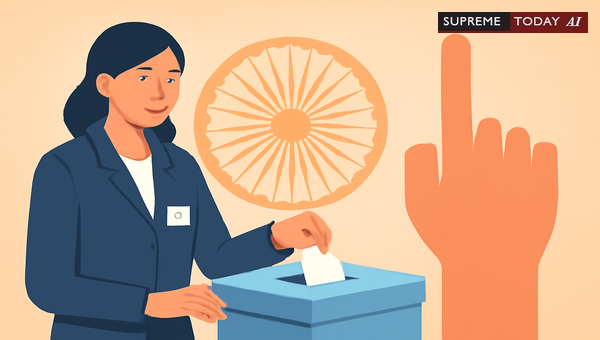
Does an Election Officer Have the Right to Vote in India?
In the heart of democracy lies the sacred right to vote—a cornerstone that empowers citizens to shape their future. But what happens when those tasked with overseeing the electoral process, such as election officers, seek to exercise this right themselves? The question arises: Does an election officer have the right to vote? This inquiry is particularly relevant in India, where elections are meticulously regulated by statutes, and roles like returning officers, presiding officers, and other election staff play pivotal roles.
This blog post delves into the legal framework surrounding voting rights for election officers, drawing from key judicial insights and statutory principles. While the right to vote is cherished, it is not absolute and is subject to specific conditions. Note that this is general information based on available legal precedents and should not be construed as specific legal advice—consult a qualified lawyer for personalized guidance.
The Nature of the Right to Vote: Statutory, Not Fundamental
The right to vote in India is not a but a , granted and regulated by legislation. This principle is repeatedly affirmed in legal documents, emphasizing that it must conform to the limitations imposed by relevant statutes. 2023 0 Supreme(SC) 711 2022 0 Supreme(SC) 1634 2013 6 Supreme 673 1982 0 Supreme(SC) 71 1993 0 Supreme(SC) 1188 2006 7 Supreme 44 1985 0 Supreme(SC) 190 1952 0 Supreme(SC) 4
For instance, the in Returning Officer, Namakkal Constituency observed: The right to vote or stand as a candidate for election is not a civil right but is a creature of statute or special law and must be subject to the limitations...
TAMILESWAARAN RAVI KUMAR vs SURUHANJAYA PILIHAN RAYA MALAYSIA & ANOR
. This underscores that voting privileges are conditional and can be restricted based on one's role or circumstances.The entire election process, including preparation, is governed by statute, leaving little room for unrestricted participation. 2000 6 Supreme 12 1969 0 Supreme(SC) 286. Certain disqualifications apply universally, such as for individuals confined in prison. 1997 6 Supreme 220.
Election Officers' Role and Voting Rights
Election officers, including returning officers, presiding officers, and polling staff, are integral to ensuring free and fair elections. Their duties demand , which raises questions about their own voting eligibility. While no document directly prohibits election officers from voting, their participation is typically permitted under strict conditions to prevent conflicts of interest.
Government service rules often allow employees, including those assisting in elections, to vote discreetly. For example, regulations state: An employee qualified to vote at such an election may exercise his right to vote, but where he does so, he shall give no indication of the manner in which he proposes to vote or has voted. 2015 0 Supreme(UK) 542 2008 0 Supreme(Mad) 4359 2006 0 Supreme(Mad) 881 2000 0 Supreme(Kar) 669 2000 0 Supreme(Kar) 668. Importantly, assisting in the conduct of an election as part of official duty does not contravene these rules. This implies that election officers, performing statutory duties, retain their voting rights provided they remain neutral—no , influencing, or disclosing votes.
In Life Insurance Corporation of India cases, courts upheld that technical violations of conduct rules do not necessarily strip voting rights, reinforcing the statutory essence of this privilege. 2008 0 Supreme(Mad) 4359. Similarly, standing orders for public sector employees permit voting while prohibiting active political involvement, balancing duty and rights. 2000 0 Supreme(Kar) 669 2000 0 Supreme(Kar) 668
Key Limitations and Disqualifications
Though election officers generally may vote, limitations persist:
- Requirement: Officers must not interfere, canvass, or use influence. Breaches can lead to disciplinary action. 2015 0 Supreme(UK) 542
- Statutory Disqualifications: Applies to all, e.g., prisoners or those under specific bans. 1997 6 Supreme 220
- Role-Specific Restrictions: Presiding officers decide voter eligibility on the spot but cannot adjudicate complex qualifications post-voters' list publication. 2023 0 Supreme(Guj) 585 2025 0 Supreme(Guj) 838
In cooperative or local body elections, exclusions from voting lists have been challenged, but courts direct remedies via rather than , preserving process integrity. 2023 0 Supreme(Guj) 585 2025 0 Supreme(Guj) 838 2022 0 Supreme(MP) 1368
Insights from Landmark Cases
Judicial precedents provide clarity:
APMC Elections: Courts have intervened when voters, including newly elected members, were wrongly excluded from lists, affirming the duty of election officers to protect statutory voting rights. In one case, failure to include Gram Panchayat members' names vitiated the process, leading to directives for fresh lists. 2024 0 Supreme(Bom) 163. The court noted: No doubt, the right to vote is a but it is equally vital to recollect that this is the essence of democracy.
Exclusion Challenges: In Siddha Town Rajarhat Residents’ Association, excluding eligible voters invalidated results, emphasizing: The election process for a statutory association must include all eligible voters, and exclusion of votes violates legal provisions. 2024 0 Supreme(Cal) 1303
Alternative Remedies: Disputes over voter eligibility, even for those barred like ex-committee members, must go through . 2023 0 Supreme(Guj) 585 2025 0 Supreme(Guj) 838
Government Transfers: The Election Commission can transfer officers for election purity, but this does not revoke voting rights. 2006 0 Supreme(Mad) 881
These cases highlight that while voting is statutory, election officers must uphold voters' rights diligently, often at the expense of personal involvement beyond discreet voting.
Contrasting views exist internationally; a Malaysian court held voting as constitutional, overriding SOPs during COVID-19 quarantine.
TAMILESWAARAN RAVI KUMAR vs SURUHANJAYA PILIHAN RAYA MALAYSIA & ANOR
. However, Indian law leans statutory.Practical Recommendations
- Consult Specific Laws: Review the /1951, and state election rules for precise provisions on election staff.
- Check Service Rules: Government employees follow conduct rules allowing secret voting.
- File : For disputes, this is the preferred remedy over . 2023 0 Supreme(Guj) 585 2022 0 Supreme(MP) 1368
- Ensure Inclusion: Election officers should verify voters' lists meticulously to avoid exclusions. 2024 0 Supreme(Bom) 163
Conclusion: Balancing Duty and Democracy
Election officers typically retain the right to vote as qualified citizens, given its statutory nature and provisions allowing discreet participation during duty performance. However, this is tempered by mandates and statutory limits. 2022 0 Supreme(SC) 1634 1982 0 Supreme(SC) 71 1993 0 Supreme(SC) 1188 2006 7 Supreme 44 1985 0 Supreme(SC) 190 1952 0 Supreme(SC) 4
Key takeaways:- Voting rights are statutory, subject to legislation.- Officers can vote secretly without influencing others.- Disputes require statutory remedies like .- Protecting all voters' rights is paramount for democratic integrity.
Democracy thrives when election guardians exercise rights responsibly. For tailored advice, reach out to legal experts or the .
#ElectionLaw #VotingRightsIndia #ElectionOfficers















