


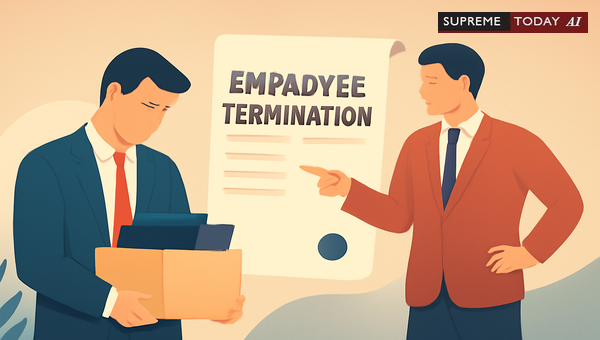
Can Be Terminated for ?
In the competitive world of government and public sector recruitment in India, play a pivotal role in determining who secures a position. But what happens when those marks are revised after appointments are made? Can an employer legally terminate an already appointed employee on the grounds of such a revision? This question often arises in disputes involving Public Service Commissions, corporations, and other hiring bodies.
If you're an HR professional, a newly appointed employee, or an employer navigating recruitment challenges, understanding the legal nuances is crucial. This post delves into the key principles, court precedents, and practical recommendations, drawing from established case law. Note: This is general information and not specific legal advice. Consult a qualified lawyer for your situation.
The Core Legal Question
Can an Appointed Employee be Terminated on the Ground of Revision of ?
The answer is nuanced: Generally, yes, if the revision is rational, transparent, and exercised within the employer's discretion without or . However, courts often protect employees from belated or unfair revisions, emphasizing and fairness. Let's break this down step by step.
Legal Principles Governing and
Employers and expert bodies, such as Public Service Commissions, hold significant authority in recruitment processes. Here are the foundational principles:
Authority to Fix : The employer or expert body has the discretion to determine . Candidates who participate are deemed to accept the rules, including potential adjustments, and cannot challenge them post-selection if unsuccessful. 2007 6 Supreme 410 2011 5 Supreme 308
Candidates' Knowledge and Acceptance: Participants are expected to know the selection criteria, including cut-offs fixed before or during the process. Claiming prejudice after knowing and accepting these terms is typically untenable. 2021 0 Supreme(Cal) 295 2007 6 Supreme 410
Discretion of the Expert Body: Adjustments to cut-offs based on factors like post nature and candidate merit are permissible. Judicial interference is rare unless or () is proven. 2021 0 Supreme(Cal) 295 2007 6 Supreme 410
No Unfettered Right to Appointment: Candidates lack an absolute right to appointment merely based on performance if they fall short of cut-offs. Courts uphold this as legitimate employer discretion. 2007 6 Supreme 410 2018 6 Supreme 162
A key quote reinforces this: If the were fixed on a , no exception thereto can be taken.2019 0 Supreme(Raj) 695 The employer's power to fix cut-offs is undisputed, and lowering them cannot be judicially mandated once rationally set.
Application to of
When an employee is appointed based on initial cut-offs and later faces due to revision:- Permissibility: is legally viable if the employee doesn't meet the revised marks, provided the process was transparent, criteria communicated, and discretion reasonably exercised. The employee's prior participation implies acceptance. 2007 6 Supreme 410
- Key Conditions:
- Cut-offs established and communicated appropriately.
- Full employee knowledge of criteria.
- No arbitrary actions by the employer.
However, real-world cases introduce caution. In scenarios where revisions occur post-appointment or result declaration, courts scrutinize for fairness.
Insights from Key Court Cases and Sources
Indian High Courts, particularly High Court, have addressed similar disputes:
In one case, employees appointed below general category cut-offs were terminated on that ground, with similarly situated petitioners challenging it. The court examined if appointments were valid initially.
PRAMOD BHARTI vs STATE OF RAJ. AND ORS -
Multiple judgments note that services of candidates securing less than revised last were terminated, but courts intervened if merit positions were based on unrevised lists. Directions were issued to protect those positions.
Protective Stance: Several precedents (e.g., 2024 0 Supreme(Raj) 98, 2024 0 Supreme(Raj) 38, 2024 0 Supreme(Raj) 31) hold that cannot be terminated solely on belated cut-off revisions post-results or appointment. Such actions may violate fairness unless mala fide or procedural lapses are absent. Employees above original cut-offs retain entitlement. 2024 0 Supreme(Raj) 98
Required: The power of the employer to fix the is neither denied nor disputed.2017 0 Supreme(Megh) 25 But revisions must be non-arbitrary. In another context, lack of prescribed cut-off percentages led to concerns over poor academic records in appointments, highlighting the need for specificity. 2019 0 Supreme(Del) 41 2017 0 Supreme(Del) 946
Limits: Probationers or temporaries can be terminated during probation or on establishment reduction, but permanents only on specific grounds. Arbitrary use against appointed staff is restricted. 2022 0 Supreme(Telangana) 228
Scrutiny Examples: Post-response surges led to category-wise cut-offs; those below weren't called, implying similar logic for terminations. 2024 Supreme(Online)(AP) 20149 Courts question belated revisions ousting employees. 2024 0 Supreme(Gau) 1114 2023 0 Supreme(Jhk) 1152
These cases illustrate a balance: Employer flexibility exists, but employee rights to prevail against retrospective unfairness.
Practical Recommendations for Employers and Employees
For Employers:
- Transparency First: Clearly communicate cut-off criteria upfront and document all changes.
- Timely Revisions: Avoid post-appointment adjustments unless procedurally sound.
- Defensive Documentation: Record rationale for revisions to counter claims.
For Employees:
- Review Processes: Ensure you met original criteria; challenge if revision seems mala fide.
- Seek Redress: Approach tribunals or courts if feels unjust.
Conclusion and Key Takeaways
While employers generally can terminate for not meeting —provided rationality and fairness—courts frequently side against belated or arbitrary changes. are typically protected if they qualified under initial criteria, underscoring the importance of .2024 0 Supreme(Raj) 98 2007 6 Supreme 410
Key Takeaways:- Employer discretion is wide but not absolute.- Rational, pre-communicated cut-offs support terminations.- Belated revisions risk judicial invalidation.- Always prioritize transparency to mitigate disputes.
References: 2021 0 Supreme(Cal) 295 2007 6 Supreme 410 2011 5 Supreme 308 2018 6 Supreme 162 2019 0 Supreme(Raj) 695
PRAMOD BHARTI vs STATE OF RAJ. AND ORS -
Stay informed on employment law updates. If facing such an issue, professional legal counsel is essential. Share your thoughts in the comments!
#EmploymentLaw #CutOffMarks #TerminationRights












