


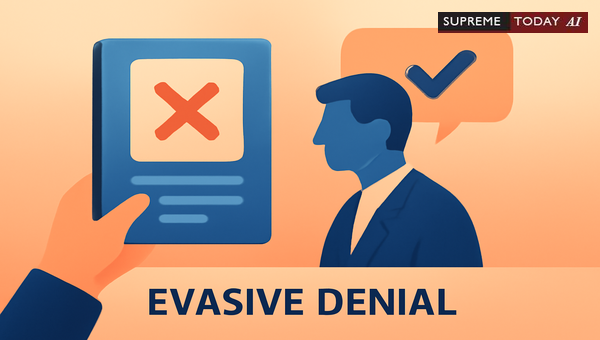
in : Under CPC?
In the intricate world of civil litigation, the way parties frame their can make or break a case. One critical pitfall that litigants often overlook is the effect of . What happens when a defendant responds to allegations in a vague or non-specific manner? Generally, under Indian civil procedure, such responses are treated as admissions, potentially sealing the fate of the defense without further proof. This blog delves into the legal implications, drawing from established precedents and statutory provisions.
Whether you're a lawyer drafting a , a business owner facing a lawsuit, or simply curious about procedural fairness, understanding this principle is essential. Note that this is general information based on judicial interpretations and not specific legal advice—consult a qualified attorney for your situation.
Understanding the Question: Effect of
The core issue revolves around the effect of in . An occurs when a party fails to clearly admit or deny a alleged by the opponent, instead offering vague, general, or qualified responses. Courts have consistently held that such denials are generally regarded as an admission of the fact denied, serving as conclusive proof unless justified or overridden by judicial discretion. 1969 0 Supreme(SC) 421 2017 5 Supreme 337 2020 0 Supreme(SC) 642
This principle stems from the need for precise to streamline trials and prevent . As we'll explore, failing to provide a under of the (CPC), , can deem the fact admitted. 1969 0 Supreme(SC) 421 2017 5 Supreme 337 2020 0 Supreme(SC) 642 2003 8 Supreme 149
Legal Framework:
Order VIII of the CPC forms an integrated code for written statements. Key rules include:
- : Every allegation of fact in the plaint must be specifically denied or admitted.
- : Denials must be specific, addressing the point of substance—not evasively.
- : Any fact not specifically denied or admitted is deemed admitted. 2017 5 Supreme 337 2003 8 Supreme 149 2012 0 Supreme(SC) 751
These provisions ensure are clear and focused. An violates this, leading to the fact being taken as admitted with no need for further proof. 1969 0 Supreme(SC) 421 2017 5 Supreme 337 2020 0 Supreme(SC) 642 2010 5 Supreme 70
For instance, in Badat & Co. v. East India Trading Co. (AIR SC 538), the clarified: if a denial is evasive, the fact shall be taken as admitted, treated as conclusive proof. 1969 0 Supreme(SC) 421 2017 5 Supreme 337 2020 0 Supreme(SC) 642
Similarly, Gautam Sarup v. Leela Jetly () 7 SCC 85 reinforced that evasive denials amount to admissions, obviating proof unless the court directs otherwise. 2010 5 Supreme 70
Key Judicial Findings on Evasive Denials
Courts across India have upheld this rigorously:
- In a case, it was observed that an evasive and vague denial is no denial in the eyes of law, specially when the petitioner did have specific knowledge qua the existence or otherwise of landlord-tenant relationship.
- Another ruling noted: the denial was evasive without any particulars or explanation, leading to proof of the claim in a winding-up petition. 2017 0 Supreme(Cal) 608
- In labor disputes, evasive denials regarding employment dates resulted in admissions due to failure to produce registers: This denial is evasive and hence result into admission. 2015 0 Supreme(Del) 3077
These examples illustrate how unsubstantiated evasive denials invite adverse consequences, including admissions and weak defenses.
Court's Discretion: Exceptions to the Rule
While evasive denials are typically conclusive, courts retain discretion to require proof in exceptional cases, such as to avert injustice or bad faith denials. This is exercised sparingly when justice demands. 2017 5 Supreme 337 2019 0 Supreme(SC) 1065 2005 0 Supreme(Ker) 702 2024 0 Supreme(Ker) 567
For example:- Parties may justify evasive denials if permitted by the court. 2017 5 Supreme 337- In property disputes, specific knowledge mandates clear denials; vagueness deems admission.
- Even with amendments or inconsistent pleas, the original stands unless clarified. 2024 0 Supreme(Ker) 567 1963 0 Supreme(SC) 180
However, deliberate evasiveness can lead to adverse inferences, signaling concealment. 2003 8 Supreme 149 1950 0 Supreme(SC) 29
Integrating Additional Case Insights
Further precedents reinforce specificity:
- In suits, absence of under treated allegations as admitted: The other aspects pleaded in the plaint is not even denied specifically as contemplated under of C.P.C. 2017 0 Supreme(Mad) 1060
- A emphasized: the denial must be specific; and that the denial must not be evasive. The denial should be bold and clear. 2012 0 Supreme(Mad) 3928
- In tenancy matters, evasive replies to ownership allegations restored trial court decrees. 2010 0 Supreme(Chh) 253
These cases highlight that evasive tactics undermine credibility, often resulting in decrees for or .
Practical Implications and Recommendations
Litigants should heed these lessons:
- Draft precisely: Specifically admit or deny each to avoid deemed admissions.
- Substantiate denials: Back with evidence; failure invites adverse inferences. 2020 0 Supreme(SC) 642
- Seek court intervention: Opponents can urge the court to enforce admissions.
- Amend judiciously: Inconsistencies don't automatically negate prior evasions. 2024 0 Supreme(Ker) 567
Clear strengthen positions and expedite justice. In winding-up or labor cases, weak denials have led to admissions and orders against defendants. 2017 0 Supreme(Cal) 608 2015 0 Supreme(Del) 3077
Conclusion and Key Takeaways
In summary, an in is generally treated as an admission, relied upon as conclusive proof unless justified or court discretion intervenes. This underscores the CPC's emphasis on specificity to curb dilatory tactics. 1969 0 Supreme(SC) 421 2017 5 Supreme 337
Key Takeaways:- Evasive = Admission: No proof needed for opponent. 1969 0 Supreme(SC) 421- Be Specific: Follow Order VIII strictly.- Discretion Rare: Exceptional circumstances only.- Adverse Risks: Inferences of bad faith possible.
By prioritizing precise , parties safeguard their cases. For tailored guidance, engage legal experts. This principle promotes efficiency in India's judicial system.
References (select excerpts):1. 1969 0 Supreme(SC) 421: .2. 2017 5 Supreme 337: requirements.3.
: Vague denial no denial in law. #EvasiveDenial #CPCPleadings #LegalAdmissions












