


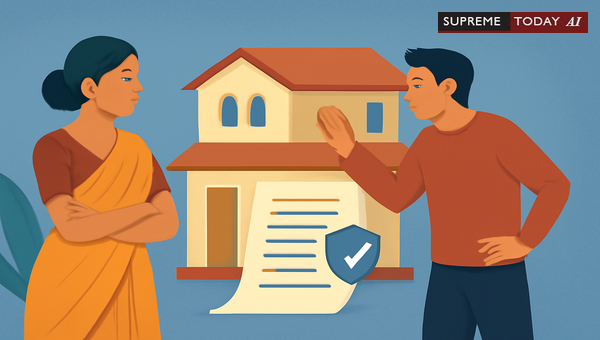
Saas vs Bahu: Can You Evict Despite Property in Her Name? Appeal Grounds Explained
In Indian families, property disputes between saas (mother-in-law) and bahu (daughter-in-law) often escalate to court, especially when a lower court orders the bahu to continue residing in the saas's house despite the property being in the bahu's name. A common question arises: Kya Bahu Jiske Naam Per Property House H Fir Bhi Saas Ke Ghar me Rahne Ke Order Lower Court Ne Kar Diye H Ab Appeal Ke Liye Ground? (Translation: If the property house is in the bahu's name, yet the lower court ordered her to stay in the saas's house, what are the grounds for appeal?)
This scenario highlights a critical legal tension between and residence rights. While the bahu may hold the property deed, courts have repeatedly clarified that this does not grant her an absolute right to reside against the owner's wishes. This blog post breaks down the legal principles, key judgments, appeal strategies, and exceptions, drawing from established case law. Note: This is general information based on precedents and not specific legal advice. Consult a qualified lawyer for your case.
Understanding the Core Legal Issue
At the heart of saas-bahu property battles is the distinction between ownership and . Even if the property is registered in the bahu's name—perhaps through a gift, purchase, or family arrangement—her stay in the sasural (in-laws' home) is typically viewed as a or license, not an independent ownership right. The saas, as the effective owner or with superior legal claims, can seek eviction.
Lower courts sometimes order the bahu to remain, citing familial harmony or claims under the (). However, higher courts, including the , have overturned such orders, emphasizing revocable licenses. For instance, in a relevant judgment, the court held that the is a granted by the owner and can be revoked, especially when the owner desires possession or eviction. 2021 0 Supreme(Del) 522
This position empowers the saas to appeal successfully, focusing on .
Key Legal Principles from Landmark Judgments
Indian courts have consistently ruled against automatic residence rights for bahus in sasural properties. Here's a detailed look:
1. Residence as a
The , in a case presided by Prathiba M. Singh, J., clarified: The owner of a property, even if the property is in the name of the bahu, retains the legal right to seek eviction, as her residence is not a right but a license that can be revoked. 2021 0 Supreme(Del) 522
This echoes the 's ruling in , referenced extensively: The contention of the defendants that they cannot be removed from the house because the suit property is the ... is not tenable as defendant no.2 can claim her rights from her husband... and not from her father-in-law/plaintiff, who has no duty to provide residence to either son or daughter-in-law. 2021 0 Supreme(Del) 522
- Key takeaway: No duty on saas or father-in-law to house the bahu indefinitely.
- Citation support: Ownership prevails; license is terminable 2021 0 Supreme(Del) 522. Ownership of property in the bahu’s name does not confer permanent residence rights 2021 0 Supreme(Del) 522.
2. Claims Under
Bahu often invokes for residence in a . However, courts distinguish this: mere residence doesn't override ownership. In one analysis, ownership rights prevail over mere residence rights unless specific protections apply
.
Grounds for Appeal Against Lower Court Orders
If a lower court has ordered the bahu to stay, the saas can file an appeal (e.g., under Section 19 for ) on robust grounds. Primary arguments include:
Doctrine: Prove the bahu's stay was a license granted by the saas/family, revocable at will. Courts affirm: The granted to a daughter-in-law is a license or privilege, which can be terminated by the owner. 2021 0 Supreme(Del) 522
No Independent Ownership Rights: Even with the name on the deed, bahu lacks rights against saas's claim. Challenge any mischaracterization as 2021 0 Supreme(Del) 522.
Lack of Duty to Provide Shelter: Saas has no duty to provide residence to either son or daughter-in-law 2021 0 Supreme(Del) 522.
Additional grounds from related cases:- Unsatisfactory respondent reply on property issues 2022 Supreme(Online)(CIC) 11653.- Emotional pleas by bahu (e.g., for children's sake) don't override legal rights; appeal on unjust lower court reasoning 2022 Supreme(Online)(DEL) 5208 2022 0 Supreme(Del) 2004.
Pro Tip: Gather evidence like original ownership documents, family arrangements, and witness statements showing the stay as permissive.
Insights from Other Family Dispute Contexts
Related cases reveal household dynamics influencing courts but not altering core principles. For example:- In one appeal, the bahu sought to stay for preserving the relationship for her children, highlighting emotional attachments, yet courts prioritized ownership 2023 Supreme(Online)(All) 24518 2023 Supreme(Online)(All) 27967.- Narratives of household tensions (e.g., substance issues or conflicts) provide context but secondary to title rights 2019 0 Supreme(Del) 546.- Extreme cases, like wills favoring daughters over in-laws or violent disputes, underscore that property intent matters 2015 0 Supreme(Del) 776 2013 0 Supreme(Del) 1569.
These illustrate complexities: while sympathy for stability exists 2023 Supreme(Online)(ALL) 13941, legal eviction grounds hold 2023 Supreme(Online)(ALL) 15982.
Exceptions and Limitations
Not all cases favor eviction:- Protections: If proven as with violence, temporary relief possible, but not permanent ownership override
.- : If bahu's name is nominal (benami for saas), reclaim via .- : may allow claims, but sasural typically excludes bahu 2021 0 Supreme(Del) 522.
Recommendations for Saas Appealing
- File Promptly: Appeals have time limits; act fast.
- Build Strong Evidence: Use judgments like Batra case; cite licenses explicitly.
- Seek Interim Relief: Request stay on lower court order during appeal.
- Professional Help: Engage a property lawyer familiar with family law.
Focus: The appeal should emphasize the legal position that ownership rights in the property are paramount and residence rights are revocable licenses. 2021 0 Supreme(Del) 522
Conclusion and Key Takeaways
Lower court orders allowing bahu residence in saas's house, despite her name on the property, are challengeable. Core grounds: residence as , no saas duty to shelter, and per precedents like S.R. Batra 2021 0 Supreme(Del) 522. While emotional factors arise 2023 Supreme(Online)(All) 28576, law favors owners.
Key Takeaways:- Property in bahu's name ≠ permanent stay right.- Appeal on license revocation and Batra principles.- Ownership trumps residence claims generally
.
References:1. 2021 0 Supreme(Del) 522 – License revocable; Batra reference.2.
– Ownership over DV rights.3. 2022 Supreme(Online)(CIC) 11653, 2022 Supreme(Online)(DEL) 5208, etc. – Appeal contexts.
Stay informed, protect your rights—family harmony shouldn't compromise law. (Word count: 1028)
#SaasBahuDispute #PropertyRightsIndia #EvictionAppeal












