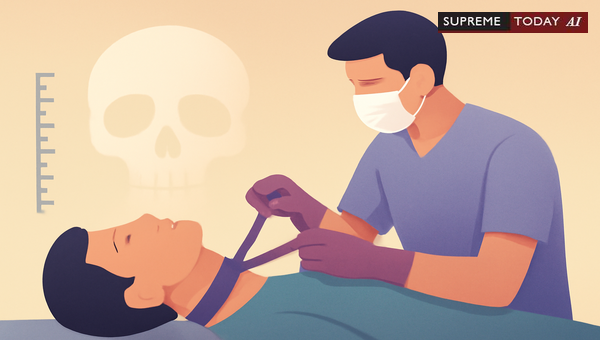
- Difference between Strangulation and Suicide by Hanging
- Strangulation is defined as the compression of the neck by a force other than hanging, typically manual or with a ligature, without involving the body's weight. It often involves external compression, which can cause specific external injuries such as ligature marks and internal injuries like fracture of the hyoid bone, though fracture is not always present ["2023 0 Supreme(Bom) 912"] ["2024 Supreme(Online)(Tel) 37694"] ["2026 Supreme(Online)(Kar) 1252"].
Suicide by hanging involves the body's weight causing constriction of the neck via a ligature, often resulting in a ligature mark consistent with hanging, and may or may not involve internal injuries like hyoid bone fracture. The cause of death is asphyxia due to suspension, with typical external signs including a ligature mark around the neck and absence of external injuries associated with manual force ["2023 0 Supreme(Del) 3185"] ["2023 0 Supreme(Chh) 246"] ["2023 Supreme(SRI)(SC) 20650"].
Main Points and Insights
- Medical Evidence:
- In cases of strangulation, medical reports often show signs such as ligature marks, external injuries, and sometimes fracture of the hyoid bone, although the latter is not always present. The absence of hyoid bone fracture does not rule out strangulation, but its presence strongly indicates manual strangulation ["2024 Supreme(Online)(Tel) 37694"] ["2026 Supreme(Online)(Kar) 1252"] ["2024 Supreme(Online)(TEL) 282"].
- Hanging typically produces ligature marks on the neck, but the absence of external injuries or hyoid fracture may suggest suicide ["2023 0 Supreme(Del) 3185"] ["2023 0 Supreme(Chh) 246"].
- External and Internal Injuries:
- External ligature marks are common in both strangulation and hanging, but the pattern and location can help differentiate. In manual strangulation, the marks may be more irregular and accompanied by internal injuries such as fracture or ecchymosis.
- Internal injuries like fracture of the hyoid bone are more common in manual strangulation, but their absence does not exclude it. Conversely, in hanging, such fractures are also possible but less consistent ["2023 0 Supreme(Bom) 912"] ["2024 0 Supreme(Telangana) 283"] ["2026 Supreme(Online)(Kar) 1252"].
Behavioral and Circumstantial Evidence:
- The context, such as absence of witnesses, the position of the body, and other circumstantial evidence, are crucial in differentiating between homicide (manual strangulation) and suicide ["2023 0 Supreme(All) 930"] ["2026 Supreme(Online)(Del) 166"] ["2023 0 Supreme(Raj) 46"].
- Statements from family members or witnesses about the deceased's mental state or circumstances can support or weaken the case for suicide versus homicide ["2023 0 Supreme(All) 930"] ["2026 Supreme(Online)(Kar) 1252"].
Analysis and Conclusion
- The distinction hinges on medical findings (ligature marks, hyoid bone fracture, external injuries) and circumstantial evidence.
- Manual strangulation involves external compression with force other than hanging, often leaving marks and internal injuries, and is considered homicidal unless evidence suggests otherwise.
- Suicide by hanging involves the body's weight suspending the neck, typically resulting in ligature marks and asphyxia, with the absence of external injuries indicative of manual force.
- Many cases rely heavily on medical expert testimony and circumstantial evidence to determine whether death was homicidal strangulation or suicidal hanging, as both can present similar external signs but differ in internal injuries and context ["2023 0 Supreme(Bom) 912"] ["2024 Supreme(Online)(Tel) 37694"] ["2023 0 Supreme(Del) 3185"].
References:- ["2023 0 Supreme(Bom) 912"]- ["2024 Supreme(Online)(Tel) 37694"]- ["2026 Supreme(Online)(Kar) 1252"]- ["2023 0 Supreme(Del) 3185"]- ["2023 0 Supreme(All) 930"]- ["2026 Supreme(Online)(Del) 166"]- ["2023 0 Supreme(Raj) 46"]- ["2024 Supreme(Online)(TEL) 282"]- ["2023 Supreme(SRI)(SC) 20650"]