


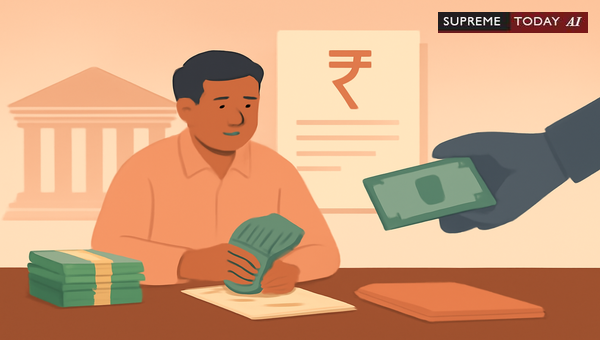
Gram Sevak Cash Over 500 Rs: Misuse Under Rajasthan Panchayati Raj Act?
In rural Rajasthan, Gram Sevaks play a crucial role in managing Gram Panchayat operations, including handling funds. But what happens when a Gram Sevak disburses more than 500 rupees in cash? Does this constitute misuse under the , and associated rules? This question arises frequently amid concerns over financial transparency in Panchayati Raj Institutions (PRIs).
This blog explores the legal framework, key rules, potential violations, judicial insights, and best practices. Note: This is general information based on legal provisions and is not specific legal advice. Consult a qualified lawyer for your situation.
Understanding the Core Issue: Cash Handling by Gram Sevak
The query at hand is: more than 500 retane cash by gram sevak come under misuse rajasthan panchayati raj rule and act. Translated, it asks if a Gram Sevak (Panchayat Secretary) retaining or paying out over 500 rupees in cash amounts to under Rajasthan's Panchayati Raj laws.
Generally, yes, such actions can be viewed as a violation if not properly authorized, documented, or compliant with payment protocols. The , and rules like the , strictly regulate fund handling to prevent . 2012 0 Supreme(HP) 79
Key Legal Provisions Governing Panchayat Funds
Panchayat finances are tightly controlled to ensure accountability. Under :- Every withdrawal from the Panchayat account must be promptly entered in the cash book.- Payments above Rs. 1,000 must be made through cheques, with proper entries. 2012 0 Supreme(HP) 79
The Gram Sevak, as the designated cashier, handles withdrawals and deposits. Cash payments are generally prohibited or heavily restricted, especially for larger amounts. Even amounts over Rs. 500 fall under scrutiny if undocumented or unauthorized, as they deviate from standard procedures. 2012 0 Supreme(HP) 79
Similar principles appear in analogous rules, such as those from , prohibiting cash payments above Rs. 1,000, reinforcing the nationwide emphasis on cheque-based transactions for transparency. 2012 0 Supreme(HP) 79
Misuse and : When Does It Become ?
, including irregular cash payments, is explicitly treated as . The law addresses:- : Cash disbursals without vouchers, authorization, or cheque mandates are irregular.- : Retaining cash beyond permissible limits or failing to record it properly can lead to charges of embezzlement. 2017 0 Supreme(Raj) 1438
Relevant jurisprudence states: The law explicitly considers the as ... payments in cash above Rs. 1,000/- are not in accordance with the rules.2012 0 Supreme(HP) 79 2017 0 Supreme(Raj) 1438
In cases of violation, authorities can initiate inquiries, leading to suspension, removal, or disciplinary action against officials like the Gram Sevak. 2017 0 Supreme(Raj) 1438
Application to 'More Than 500 Rs Cash' Scenario
For amounts exceeding Rs. 500:- If paid in cash without documentation, cheque, or prior approval, it breaches financial procedures.- Even below Rs. 1,000, the principle of strict regulation applies, classifying it as potential misuse.- Example: A Gram Sevak withdrawing Rs. 600 in cash for petty expenses without entry in the cash book could trigger an audit flag. 2017 0 Supreme(Raj) 1438
Courts have upheld that any irregular payment or of Panchayat funds, including cash payments not in accordance with rules, constitutes and misuse.2017 0 Supreme(Raj) 1438
Judicial Perspectives and Related Case Law
rulings emphasize procedural adherence in PRIs. While direct cash misuse cases are referenced in orders like 2017 0 Supreme(Raj) 1438, broader contexts reinforce accountability:
- In matters of Panchayat decisions, under , can annul irregular actions, including those involving fund handling. The term Collector includes Additional Collectors for such powers. 2020 0 Supreme(Raj) 17
- Election petitions under highlight burdens, where failure to prove compliance leads to adverse inferences—analogous to fund misuse probes. 2018 0 Supreme(Raj) 1058
- Pattas issued under , have been quashed for procedural lapses, underscoring that deviations invite scrutiny. 2017 0 Supreme(Raj) 2260
These cases illustrate: PRIs must follow rules meticulously, or decisions (financial or otherwise) risk reversal. No specific power exists for arbitrary actions, aligning with constitutional schemes under and 243Q. 2015 0 Supreme(Raj) 352
Exceptions and Permissible Scenarios
Not all cash handling is misuse:- Authorized petty cash: Small, documented expenses under limits may be allowed.- Competent authority approval: If pre-approved and recorded, higher cash payments might qualify.- Emergencies: Rare cases with post-facto ratification, but still requiring audit trails.
However, exceeding Rs. 500 without safeguards typically invites questions. Always prioritize cheques for amounts over Rs. 1,000. 2012 0 Supreme(HP) 79
Recommendations for Gram Sevaks and Panchayat Officials
To avoid allegations:1. Use cheques religiously for payments above Rs. 1,000; prefer for all significant sums.2. Maintain impeccable records: Update cash books instantly; attach vouchers.3. Seek approvals: Document all disbursals with Sarpanch/Up-Sarpanch sign-off.4. Conduct regular audits: Self-audits prevent escalations.5. Training: Familiarize with , and 2002 Finance Rules.
Compliance safeguards against inquiries under the Act. 2017 0 Supreme(Raj) 1438 2012 0 Supreme(HP) 79
Conclusion and Key Takeaways
In summary, disbursing more than 500 rupees in cash by a Gram Sevak, without proper procedure, generally falls under per the , and rules. Thresholds like Rs. 1,000 for cheques underscore the push for transparency.
Key Takeaways:- Cash payments are restricted; cheques are mandatory for larger sums. 2012 0 Supreme(HP) 79- Irregularities can lead to charges, suspension, or removal. 2017 0 Supreme(Raj) 1438- Proper documentation is your best defense.- Judicial trends favor strict rule adherence in PRIs.
Stay compliant to uphold Panchayati Raj's integrity. For tailored advice, reach out to a Rajasthan legal expert.
References:- 2017 0 Supreme(Raj) 1438: Discusses misuse, improper handling, and actions against officials.- 2012 0 Supreme(HP) 79: Details fund handling rules, cheque mandates, and .- Additional cases: 2020 0 Supreme(Raj) 17, 2018 0 Supreme(Raj) 1058, 2017 0 Supreme(Raj) 2260, 2015 0 Supreme(Raj) 352.
#GramSevak #PanchayatiRaj #RajasthanLaw












