


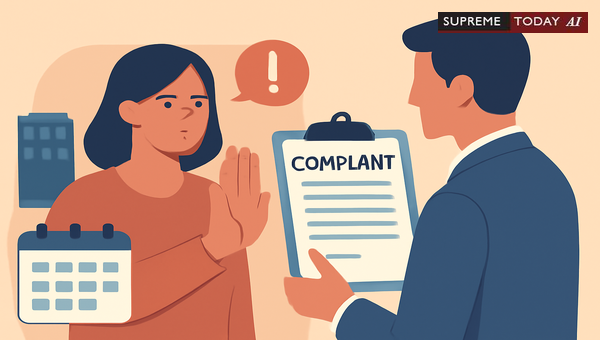
Specific Date Not Required in Harassment Complaints: Legal Insights
In today's workplaces, allegations of harassment—particularly sexual harassment—can arise unexpectedly, leaving both victims and employers uncertain about procedural requirements. A common question arises: Specific Date of Harassment is Not Required to be Stated in a complaint? Many worry that lacking an exact date could invalidate their claim. Fortunately, legal precedents suggest otherwise. This post dives into the nuances, drawing from key cases and statutes like the (), to clarify when and why precise dates aren't always necessary.
Note: This is general information based on legal analyses and is not specific legal advice. Consult a qualified attorney for your situation.
Why Exact Dates Aren't Always Mandatory
Under Indian law, the emphasis in harassment complaints is on the nature of allegations, credibility, and procedural compliance rather than pinpoint accuracy on dates. The focuses on preventing and redressing workplace sexual harassment without mandating exact dates for each incident. Instead, complaints must typically be filed within a relevant timeframe, such as three months from the last incident, with provisions for for valid reasons.
Key legal principle: Courts prioritize the and whether the complaint falls within limitation periods over exact dates. For instance, the last incident need not be precisely dated if it's shown to be within the prescribed timeframe. This approach protects victims who may not recall specifics due to trauma or ongoing patterns of behavior. 2020 0 Supreme(Mad) 999
Core Findings from Landmark Cases
Relevance of Dates in Sexual Harassment Claims
Sexual harassment cases often involve recurring incidents, making exact dating challenging. In one analyzed case, the respondent's failure to specify the exact date of the last incident did not derail the complaint, as it was confirmed within three months. 2020 0 Supreme(Mad) 999
rulings reinforce this by stressing limitation periods over per-incident dates. The core issue is timely filing, not chronological precision. 1997 0 Supreme(Raj) 18 2002 0 Supreme(AP) 969
Jurisdictional and Procedural Contexts
Jurisdiction hinges on location, not dates. In a case involving alleged harassment in Jalandhar City, the absence of a specific date did not affect validity. 1991 0 Supreme(P&H) 68
The framework underscores occurrence and complaint processes without date specificity mandates. 2023 0 Supreme(SC) 1062 2019 0 Supreme(Kar) 700 2014 0 Supreme(Bom) 1152
Broader Criminal Contexts
This principle extends beyond workplaces. In cases involving child sexual offenses, courts recognize victim challenges: It would be unwise to expect such victim to furnish the exact date of commission of the rape. In this case, although no specific date of commission of the offence has been stated, but the offence is stated to have been committed during the beginning of . 2016 0 Supreme(Mad) 798
Even in general criminal complaints under , while specificity is ideal, it's not always fatal. One case noted the need for dates in charge sheets but acquitted on other grounds like incomplete evidence chains, highlighting that dates alone don't determine outcomes. 2001 0 Supreme(Del) 721
Insights from Additional Legal Sources
Other precedents provide context:
- In a rape-related appeal, victim testimony was accepted despite approximate timelines, focusing on minor status and evidence corroboration. 2016 0 Supreme(Mad) 798
- Harassment linked to domestic issues, like abetment of suicide, succeeded without exact dates, relying on witness accounts of distress. 2003 0 Supreme(Mad) 384
- Contrasting views exist; some cases stress date specificity for charges, but failures lead to acquittals on evidentiary gaps, not date absence alone. 2001 0 Supreme(Del) 721
These illustrate a balanced judicial approach: flexibility for victims in trauma cases, rigor where intent or pattern requires clarity.
General Legal Practice and Recommendations
Legal proceedings emphasize:- Occurrence within relevant periods (e.g., POSH's three-month window).- Credibility of allegations via witnesses, documents, or patterns.- Procedural compliance, like internal committees under POSH.
Practical Tips for Drafting Complaints:1. Specify the period (e.g., between ).2. Describe incidents in detail: nature, witnesses, impact.3. Note the last incident's approximate timeframe for limitation.4. Attach supporting evidence (emails, chats, colleague statements).
This aligns with norms, avoiding dismissals for minor omissions. Employers should train ICCs () on these nuances to handle complaints effectively.
In non-workplace scenarios, like under or POCSO, similar leniency applies, especially for vulnerable complainants. However, in structured chargesheets, more detail strengthens cases. 2001 0 Supreme(Del) 721
Potential Exceptions and Cautions
While not mandatory, vagueness can invite challenges:- Limitation defenses: Prove incidents within time bars.- Specific intent crimes: Dates may clarify , as in harboring cases (though not harassment-specific).
- Juvenile or special laws: Procedures like allow anticipatory bail without rigid dates. 2023 0 Supreme(All) 1836
Always err on detailed timelines to bolster credibility.
Conclusion and Key Takeaways
Legal documents consistently indicate that a specific date of harassment is not a mandatory requirement for complaint validity. Focus remains on timely occurrence, credible details, and compliance. This victim-friendly stance, evident in POSH and allied laws, empowers reporting without procedural hurdles.
Key Takeaways:- Use periods or approximations for incidents.- Prioritize patterns and evidence over exact dates. 2020 0 Supreme(Mad) 999 2016 0 Supreme(Mad) 798- Timely filing trumps precision. 1997 0 Supreme(Raj) 18- Seek professional guidance for complex cases.
By understanding these principles, victims can confidently pursue justice, and organizations can foster safer environments. Stay informed—workplace laws evolve.
Word count approx. 1050. For tailored advice, contact a legal expert.
#POSHAct #HarassmentLaw #WorkplaceRights















