


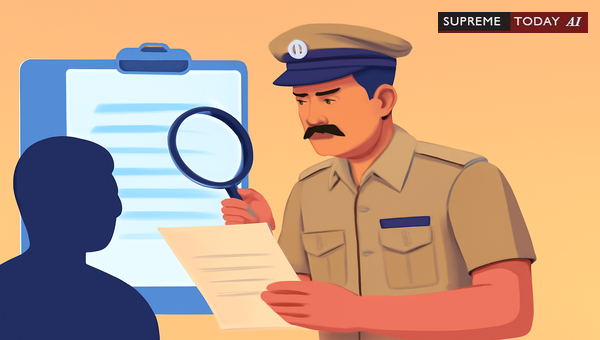
Can a Head Constable a Criminal Case? Essential Legal Insights
In the Indian criminal justice system, the question of who can a case is crucial for ensuring fairness and legality. A common query arises: Send Citation to Show that Head Constable Cannot the Criminal Case. This issue touches on the powers vested under the , particularly , which govern police investigations. While head constables play vital roles in policing, their authority to lead investigations into is often limited. This blog post delves into the nuances, backed by judicial precedents and legal documents, to clarify when a head constable may or may not .
Understanding these boundaries is essential for accused persons, complainants, and legal professionals challenging . Note that this is general information based on available sources and not specific legal advice—consult a qualified lawyer for your case.
Legal Framework Governing Police Investigations
Under the CrPC, investigations into (serious crimes where police can arrest without a warrant) are typically initiated by registering an under . mandates that the of a police station proceeds to .
However, police hierarchy plays a key role. Generally, officers of the rank of Assistant Sub-Inspector (ASI) or above are empowered to conduct investigations, especially for heinous crimes. Head constables, being junior ranks, face restrictions to uphold and competence. The documents emphasize compliance with CrPC procedures for valid investigations. 2013 7 Supreme 49
Head Constable's : Key Limitations
The legal documents do not issue a blanket prohibition but highlight significant constraints on a head constable's role. Here's a breakdown:
1. When a Head Constable May Act as
- In limited scenarios, a head constable may be authorized if they are the when the is received. For instance: 1969 0 Supreme(SC) 386
2. Core Limitations
- : A head constable cannot if they are the complainant or informant, as this compromises . In one case, the court ruled that a head constable who was the complainant should not have proceeded. 2004 3 Supreme 434
- Lack of Designation: They are not empowered if not the . 1976 0 Supreme(SC) 126
- Rank-Based Restrictions: Multiple sources affirm that head constables generally lack authority for , reserved for ASI or higher. Investigation by a head constable is often deemed outside legal scope. 2024 0 Supreme(Raj) 1054 2024 Supreme(Online)(RJ) 5494
Exact Quote Example: It is also correct that being a Head Constable he is not competent to the case in offences u/s. 376/511 . 2017 0 Supreme(J&K) 1021
3. Judicial Precedents Reinforcing Restrictions
Courts have quashed proceedings tainted by unauthorized investigations:- In a case, a head constable was held unauthorized. 1976 0 Supreme(SC) 126- Proceedings can be if a head constable bypasses higher officers like the Sub-Inspector, rendering the probe improper or ritualistic. 2023 0 Supreme(MP) 831 2023 Supreme(Online)(MP) 10482- Quote: Head Constable's Authority to - Multiple sources highlight that a Head Constable is generally not authorized to conduct investigations of , which are typically reserved for officers of the rank of ASI or above. 2024 0 Supreme(Raj) 1054
Further, in cases like 2023 4 Supreme 498, courts scrutinized further investigations ordered improperly, underscoring hierarchical compliance.
Exceptions and Special Circumstances
While restrictions dominate, exceptions exist:- Recording Statements or FIRs: Head constables may assist in preliminary steps, like lodging FIRs or recording initial statements, but not full probes.
-
- Delegation in Absence: If no senior is available, temporary entrustment might occur, but courts view this skeptically. For example, in 2004 0 Supreme(Mad) 1513, non-examination of a head constable was not fatal due to the Investigating Officer's testimony, but this doesn't endorse their lead role.- Specific Contexts: In minor roles, like in 2001 0 Supreme(Raj) 489, a head constable deposed about unrelated duties, but not leading investigation.Cautionary Note: Even in exceptions, bypassing seniors invites judicial invalidation. Sources like 2023 0 Supreme(All) 1547 stress that material from unauthorized probes cannot be casually rejected but must align with proper authority.
Fairness and : Overarching Principles
Central to these rulings is the principle of unbiased investigation. Documents repeatedly stress: 2004 3 Supreme 434
- is paramount; self-investigation by the complainant head constable violates this.
- In retaliation cases or disputes, like 2025 0 Supreme(Del) 597, head constable involvement raised bias concerns: Head Constable Rohtash had taken money from him and when his mother protested, he got him implicated falsely.
Courts also note inconsistencies, such as in 2024 0 Supreme(Mad) 2432, where cases were transferred to due to doubts over police (including head constables) credibility.
Integrating Additional Judicial Insights
Broader sources reinforce the consensus:- Non-Examination Impact: Non-examination of head constables isn't always fatal if corroborated, but doesn't grant investigative power. 2002 0 Supreme(AP) 1302 2004 0 Supreme(Mad) 1513- Competency Objections: Challenges to head constable probes succeed when rank is highlighted. 2024 0 Supreme(Bom) 185- Injury and Evidence Scrutiny: Claims against head constables, like in 2002 0 Supreme(Del) 1418, require proof, but don't expand their probe authority.
Key Analysis from Sources: The collective legal and judicial insights clearly establish that a Head Constable does not possess the authority to independently cognizable criminal cases. Investigation powers are typically conferred upon officers of the rank of ASI or higher. References: 2024 0 Supreme(Raj) 1054 2024 Supreme(Online)(RJ) 5494 2023 0 Supreme(MP) 831 2023 Supreme(Online)(MP) 10482
Conclusion and Key Takeaways
In summary, while no absolute bar exists, head constables typically cannot independently criminal cases, especially . Authority hinges on being , absence of conflict, and rank suitability under CrPC. Unauthorized probes risk vitiating proceedings, as seen in multiple rulings. 2004 3 Supreme 434 1976 0 Supreme(SC) 126 2024 0 Supreme(Raj) 1054
Key Takeaways:- Challenge investigations by head constables if they were complainants or not designated. 2004 3 Supreme 434- Seek under CrPC for procedural flaws.- Prioritize fairness—courts prioritize . 2013 7 Supreme 49- Always verify with case-specific facts.
This analysis draws from cited documents for educational purposes. For personalized guidance, engage a legal expert. Stay informed on evolving jurisprudence to protect your rights in criminal matters.
#HeadConstableInvestigation, #CrPCAuthority, #CriminalCaseIndia















