


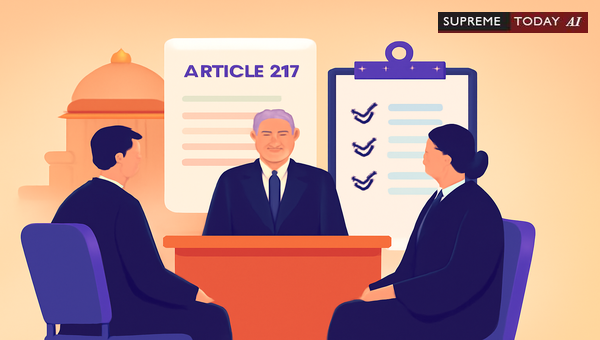
Understanding the Selection Process for High Court Judges in India
The forms the backbone of India's democratic framework, ensuring justice, upholding the , and safeguarding rights. At the heart of a robust judicial system lies the process of appointing qualified judges to . But how does this critical selection happen? The question of the detailed process for selection of High Court Judges is pivotal, especially amid ongoing discussions on and transparency.
This blog post breaks down the constitutional mechanism under , highlights key stakeholders, and explores related judicial insights. While this provides general information, it is not legal advice—consult professionals for specific cases.
Overview of the Appointment Framework
The selection of High Court judges in India is governed by of the , mandating an integrated consultative process. It involves the Chief Justice of India (CJI), the Chief Justice of the High Court (HC CJ), the State Governor, and culminates with the President of India. This prioritizes to maintain independence. 2011 0 Supreme(All) 3502 2011 0 Supreme(All) 2060
The further details steps, criteria, and timelines, promoting transparency and accountability. 2015 8 Supreme 65
Step-by-Step Selection Process
Here's the structured procedure:
Initiation of Names: The HC CJ, in consultation with two senior-most judges, prepares a panel of meritorious candidates. This ensures initial vetting at the High Court level. 2011 0 Supreme(All) 3502 2011 0 Supreme(All) 2060
Consultations: The HC CJ seeks inputs from:
- The CJI
- The State Governor
- For non-Chief Justice appointments, the HC CJ concerned. 2005 0 Supreme(Mad) 1329 2004 0 Supreme(Raj) 1029
These consultations assess integrity, competence, and suitability.
Role of the Chief Justice of India: The CJI holds primacy, forwarding recommendations to the President after collegium deliberations. This was reaffirmed in key judgments emphasizing the 's lead role. 2011 0 Supreme(All) 3502 2011 0 Supreme(All) 2060
Final Appointment: The President issues the warrant under hand and seal, post-consideration of CJI's recommendations and Governor's views. 2001 0 Supreme(HP) 414 2004 0 Supreme(Raj) 1029
This process typically emphasizes merit, with candidates often drawn from senior advocates, judicial officers, or distinguished jurists meeting eligibility criteria (at least 10 years of practice or judicial service).
Key Considerations in Selection
Merit-Based Approach: Performance, integrity, and are paramount. Courts have stressed that selections must be non-arbitrary, fostering legitimate expectations among candidates. 2023 6 Supreme 688 2013 0 Supreme(SC) 629 2023 0 Supreme(SC) 1138
: Heavy judicial involvement safeguards against executive overreach, as noted in precedents upholding primacy of in appointments, including and even tribunal members with similar qualifications. 2023 6 Supreme 688 2015 8 Supreme 65 2025 Supreme(Online)(Kar) 36555
Transparency via MoP: The MoP mandates detailed criteria, including eligibility verification and integrity checks, ensuring accountability.
Challenges and Exceptions in Judicial Appointments
While the process is robust, it isn't immune to scrutiny. Judicial reviews arise in cases of alleged or rule violations. For instance:
of Rules: Amendments or provisos to recruitment rules generally apply prospectively unless explicitly retrospective. In a Madhya Pradesh case, a proviso to allowing promotions after two failed direct recruitments was held prospective: proviso itself provides waiting for two consecutive selection processes—legislative intent was very clear that said proviso shall have . It violated and directives on quotas (promotion, limited competitive exam, direct from Bar). 2025 0 Supreme(MP) 114
No Arbitrary Cut-offs: Introducing minimum viva-voce marks post-written exams without notice violates . In a Manipur case, executive instructions couldn't override statutory rules: Prescribing minimum marks for viva voce segment may be justified... but in present case such a requirement was introduced only after commencement. 2024 7 Supreme 68
Wait Lists and Eligibility: Eligible candidates can't be denied without a continuing wait list. In , a meritorious candidate at position 38 was appointed notionally. Relatedly, Fast Track Court judges' service counts for pension, but selection processes must adhere strictly. 2025 6 Supreme 377 2018 5 Supreme 265 2023 0 Supreme(Ker) 15
Precedence for Senior Judges: Appointments like Presidents prioritize retired District Judges over advocates. 2009 0 Supreme(Mad) 5390
These cases illustrate how courts intervene to ensure fairness, often quashing irregular appointments while protecting incumbents on equity grounds, e.g., placing officers in batches without reversion. 2025 0 Supreme(MP) 114
Related Processes: District Judges and Beyond
High Court selections mirror lower processes but with higher stakes. For District Judges:
Quotas balance from Bar, promotions, and exams. Violations, like creating a 'fourth channel,' are struck down. 2025 0 Supreme(MP) 114
Vacancies post-advertisement don't expand scope; separate processes for Fast Track Judges are valid if procedurally sound. 2018 5 Supreme 430
Trainees aren't 'judicial officers' until post-training appointment, allowing participation in higher selections. 2023 0 Supreme(Ker) 15
Pay and grades for District Judges (Selection/Super Time Scale) follow , influencing High Court eligibility. 2023 0 Supreme(Bom) 379
Conclusion and Key Takeaways
The selection of High Court judges is a meticulous, consultative mechanism designed to appoint meritorious individuals while preserving . Primacy of the CJI, merit focus, and MoP guidelines form its core, with courts vigilantly guarding against deviations.
Key Takeaways:- Start with HC CJ's panel, consult CJI/Governor, end with President's warrant.- Merit and integrity first; processes must be fair and prospective.- Judicial review available for irregularities, but equity protects serving officers.- Recommendations: Adhere to MoP, update for transparency, resolve disputes promptly.
This system upholds public confidence in the . For nuanced advice, seek expert counsel. Stay informed on evolving jurisprudence shaping India's judicial landscape.
#HighCourtJudges #JudicialAppointments #IndianConstitution












