Searching Case Laws & Precedent on Legal Query.....!
Analysing the retrieved Case Laws
Scanned Judgements…!



Searching Case Laws & Precedent on Legal Query.....!
Analysing the retrieved Case Laws
Scanned Judgements…!
Similarity of Mark Names in Hindi - The sources indicate that phonetic and visual similarities between Hindi or transliterated marks can lead to confusion or infringement concerns. For example, DUNIYADARI is phonetically similar to the impugned mark DUNIYADARI, and despite suggesting or suggestive nature, it has acquired distinctiveness in the news industry ["2026 Supreme(Online)(Del) 21"]. Similarly, the Hindi transliteration of MIRINDA was used in relation to liquor, and the court emphasized that the use of the same or similar marks, even in different languages or scripts, can cause deception if they are similar enough ["2023 0 Supreme(Del) 1537"]. The case of RAASHEE versus RAJSHREE illustrates that visual and phonetic similarities, especially in Hindi, can deceive an average consumer and constitute infringement ["2015 0 Supreme(Del) 4425"]. Moreover, the use of Hindi words like Vasundhra (meaning earth or bearer of all) was deemed a weak trademark intrinsically but still protected if used in relation to identical goods and prior user rights are established ["2023 0 Supreme(Del) 3411"].
Use of Hindi in Trademark and Domain Names - The courts recognize that Hindi or Devanagari script marks, when similar in appearance or sound to existing trademarks, may infringe or cause confusion. For instance, the use of HITASHI in Hindi was restricted because it was similar to HITACHI in English, and the court held that use in Hindi was not permissible to avoid deception ["1995 0 Supreme(Del) 643"]. The domain name republichindi.com was found deceptively similar to republichindi trademarks, especially considering the visual and contextual use of language ["2020 0 Supreme(Cal) 316"].
Trademark Rights and Distinctiveness - The legal framework emphasizes that prior use, registration, and distinctiveness are key to establishing rights. For example, Mathura Ghee with a similar mark was protected based on prior use since 1990, and the use of a deity’s name alone is not enough to prevent imitation if the overall mark is distinctive ["1998 Supreme(Online)(AP) 7"]. The court also noted that a mark like JUMBO, associated with elephants, is distinctive enough to grasp consumer recognition, and imitation of such features can cause injury to the original business ["2024 0 Supreme(Cal) 1235"].
Phonetic and Visual Similarity in Hindi - The courts have acknowledged that Hindi words, when written or spoken, can be deceptively similar, especially to an unwary consumer. For example, RAJSHREE and RAASHEE are phonetically similar in Hindi, and visual similarity in Devanagari script can deceive consumers, leading to infringement suits ["2001 0 Supreme(Del) 1534"], ["KAMAL KANT AND COMPANY LLP vs RAASHEE FRAGRANCES INDIA PVT. LTD. - Delhi"]. The similarity in scripts and sounds can cause confusion regardless of the language of the mark.
Analysis and Conclusion:The provided cases collectively demonstrate that in Indian trademark law, phonetic, visual, and contextual similarities in Hindi or transliterated marks are significant. Marks that are similar in pronunciation or appearance, especially in Devanagari script, can lead to confusion and infringement claims, even if they are in different languages or scripts. Prior use, distinctiveness, and the likelihood of deception are critical factors. Therefore, when selecting similar names in Hindi, caution is essential to avoid legal disputes, as courts tend to protect marks that have acquired distinctiveness or are used in relation to specific goods/services, and view phonetic and visual similarities as potential infringement risks ["2026 Supreme(Online)(Del) 21"] ["2023 0 Supreme(Del) 1537"] ["2015 0 Supreme(Del) 4425"].
References:- ["2026 Supreme(Online)(Del) 21"]- ["KAMAL KANT AND COMPANY LLP vs RAASHEE FRAGRANCES INDIA PVT. LTD. - Delhi"]- ["2023 0 Supreme(Del) 1537"]- ["2015 0 Supreme(Del) 4425"]- ["2001 0 Supreme(Del) 1534"]- ["1998 Supreme(Online)(AP) 7"]- ["2024 0 Supreme(Cal) 1235"]- ["KAMAL KANT AND COMPANY LLP vs RAASHEE FRAGRANCES INDIA PVT. LTD. - Delhi"]- ["1995 0 Supreme(Del) 643"]
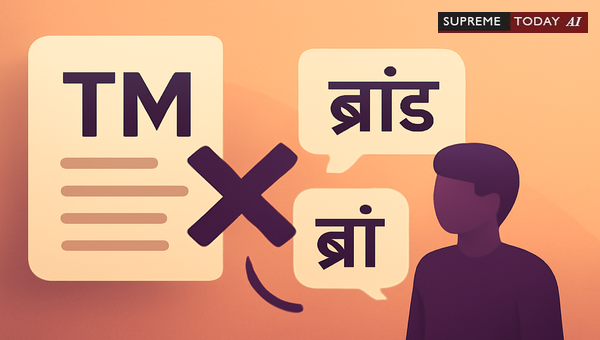
In today's diverse market, businesses often choose Hindi names for their brands to connect with local audiences. But what happens when two businesses pick similar Hindi names? Can one claim ? The question trademark similar name in Hindi arises frequently, especially with words in Devanagari script that carry cultural or descriptive meanings.
generally assess such cases based on visual, phonetic, and , alongside the . This blog post breaks down the legal principles, key court findings, and practical advice drawn from judgments. Note: This is general information, not legal advice. Consult a trademark attorney for specific cases.
Trademark law in India, under the , protects marks that are distinctive. However, similarity in Hindi names doesn't automatically mean infringement. Courts examine:
For instance, mere similarity in sound or appearance isn't enough; the overall impression matters, including the nature of goods/services and reputation. 1971 0 Supreme(SC) 302
Common Hindi words like GHADI (clock) or NANDI (cow/Goddess) are typically generic or descriptive, making them hard to monopolize exclusively. They often carry secondary meanings tied to culture or daily use, limiting exclusive rights unless is proven. 2023 0 Supreme(Del) 4344 2011 2 Supreme 394
In cases involving GHADI and GHADIYAL, courts stressed that etymology alone doesn't decide infringement. The overall impression and goods (e.g., medicinal preparations) are crucial. Common terms like GHADI can't be exclusively owned without strong evidence of . 2025 0 Supreme(SC) 1202
Words with religious significance, such as NANDI or NANDHINI, can be used by multiple parties if goods differ and no confusion arises. Courts noted: common, religious, or culturally significant words in Hindi are not inherently exclusive unless they have acquired and reputation. 2023 0 Supreme(Del) 4344 2011 2 Supreme 394
In NANDHINI DELUXE vs. NANDINI, differences in prefixes, logos, and presentation helped avoid infringement. 1999 0 Supreme(Del) 130
Even minor changes, like dropping a letter, don't escape scrutiny if persists. In one case, UTROTON was held to registered UTEROTONE, especially with identical packaging, red cans, cow device, and Hindi inscription. The court found: The petitioner has dropped the alphabet 'E' from the registered trade mark UTEROTONE... but such act... has made no difference to the visual, structural and . 2021 0 Supreme(Del) 1368
Prior users of Hindi/Sanskrit marks can challenge English equivalents conveying the same idea. MAYUR (peacock in Sanskrit/Hindi) successfully enjoined PEACOCK for plastic goods due to deceptive similarity, priority since , and public confusion. The court affirmed under . 1994 0 Supreme(Del) 426
Even potentially descriptive Hindi combinations like PANCHARISHTA (five arishtas) gain protection if they acquire through long use, especially for medicines where consumer confusion risks are high. 2019 0 Supreme(Del) 2223
Generic Hindi/Sanskrit words such as GATI (common in dictionaries) may not infringe if services differ. In GATI (logistics) vs. GATI DANCE FORUM, no confusion was found due to distinct fields. 2014 0 Supreme(Del) 622
Courts weigh several elements:
Exceptions include:- Descriptive/generic Hindi words without . 1971 0 Supreme(SC) 302- Culturally significant terms used differently without deception. 2023 0 Supreme(Del) 4344- Distinct presentations distinguishing marks. 1999 0 Supreme(Del) 130
To navigate Hindi trademark risks:
Similar Hindi names in trademarks are permissible if they avoid public deception, especially for common or cultural words. Courts prioritize consumer protection through holistic analysis—visual, phonetic, conceptual—rather than script alone. Cases like NANDINI, MAYUR, and UTEROTONE illustrate that while generic terms face hurdles, distinctive use with reputation prevails.
Key Takeaways:- Focus on overall impression and confusion likelihood. 1998 0 Supreme(Mad) 818- Differentiate via design elements.- Prior user/registration often wins.
For tailored guidance, seek professional IP counsel. Stay informed on evolving IP law to safeguard your brand.
References: Cited judgments include 1971 0 Supreme(SC) 302, 2023 0 Supreme(Del) 4344, 2011 2 Supreme 394, 1999 0 Supreme(Del) 130, 2025 0 Supreme(SC) 1202, 1994 0 Supreme(Del) 426, 2021 0 Supreme(Del) 1368, 2019 0 Supreme(Del) 2223, 2014 0 Supreme(Del) 622, 2025 Supreme(Online)(Bom) 4582, 2023 0 Supreme(Del) 4556, 1998 0 Supreme(Mad) 818, 1983 Supreme(Online)(Del) 1.
#HindiTrademarks #TrademarkInfringement #IPLawIndia


In stark contrast, the Mark ‘DUNIYADARI’ is not a religious or widely generic name that is common to the news broadcasting trade. Hence, this case also does not help the Defendant. ... Even the segment is the same as both the programmes target the North-Indian Hindi / Punjabi speaking viewers. There is a phonetic similarity between both the Subject Mark and the Impugned Mark as both are pronounced as ‘DUNIYADARI’. ... In fact, Defendant is the prior adopter and user of the Trade Mark ‘....

Per contra, learned A.G.A. has opposed the bail prayer of the applicant but could not dispute the aforesaid fact that applicants have already been released on bail in simillar case. ... Learned counsel for the applicants submits that applicants in simillar case have already been granted bail by co-ordinate Bench of this Court vide order dated 5.1.2021 in Criminal Misc. ... Considering the facts and circumstances of the case as well as submissions advanced by learned counsel for the parties and also perusing the material on record, enlargement o....
using Hindi transliteration of the mark MIRINDA, in relation to country made liquor. ... or trade name." ... Plaintiffs immediately initiated an investigation, which revealed that Defendant No.2 is a Director in Defendant No.1 company, which is currently using Hindi transliteration of the mark MIRINDA i.e. ... However, if despite legal notice, any one big or small, continues to carry the illegitimate use of a significant world wide renowned name/mark as is being done ....

The question which falls for consideration and examination is that if a perso is the prior user of a trade mark in Hindi, can another person use the trade mark using another word in English but conveying the same idea as conceived by the word used in Hindi. The answer is in affirmative. ... MAYUR is a Sanskrit name of a bird and in India it is called by different name as mor or MAYURI, the English equivalent or name of MOR in English language is PEACOCK. Plaintiff h....
The name Andal does not cease to be deceptively similar because it is used in conjunction with a pictorial device. The case of De Cordova v. Vick Chemical Co., 1951(68) RPC 103 is instructive. ... Where the trade relates to goods largely sold to illiterate or badly educated persons, it is no answer to say that a person educated in the Hindi language would go by the etymological or ideological meaning and see the difference between "current of nectar" and "current of Lakshman". ... An unwary purchaser of average intelligence and imperfect recollection would....

Further, `Vasundhra' in Hindi means the earth or the bearer of all. Thus, intrinsically, the word `Vasundhra' would be a weak trademark. ... -Nothing in this Act shall entitle the proprietor or a registered user of a registered trade mark to interfere with any bona fide use by a person of his own name or that of his place of business, or of the name, or of the name of the place of business, of any of his predecessors in business ... Defendant no.2 is the domain name registrar of the im....
S.28(1) of the Trade and Merchandise Marks Act, 1958, confers upon the registered proprietor of the trade mark the exclusive right to use the trade mark in relation to the goods in respect of which the trade mark is registered and to obtain relief in respect of infringement of his trade mark. ... To carry on business under such a name, mark, description or otherwise in such a manner as to mislead the public into believing that the business is that of another person, is an actionable wr....
Justice Anil Dev Singh had occasion to consider the claim of a person to use the same name in Hindi, in FAO (OS) 169/94. ... However, the learned Counsel for the defendants contended that they would be within their rights in using the same in Hindi and, therefore, to the extent that the defendants would be entitled to use the HITASHI name in Hindi the claim of the plaintiff should be rejected. ... Hindi/devnagri script. ... Inasmuch as the defendants have conceded that the na....

It is submitted that the Plaintiff is owner of artistic work “RAM BANDHU” both in Hindi and English which was created by one Mr. Dnyaneshwar M. Bachhav in the year 2002. ... The adoption of the mark “Shree Ram Bandhu” is claimed to be a honest and bona fide adoption for the reason that the adoption was of the name of Lord Ram and it is common for businesses to adopt the name of the God as part of its trade name. ... The submission is flawed as the Defendant’s mark is not standalone #H....
Aziz Makbool Tade; . ... Hafiz Hasan Tade; . ... Salim Yacub Tade; . ... Kaiyyum Yusuf Tade; . ... Akbar Mehmood Tade; .
Below the shaded rectangle, the trade mark UTEROTONE is also written in Hindi Language. The respondent has a copyright in respect of the said packing and label. The label carries a depiction of a device of cow on the top and at the centre of the label. In 1989, the respondent adopted a distinctive red colour plastic can packing for its products with a distinctive artistic label in which the trade mark UTEROTONE is written in a shaded rectangle having two thick parallel lines on the top and below the rectangle.
This combination did not exist prior to the Plaintiff's usage. The fact that the Plaintiff's product is an over the counter drug which requires DCGI approval shows that consumers can easily purchase the Defendant's products as that of the Plaintiff's due to the use of the word "PANCHARISHTA". The mark "PANCHARISHTA" is a unique combination of the number "5" in Devanagari/Hindi language, combined with the word Arishta.

Use of colour label with background having a colour combination of Brown and Yellow. The mark "BAPA" is printed in bold BAPA Capital letters in English and Hindi with white ghost - line around the letters. The mark "BABU" is printed in bold BABU Capital letters in English and Hindi with white ghost - line around the letters. Use of the word parcel along with the mark "BABU".
The mark GATI is a common Hindi/Sanskrit word and finds mention in Hindi and Sanskrit dictionaries. It had been stated that a simple search at the Indian Trademark Office reveals that there are numerous companies using the mark GATI for various services. Likewise there are companies engaged in different businesses that use GATI as an integral part of their company name.

It is stated that the appellant against whom a suit for injunction is pending has taken the plea that the labels are different and however, a notice of opposition against the grant of registration of trade mark Talod Instant Mix under Application No.1798695 has been filed and the appellant is taking a different stand in different proceedings. Talod is an artistic work which require protection and therefore the aforesaid suit came to be filed. It is therefore contended that registration of the trade mark Talod Instant Mix in Hindi as well as in Gujarati with the label and trade mark....


An indispensable Tool for Legal Professionals, Endorsed by Various High Court and Judicial Officers
Please visit our Training & Support
Center or Contact Us for assistance

Scan Me!
India’s Legal research and Law Firm App, Download now!


For Daily Legal Updates, Join us on :



 Back to top


