


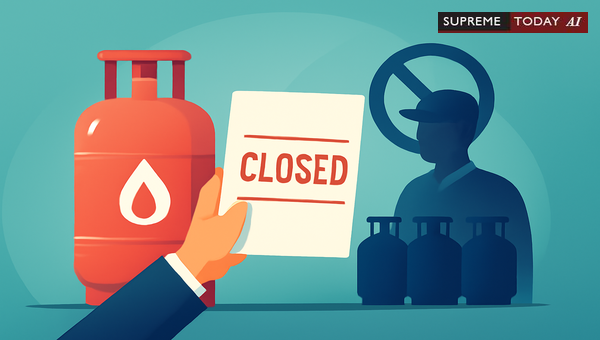
Illegal Gas Distribution: Legal Risks in India
Introduction
In the bustling energy market of India, where liquefied petroleum gas (LPG) is an essential commodity for millions of households and businesses, the question of Illegal Gas Distributor activities looms large. What happens when a gas distributor operates without proper authorization, diverts cylinders for unauthorized use, or violates licensing terms? Such practices not only endanger public safety but also invite severe legal consequences under Indian law. This blog post delves into the legal frameworks, key provisions, case insights, potential defenses, and practical recommendations to help stakeholders navigate this complex area.
Illegal gas distribution typically involves unauthorized or unlicensed sale and distribution of LPG cylinders, often breaching regulatory orders and contractual obligations. Understanding these risks is crucial for distributors, businesses, and consumers alike. Let's break it down step by step.
Overview of Illegal Gas Distribution
Illegal gas distribution in India falls under multiple legal frameworks, primarily the and the . These laws regulate the production, supply, and distribution of LPG to ensure public safety, fair pricing, and prevent black-market activities. Violations can lead to criminal charges, fines, imprisonment, and termination of distributorships.
For instance, distributors appointed by oil marketing companies (OMCs) like or must adhere to strict agreements renewed periodically. Breaches, such as selling cylinders without receipts or diverting domestic LPG for commercial use, trigger action. As noted in one case, The OMC had proceeded against the appellant, its distributor, based on specific allegations put to the distributor by the two show-cause notice. 2024 0 Supreme(Pat) 990
Relevant Legal Provisions
Key sections include:1. : . This applies when a distributor misrepresents gas quality or quantity.2. : , relevant for agents or merchants handling public commodities.3. : , holding co-conspirators liable.
This Act directly governs LPG as an essential commodity. Unauthorized distribution violates its provisions, leading to penalties like imprisonment and fines. Additionally, the mandates prior written permission from oil companies for actions like refusing home delivery or territory expansions. Violations, such as diverting LPG for unauthorized purposes, justify disciplinary measures. 2023 0 Supreme(Cal) 1449 2023 0 Supreme(Ker) 50
Case Law Insights
Courts have consistently upheld actions against illegal distributors, emphasizing public interest and regulatory compliance.
Criminal Liability: Charges under IPC arise for cheating consumers. For example, if a distributor sells substandard gas, they face prosecution. Courts note, Individuals or entities involved in illegal gas distribution can be charged under IPC sections for cheating and breach of trust. For instance, if a distributor misrepresents the quality or quantity of gas, they may face charges under for cheating. 2024 3 Supreme 199
Regulatory Violations: The Essential Commodities Act empowers authorities to penalize unauthorized practices. Courts have upheld the government's authority to regulate and penalize illegal distribution practices to ensure public safety and fair pricing. 2024 3 Supreme 130
Public Interest: Judiciary prioritizes consumer protection. The judiciary has emphasized the importance of maintaining public interest in cases involving essential commodities. Illegal distribution not only harms consumers but also undermines the regulatory framework established to protect them. 2009 3 Supreme 487
Other cases highlight real-world enforcement:- Termination for irregularities: During an inspection, the Rationing Inspector attached to the office of the 2nd respondent inspected the godown of the petitioner and in the said inspection, irregularities were detected. 2017 0 Supreme(Ker) 54- Supply failures: It is alleged that despite giving affidavit as sought for and repeated requests, the opposite party no.3-distributor/dealer did not continue supply of gas cylinder. 2025 Supreme(Online)(SCDRC) 32134- Dealership disputes: The appellant was appointed by the respondent as a distributor/dealer of gas cylinders in the year . Agreements are renewed every , but breaches lead to termination. 2018 0 Supreme(Bom) 463
Courts often dismiss challenges if due process is followed, as in cases of unlawful or unauthorized operations like illegal sales. 2024 2 Supreme 592 2023 0 Supreme(Cal) 831
Potential Defenses
While convictions are common, defenses may include:- Lack of Knowledge: Claiming unawareness of illegality, though ignorance of the law is generally not a valid defense.- Compliance Proof: Demonstrating valid licenses and records. For example, As per procedure, the customer has to apply for new gas connection in the office of the distributor. Though it is correct that sale of 49 cylinders was found... as per normal practice, receipts...
DIRECTOR (RESEARCH) VS NAGDA GAS AGENCY - Consumer
However, these succeed only with strong evidence, as courts scrutinize jurisdiction and due process. 2024 0 Supreme(Telangana) 320 2023 0 Supreme(Cal) 393
Insights from Additional Cases
Numerous disputes involve distributorship terminations for violations:- Restructuring due to poor service: Since the action as proposed above, is warranted due to inability of M/s Avirat Gas to meet the customer needs... 2014 0 Supreme(MP) 732- Coverage lapses: Lists of distributors like M/s. Gas Links (Indane Distributor) facing issues. 2011 0 Supreme(Mad) 3483
Overall, Distributors operating without proper licensing or outside the scope of their agreement... are considered to be involved in illegal distribution activities. Courts uphold terminations if procedures are followed. 2023 0 Supreme(Cal) 393 2023 0 Supreme(Cal) 1209
Recommendations for Compliance
For Distributors and Businesses
- Secure and renew licenses from OMCs and comply with the LPG Regulation Order.
- Maintain detailed transaction records and avoid diversions.
- Ensure godown capacities and supply chains meet standards, e.g., Gas will make arrangement for a godown with 8000 Kgs capacity... 2014 0 Supreme(MP) 732
For Legal Practitioners
- Advise on IPC and Essential Commodities Act implications.
- Gather evidence of transparency for litigation.
Proactive compliance prevents issues like those in show-cause notices. 2024 0 Supreme(Pat) 990
Conclusion and Key Takeaways
Illegal gas distribution carries substantial risks, from IPC criminal charges to distributorship termination under the Essential Commodities Act. Stakeholders must prioritize regulatory adherence to safeguard operations and public welfare. Key takeaways:- Always obtain authorizations for sales and deliveries.- Document everything to counter allegations.- Courts favor enforcement when due process is observed.
Disclaimer: This post provides general information based on legal principles and case insights. It is not specific legal advice. Consult a qualified attorney for personalized guidance.
References: 2024 3 Supreme 199 2024 3 Supreme 130 2009 3 Supreme 487 2024 0 Supreme(Pat) 990 2025 Supreme(Online)(SCDRC) 32134 2018 0 Supreme(Bom) 463 2017 0 Supreme(Ker) 54 2014 0 Supreme(MP) 732 2011 0 Supreme(Mad) 3483
DIRECTOR (RESEARCH) VS NAGDA GAS AGENCY - Consumer
2023 0 Supreme(Cal) 1449 2023 0 Supreme(Ker) 50 2024 0 Supreme(Telangana) 320 2023 0 Supreme(Cal) 393 2021 Supreme(Online)(Mad) 79860 2024 2 Supreme 592 2023 0 Supreme(Cal) 831 2023 0 Supreme(Cal) 1209 #IllegalGasDistribution #LPGIndiaLaws #GasDistributor















