


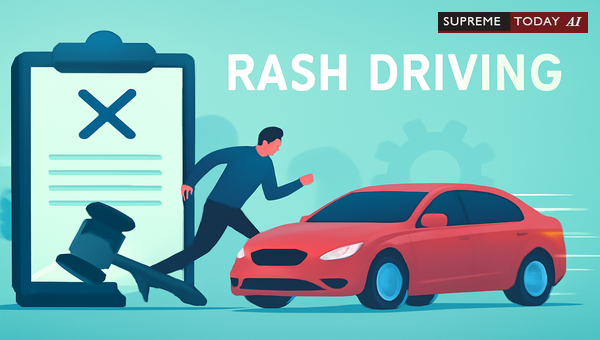
Illegal Vehicle Use: IPC and MV Act Provisions Explained
Introduction
In India, the misuse of vehicles—whether through rash driving, unauthorized operation, or involvement in criminal activities—carries serious legal consequences. Many drivers and vehicle owners wonder: What are the provisions for illegal use of a vehicle under the IPC and MV Act? This question arises frequently in cases involving accidents, unlicensed driving, or vehicles used for illicit purposes. Understanding the interplay between the and the is crucial for compliance and defense.
This blog post breaks down the key legal frameworks, penalties, enforcement mechanisms, and related issues like vehicle seizure and presumptions of consent. Note that this is general information based on judicial precedents and statutes; it is not specific legal advice. Consult a qualified lawyer for personalized guidance.
Overview of Legal Frameworks
The MV Act serves as a comprehensive code regulating motor vehicle usage, including registration, permits, licensing, and penalties for violations. Meanwhile, the IPC addresses criminal liability for acts like rash driving or causing harm. Importantly, these statutes operate independently, allowing for concurrent application without conflict. The has clarified that there is no conflict between the MV Act and the IPC; both statutes can apply concurrently to the same act or omission without infringing on each other’s provisions 2021 0 Supreme(Chh) 78 2023 0 Supreme(Telangana) 322.
Offenses under Chapter XIII of the MV Act do not abrogate IPC provisions such as Sections 297, 304, 304A, 337, and 338. As noted, The legislative intent of the MV Act and in particular Chapter XIII of the MV Act, was not to override or supersede the provisions of IPC insofar as convictions of offenders in motor vehicle accidents 2020 0 Supreme(All) 933 2020 0 Supreme(Mad) 1109. The maxim (general law does not derogate from special law) is inapplicable here, as the offenses serve distinct purposes 2019 0 Supreme(SC) 1132.
Key Offenses under the IPC
The IPC targets criminal intent and harm caused by vehicle misuse:
- Section 279: Rash driving or riding on a public way, endangering human life.
- Section 304A: Causing death by negligence.
- Sections 337 and 338: Causing hurt or grievous hurt by acts endangering life or personal safety.
These provisions fill gaps in the MV Act, which focuses on regulatory breaches rather than criminal harm. These provisions are distinct from those in the MV Act, which does not specifically address the criminal liability for causing death or injury through negligent driving 2023 0 Supreme(Telangana) 322 2021 0 Supreme(Chh) 103.
Courts have reinforced that IPC applicability persists even in MV Act-covered scenarios, ensuring accountability for serious outcomes like fatalities.
Provisions under the MV Act
The MV Act penalizes regulatory violations related to illegal use:
- Section 66: Driving without a permit.
- Section 192A: Using a vehicle in contravention of permit conditions.
- Section 39 and 192: Driving without registration; transport vehicles need a fitness certificate under Section 56. Under , driving a motor vehicle or causing or allowing a motor vehicle to be used without registration under is an offence
.
- Section 207(1): Allows vehicle seizure for violations, but this must be proportionate. Therefore, the seizure of the vehicle under Section 207(1) of MV Act is held illegal... Such a violation may be dealt with under relevant provision but the vehicle cannot be seized and detained under Section 207(1) of MV Act 2020 0 Supreme(AP) 113.
Penalties include fines and imprisonment, typically lighter than IPC sanctions but cumulative.
Concurrent Prosecution and Enforcement
Prosecution under both laws is permissible for the same incident if offenses do not overlap. An offender may face MV Act fines for unlicensed driving alongside IPC charges for rashness causing injury 2019 0 Supreme(SC) 1132 2019 0 Supreme(Gau) 811.
Vehicle Seizure and Release
Seizure often occurs during investigations, but courts emphasize procedural fairness. Under the MV Act, vehicles can be detained temporarily, but illegal auctions or disposals are unlawful. Authorities conducting vehicle auctions must adhere to statutory rules. Unauthorized sale or disposal, especially in violation of prescribed procedures, is illegal (derived from 2023 0 Supreme(Pat) 274). Owners may seek release under Section 451 Cr.P.C. during trials, particularly if not linked to like NDPS offenses without proof of consent
2023 0 Supreme(Raj) 297.
In NDPS cases, unless proof shows a person knowingly permitted illegal use, they cannot be held liable under provisions like or IPC 2024 0 Supreme(Raj) 202 2025 1 Supreme 698.
Special Considerations: Juvenile Use and Unauthorized Permission
Presumption of Consent for Juveniles: presumes guardian consent for juvenile vehicle use, heightening parental responsibility. Section 199A of the Motor Vehicles Act (MV Act) presumes that any use of a vehicle by a juvenile is with the guardian’s consent... This presumption simplifies cases involving juvenile driving
2024 0 Supreme(Guj) 452.
Undertakings in Bail: Courts may require undertakings like the petitioner shall give an undertaking that he will not use the vehicle for any illegal activities in future 2023 0 Supreme(Mad) 1889.
These elements underscore that illegal use hinges on evidence of knowledge or permission.
Penalties and Practical Implications
| Statute | Key Offense | Typical Penalty ||---------|-------------|-----------------|| MV Act | No permit (Sec 66), Permit violation (Sec 192A) | Fines, short imprisonment 1998 0 Supreme(Raj) 246 || IPC | Rash driving (Sec 279), Death by negligence (Sec 304A) | Imprisonment up to 2-10 years 2021 0 Supreme(Chh) 103 |
Legal practitioners should evaluate cases holistically, invoking both statutes for robust prosecution while protecting rights.
Conclusion and Key Takeaways
Illegal vehicle use under the IPC and MV Act reflects a dual regulatory-criminal approach, enabling comprehensive enforcement. Key takeaways:- Statutes apply concurrently; no overlap bars dual charges 2023 0 Supreme(Telangana) 322 2021 0 Supreme(Chh) 78.- IPC covers harm; MV Act handles compliance 2021 0 Supreme(Chh) 103.- Seizures must follow procedures to avoid illegality 2020 0 Supreme(AP) 113.- Presumptions aid juvenile cases but require proof for consent
.
Vehicle owners and drivers should prioritize licensing, safe operation, and documentation to mitigate risks. For case-specific advice, engage a legal expert promptly.
References:- 2021 0 Supreme(Chh) 78 2023 0 Supreme(Telangana) 322 2019 0 Supreme(SC) 1132 2021 0 Supreme(Chh) 103 1998 0 Supreme(Raj) 246 2020 0 Supreme(All) 933 2020 0 Supreme(Mad) 1109 2020 0 Supreme(AP) 113
2024 0 Supreme(Guj) 452 2024 0 Supreme(Raj) 202 2025 1 Supreme 698
2023 0 Supreme(Pat) 274 2023 0 Supreme(Raj) 297 #IllegalVehicleUse, #IPCandMVAct, #TrafficLawsIndia















