
Searching Case Laws & Precedent on Legal Query..!
Scanned Judgements…!
Searching Case Laws & Precedent on Legal Query..!
Scanned Judgements…!
United India Insurance Company Ltd. VS Belaben Harishkumar Gandhi - Consumer
"], ["2025 Supreme(Online)(Mad) 69768"].Conclusion:In accidental cases where the insured party had a valid driving license at the time of the incident, the insurance company’s appeal for partial payment or denial based on licensing issues is often unsuccessful. The courts emphasize that the insurer must prove that the license was invalid or that the breach directly caused the accident to avoid liability. If the license was valid and proper driving credentials were in place, the insurer remains liable to pay, though they may seek recovery from the insured if breach conditions are proved later.
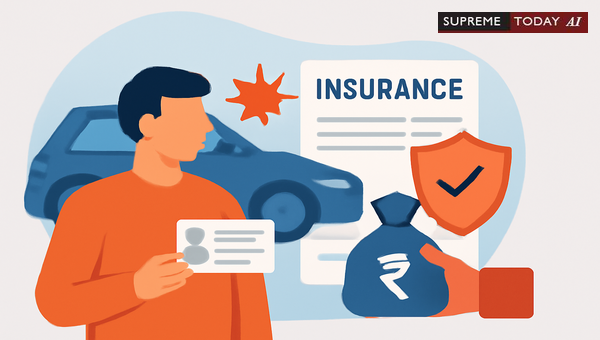
In the chaotic aftermath of a motor accident, questions about insurance coverage often take center stage. Imagine a scenario: an accident occurs, the vehicle is fully insured, and the driver holds what appears to be a proper driving license. Yet, the insurance company appeals to the High Court seeking only partial payment. Can they limit their liability? This is a common dilemma in cases related to accidental claims where the insurance company appeals to the High Court for partial payment of accident compensation, but the other party has fully insured the vehicle and the driver possesses a proper driving license.
This blog post dives into the legal principles governing such disputes, drawing from landmark judgments and the Motor Vehicles Act, 1988 (MV Act). We'll explore when insurers remain liable to third-party claimants, the critical role of license validity, and the insurer's burden of proof. Note: This is general information based on case law and not specific legal advice. Consult a qualified lawyer for your situation.
Generally, in accidents involving fully insured vehicles where the driver holds a valid license, the insurance company's liability to third parties stands firm. Courts have consistently ruled that insurers cannot evade payment solely based on minor breaches unless they prove specific conditions.
As established in key judgments, The liability to pay compensation for a motor accident lies with the Insurance Company if the vehicle is fully insured and the driver possesses a valid driving licence. 1996 0 Supreme(P&H) 1134 Similarly, liability persists even if challenges arise later, provided the license was valid at the time of the accident. 2005 0 Supreme(Ori) 790
Under Section 149 of the MV Act, insurers must indemnify third-party claimants unless they demonstrate:- A breach of policy conditions (e.g., invalid license).- That the insured (owner) was aware of the breach and permitted the driver to operate the vehicle.- That the breach fundamentally contributed to the accident.
The insurer bears the burden of proof. Without this, they remain liable, though they may later recover from the insured (pay and recover). 2003 2 Supreme 768 2021 0 Supreme(Bom) 699
When the driver has a genuine, valid license and the vehicle is comprehensively insured, courts uphold the insurer's full responsibility. For instance:- In one case, the insurer's appeal was dismissed because the driver held a valid license, affirming third-party compensation. 1996 0 Supreme(P&H) 1134- Another ruling emphasized that the insurer’s liability is not negated solely because the driver was not licensed, provided the license was valid at the time of the accident. 2005 0 Supreme(Ori) 790
Even in appeals to higher courts, such as the High Court or Supreme Court, valid licenses protect the insurer's obligation. This protects innocent third parties from being left without recourse.
Fake or invalid licenses complicate matters, but insurers don't get an automatic escape. The insurance company cannot avoid liability solely on the ground that the person driving the vehicle at the time of the accident was not duly licensed. 2021 0 Supreme(Bom) 699
Courts require proof of the insured's knowledge. For example:- Section 149(2) defenses are limited; the insurer must show the insured's willful breach. 2003 2 Supreme 768- The defence taken by the Insurance Company regarding driving licence and policy violation is not permissible under Section 149(2) of the Motor Vehicles Act, 1988. 2025 0 Supreme(Kar) 2022
In a Supreme Court-reviewed case, the insurer was held liable despite a fake license, with rights to recover from the owner. The court enhanced compensation from Rs.8,00,000 to Rs.11,64,000, directing pay and recover. This aligns with precedents like National Insurance Company Limited v. Geeta Bhat. 2023 0 Supreme(AP) 1115
Further, to avoid its liability towards insured unless the said breach or breaches on the condition of driving licence is/ are so fundamental as are found to have contributed to the case of the accident. 2023 0 Supreme(AP) 1115
The onus is squarely on the insurer:- Prove the breach was on the part of the insured. 2003 2 Supreme 768- Establish the insured's awareness and permission. 2014 0 Supreme(Raj) 1671- Link the breach to the accident's cause. 2025 0 Supreme(Cal) 13
Failure here means full liability to claimants. In one appeal, the insurer lost because the driver's license validity was a factual issue not raised timely before the tribunal. 2008 0 Supreme(Ori) 915
The issue of the driver's valid licence is a question of fact, not a substantial question of law, and failure to raise the issue before the Tribunal and provide evidence can lead to the dismissal. 2008 0 Supreme(Ori) 915
Insurers may avoid or limit liability in rare cases:- Proven insured knowledge of invalid license + permission + contribution to accident. 2003 2 Supreme 768 2014 0 Supreme(Raj) 1671- License not in force on accident date, as in a Rajasthan High Court case upheld by the Supreme Court. 2018 0 Supreme(Bom) 2640
However, mere absence of a badge or minor issues doesn't suffice. The burden of proof lies with the insurer to establish a breach of policy conditions by the insured, and the absence of a badge alone is not sufficient to exonerate the insurance company from liability. 2007 0 Supreme(Ker) 396
The insurance company cannot disown its liability for compensation if the owner did not deliberately entrust the vehicle to a person without a valid driving licence. 2004 0 Supreme(Jhk) 698 2004 0 Supreme(Jhk) 697
Additional rulings reinforce these principles:- In injury claims, insurers paid despite license disputes, with recovery rights if proven. Courts enhanced awards using multipliers (e.g., 16 for young deceased). 2018 0 Supreme(Bom) 2640 (Note: Adapted contextually.)- Appeals under Workmen's Compensation Act dismissed if license issues are factual oversights. 2008 0 Supreme(Ori) 915
These cases highlight tribunals' and courts' focus on protecting claimants while allowing insurers recovery paths.
The legal consensus is clear: Insurers generally remain liable to third-party claimants in motor accidents if the vehicle is insured and the driver had a valid license. Even with fake licenses, escape clauses are narrow—requiring proof of insured's willful breach and causal link. High Court appeals for partial payments often fail without this evidence.
Key Takeaways:- Valid license + insured vehicle = Insurer pays. 1996 0 Supreme(P&H) 1134- Invalid license? Insurer still pays unless they prove insured's fault. 2003 2 Supreme 768- Always pay and recover for third parties. 2014 0 Supreme(Raj) 1671- Burden on insurer; claimants protected.
Stay informed, drive safely, and insure properly. For personalized guidance, reach out to a legal expert.
References (Selected):1. 1996 0 Supreme(P&H) 11342. 2005 0 Supreme(Ori) 7903. 2003 2 Supreme 7684. 2014 0 Supreme(Raj) 16715. 2021 0 Supreme(Bom) 6996. 2025 0 Supreme(Kar) 20227. 2023 0 Supreme(AP) 1115
#MotorAccidentClaims, #InsuranceLiability, #DrivingLicenseLaw
compensation amount to the third party and the Insurance company may recover the same from the insured. ... Nikhil Mehta, learned counsel for the appellant – Insurance company, would submit that although the Insurance company has preferred this appeal against the order of the Tribunal, primarily on the ground that the rider of the motorcycle was not holding a valid driving license at the time of the accid....
It is not the case of the appellant that the insured knowing fully well that the rider did not possess a valid and effective driving licence to ride the motor cycle involved in the accident permitted him to ride and thereby committed breach of conditions of the policy. ... to him, it is not the case of the insurance company that the rider had incurred any disqualification for holding a licence. ... The very renewal....
More importantly, even in such a case the Insurance Company would remain liable to the innocent third party, but it may be able to recover from the insured. This is the law which has been laid down in Skandia 's Sohan Lal Passi 's and Kamla 's case. ... The learned Counsel for the appellant would argue that the learned Member of the Tribunal has failed to consider that the driving licence of the Driver of the offending tanker was in the name of someo....
While the case of complainant is that on the day of accident, car was driven by paid driver Bipin Bhai Maheta, the case of OP Insurance Company is that it was the owner of Car Hareshbhai Vallabhdas Gandhi who was driving the car, but at the time of accident, he was not holding a valid and effective driving ... In this case, the deceased driver/insured lacked the necessary valid driving license as ....
After service of notice, the respondents No.1 and 2 denied rash and negligent driving and the claimant’s alleged injuries, asserting that respondent No.1 held a valid driving licence and the vehicle was duly insured. ... The defence taken by the Insurance Company regarding driving licence and policy violation is not permissible under Section 149(2) of the Motor Vehicles Act, 1988 (‘the MV Act’ for short). 9. ... However, the driver of the offending v....
4.The third respondent namely the United Insurance Company filed a counter contending that the petitioner drew his two wheeler without proper driving licence, fitness certificate and Registration Certificate ... 5.The fourth respondent namely IFFCO Tokio General Insurance Company filed a counter stating that he is not a necessary party. ... The company undertakes to pay compensation as per the following scale for bodily injury/dea....
Divisional Manager, The Oriental Insurance Company Limited and Others, Civil Appeal No. 8144 of 2018 and SLP (C) No. 26955 of 2017 the facts of the case are that the jeep driver had no valid driving license at the time of the accident and there was a violation of the terms of the insurance policy; the ... Where the driver did not possess a valid driving licence and there is a breach of policy conditions “pay and recover” can be orde....
to avoid its liability towards insured unless the said breach or breaches on the condition of driving licence is/ are so fundamental as are found to have contributed to the case of the accident. ... Where the driver did not possess a valid driving licence and there is a breach of policy conditions, "pay and recover" can be ordered in case of third-party risks. ... Divisional Manager, The Oriental Insurance #HL_STAR....
As per averment of the complainant/ respondent the non-applicant impleaded in the claim case who is the opposite party / appellant insurance company in this case was fully aware of the entire facts regarding accidental death of the insured Jitendra Kumar Mehta, but they did not take any step for settlement ... claim regarding accidental death of the insured but the claim amount was not given, whereas the deceased #....
The view taken by the National Commission that the law as settled in the Pepsu case (Supra) is not applicable in the present matter as it related to third-party claim is erroneous. It has been categorically held in the case of National Insurance Co. Ltd. vs. ... To answer this question, we shall advert to the legal position regarding the liability of the Insurance Company when the driver of the offending vehicle possessed an invalid/fake driving #HL_....
The insurance company challenged the decision of the Tribunal in the High Court (Rajasthan High Court), however, the High Court did not cause any interference in the decision of the Tribunal. The matter was therefore taken to the Hon''ble Apex Court by the insurance company whereupon the Hon''ble Apex Court while allowing the appeal filed by the insurance company held that the insurance company would have no liability in the case since the driving licence of the driver of the offending vehicle was not in force on the date of accident. The matter was therefore take....
The appeal u/s 30 of the Workmen's Compensation Act was maintainable only on the substantial question of law. 1. This AHO has been filed against the Judgment and order of the learned Single Judge dated 21st July, 1999 on the ground that the learned Single Judge ought to have remanded the case to the Motor Accidents Claims Tribunal (hereinafter called the 'Tribunal') to examine and determine the issue as to whether the insurance company-Appellant would be held responsible for making the payment of compensation in a case where the person driving the vehicle which met the accident and....
v. Kusum Rai and others ((2006) 4 SCC 250) : (AIR 2006 SC 3440). In that case, appeal was filed by the insurance company against the finding of the High Court holding that even though driver was not holding a valid driving licence to drive the type of vehicle involved in the accident at the time of accident, insurance company is liable to pay the amount and recover the same from the owner of the vehicle, the insured. The Hon'ble Supreme Court dismissed the appeal filed by the insurance company. Registered owner did not file any appeal from the decision of the High Court.
The opposite party insurance company contested the case stating, inter alia, that on the relevant date of accident the driver driving the truck was not having a valid driving licence and also that the vehicle was not insured with the insurance company. However, National Insurance Co. Ltd. denied the fact that the truck was being driven rashly and negligently.
However National Insurance Company denied the fact that the truck was being driven-rashly and negligently. The opposite party Insurance Company contested the case stating inter alia that on the relevant date of accident the driver driving the truck was not having a valid driving licence and also that the vehicle was not insured with the Insurance Company.
Login now and unlock free premium legal research
Login to SupremeToday AI and access free legal analysis, AI highlights, and smart tools.
Login
now!
India’s Legal research and Law Firm App, Download now!
Copyright © 2023 Vikas Info Solution Pvt Ltd. All Rights Reserved.








