


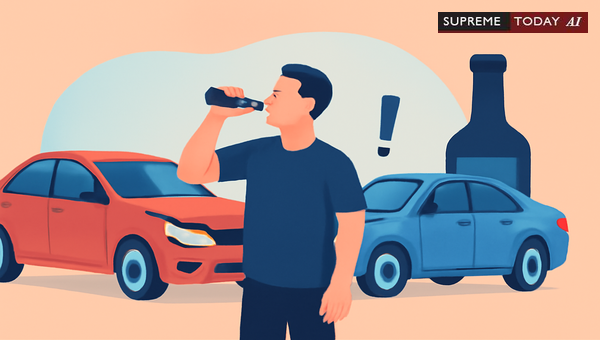
Insurance Liability in Drunk Driving Accidents: What You Need to Know
Drunk driving accidents devastate lives, leaving victims seeking justice and compensation. But what happens when the insurance company objects, claiming the driver was intoxicated? A common question arises: Objection by Insurance Company. Does the insurer escape liability? This blog post breaks down the legal landscape under Indian law, particularly the , drawing from key judgments and principles. Note: This is general information, not legal advice. Consult a qualified lawyer for your specific case.
The Core Issue: Can Insurers Dodge Claims Due to Drunken Driving?
In motor accident cases, insurance companies often argue that the driver's intoxication breaches policy terms, absolving them of responsibility. However, courts have consistently ruled that this defense has limits, especially for . The policy is statutory, designed to protect innocent victims, not just the insured.
Key Principles of Insurance Liability
Liability to Third Parties
Insurance companies cannot avoid liability to third parties (victims not connected to the insured vehicle) even if the driver was under the influence. This stems from the . A violation like drunken driving doesn't exonerate the insurer from compensating third parties. As established: The insurance company cannot avoid liability to third parties (i.e., not the insured) for compensation, even if the driver was under the influence of alcohol at the time of the accident. This is because the insurance policy is statutory in nature, and the violation of policy conditions does not exonerate the insurance company from paying compensation to third parties. 2023 0 Supreme(Ker) 39
This protects road users, ensuring quick payouts via mechanisms like ''—insurers pay first, then seek reimbursement from the insured if policy breaches are proven.
Liability to the Insured
For the vehicle owner (insured), coverage is narrower. The insurer's duty is limited to for liabilities imposed by law. If drunken driving voids personal coverage, the owner may not recover damages paid to third parties. However, the insurance company's liability is limited to indemnifying the insured (i.e., the owner of the vehicle) for any liability imposed on them. 2023 0 Supreme(Ker) 39
: Insurers Must Substantiate Drunken Driving Claims
Insurance objections hinge on proving intoxication, but courts demand solid evidence. Mere allegations fall short.
In one case, the insurer claimed the motorcycle rider was drunk and unlicensed, breaching policy terms. Despite examining a witness, the contention failed for lack of proof. Learned Standing Counsel appearing for the appellant-Insurance Company contended that the erred in granting compensation, since the rider/driver of the crime motorcycle was in a drunken state and driving without a valid driving licence, thereby breached the terms of the insurance policy... In the instant case, although the appellant-Insurance Company examined its witness.... 2025 Supreme(Online)(Tel) 32351
Another ruling dismissed an appeal because no viscera or forensic report confirmed alcohol levels. As per Post Mortem Report... there is no Viscera Report or Forensic Science Laboratory Report of deceased indicating the consumption of prohibited degree of ethyl alcohol... The mere reliance on Annexure R-4, stated to be Physician Statement, in the absence of affidavit, ipso facto, is not sufficient... Appeal dismissed.
Branch Manager, M/s. Bharti Axa General Insurance Co. Ltd. VS Pradeep Kumar
Courts rejected insurer pleas where evidence was weak: Even though the insurance company has taken the said contention in their statement but they have not proved the same in a manner known to law... Even though in Ex.R14, the doctor has stated that patient has consumed alcohol but he is not intoxicated. 2020 0 Supreme(Kar) 1152
The lesson? Insurers bear the onus, often requiring medical reports, breathalyzer tests, or witness affidavits. Without them, tribunals award compensation.
and Drunken Driving
If proven, intoxication may lead to , reducing awards. But again, evidence rules.
Tribunals assessed negligence at 25% despite a head-on collision and middle-road accident, rejecting equal blame without proof under . Only on the basis that accident took place in the middle of road, it cannot be said that deceased was equally liable... So far as holding the deceased equally liable for the accident as deceased was in a drunken condition, section 185 of the reads as under :- 2013 0 Supreme(MP) 58
In an injury claim, traces of alcohol in an accident register weren't enough without examining the doctor. Nobody was examined by the second respondent insurance company to prove that at the time of accident the appellant was in a drunken mood. Admittedly, the second respondent has not examined the Doctor, who issued Ex.P12-Accident Register. 2019 0 Supreme(Mad) 426
Courts modified awards accordingly, e.g., reducing from Rs.3,82,000 to Rs.2,38,000 after rejecting intoxication claims and adjusting multipliers. 2020 0 Supreme(Kar) 1152
Broader Context: Societal and Legal Push Against Drunk Driving
Courts recognize drunk driving's toll, invoking powers for stricter enforcement. One judgment, triggered by an insurer's failed plea, issued directions: Police Authorities shall file Compliance Reports every month giving details of the persons arrested for Drunken driving... this Court, , invokes and issue directions to the Police to exercise power under to arrest the Drunken Drivers and conduct Breathalyser Test or Blood.... 2020 0 Supreme(Mad) 1133
It highlighted: Accessibility and availability of Alcohol... is the main reason for increase in crimes... Many precious lives are lost... due to Drunken driving. 2020 0 Supreme(Mad) 1133 This underscores violations but doesn't let insurers off the hook for third parties.
Practical Implications for Claimants and Policyholders
- Third-Party Victims: Strong position—insurers typically pay, recovering later if needed.
- Insured Drivers/Owners: Risk personal claim denial; maintain sobriety and valid licenses.
- Evidence Tips: Demand forensic proof from insurers; tribunals scrutinize physician statements without affidavits.
Compensation calculations consider age, income, multipliers—often adjusted on appeal, as in cases enhancing or reducing awards with interest (7.5%-8%).
Key Takeaways
- Insurers can't deny solely due to drunken driving—statutory policies protect victims. 2023 0 Supreme(Ker) 39
- Proof of intoxication is mandatory; weak evidence fails. 2025 Supreme(Online)(Tel) 32351
Branch Manager, M/s. Bharti Axa General Insurance Co. Ltd. VS Pradeep Kumar
- may apply but requires concrete evidence. 2019 0 Supreme(Mad) 426 2013 0 Supreme(MP) 58
- Drunk driving endangers all—courts push enforcement. 2020 0 Supreme(Mad) 1133
If involved in such a case, gather documents like FIRs, medical reports, and witness statements. While these principles guide generally, outcomes vary by facts. Seek professional legal counsel promptly. Stay safe on roads—designated drivers save lives and claims.
#DrunkDrivingInsurance, #MotorAccidentClaims, #InsuranceLiability















