Searching Case Laws & Precedent on Legal Query.....!
Analysing the retrieved Case Laws
Scanned Judgements…!



Searching Case Laws & Precedent on Legal Query.....!
Analysing the retrieved Case Laws
Scanned Judgements…!
MEGHA AND ANOTHER vs State of U.P. AND 3 OTHERS - Allahabad
"], ["2023 Supreme(Online)(ALL) 15982"].MEGHA AND ANOTHER vs State of U.P. AND 3 OTHERS - Allahabad
"], ["2023 Supreme(Online)(ALL) 15982"].HARPAL SINGH AND 2 OTHERS vs State of U.P. AND 5 OTHERS - Allahabad
"].MEGHA AND ANOTHER vs State of U.P. AND 3 OTHERS - Allahabad
"]HARPAL SINGH AND 2 OTHERS vs State of U.P. AND 5 OTHERS - Allahabad
"]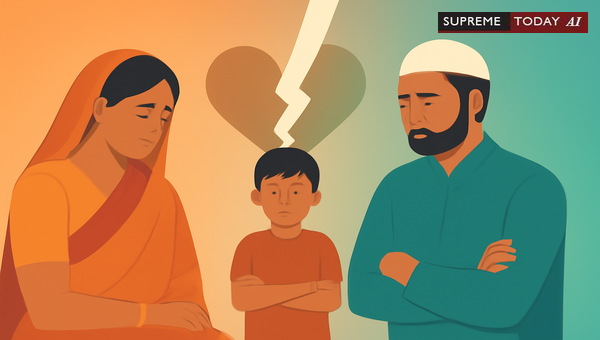
In today's diverse society, interfaith marriages are increasingly common, but they can present unique challenges, especially when it comes to dissolution. Imagine a scenario where a Hindu man (ladka Hindu h) and a Muslim woman (ladki Muslim) got married six years ago, have children, and now both want a divorce (ab divorce chahte h kaise hoga). This is a real concern for many couples navigating personal laws in India.
This blog post breaks down the legal process, drawing from key statutes like the , and Muslim personal law, including recent rulings on talaq. Note: This is general information based on legal precedents and not specific legal advice. Consult a qualified lawyer for your situation.
India's legal system respects personal laws based on religion for marriage and divorce. For a Hindu-Muslim couple:- The Hindu husband's rights fall under the (HMA) 1996 3 Supreme 611.- The Muslim wife's rights are governed by Muslim personal law, including the 2022 0 Supreme(Ker) 1060.
Their marriage, often solemnized under the , or customary rites, is treated as a civil contract, but divorce follows respective personal laws. Recent developments, like the criminalization of instant (), have standardized procedures 2022 0 Supreme(Ker) 396.
Under the HMA, the Hindu spouse can seek divorce via:- : Both agree under . After one year of separation, file a joint petition, wait six months, and obtain a decree if no withdrawal 1996 3 Supreme 611.- : Grounds include , (two years), , or (). Courts prioritize reconciliation but grant decrees if proven.
Women's rights to maintenance () and residence are protected, even post-divorce, under the 1996 3 Supreme 611 2001 7 Supreme 297. For instance, in domestic dispute cases, courts have upheld a wife's right to matrimonial home despite allegations, emphasizing registered documents for proof
.
Key Quote: The right of the wife to residence and maintenance is protected under the 1996 3 Supreme 611.
Muslim law offers multiple divorce forms:- Talaq by Husband: Must follow (single pronouncement, period, revocable) or (three monthly pronouncements). Instant is unconstitutional and criminalized under the 2022 0 Supreme(Ker) 396 2017 5 Supreme 577.- : Wife-initiated, with husband's consent, returning (dower), and court approval if needed 2022 0 Supreme(Ker) 396.
Validity requires proper pronouncement, communication, and reconciliation attempts. The clarified: arbitrary talaq is invalid 2017 5 Supreme 577. In cases of marital discord, like threats or violence, wives can seek judicial or ()
.
Exceptions: Unprocedural talaq, e.g., via email without adherence, may not hold, as seen in disputes over informal separations
.
In practice, mediation is recommended to protect children, as unilateral actions fail in court 2022 0 Supreme(Ker) 396.
Children born to such unions have equal rights regardless of parents' religion:- Custody: Typically mother for minors (under 5-7 years per personal law), father as guardian. Courts decide based on welfare ().- Maintenance: Both parents liable; unaffected by divorce mode 2017 5 Supreme 577.- Inheritance: Follows father's personal law generally.
Related cases highlight protection: In disputes with children, courts ensure maintenance despite separations
. Children's needs supersede parental conflicts, as in abetment cases stressing family impact 2022 0 Supreme(UK) 310.
Bullet Points on Child Protection:- Unaffected by talaq validity 2017 5 Supreme 577.- Courts prioritize best interest.- Maintenance claims enforceable post-divorce.
In violence cases, like beatings or threats (mera pati kabhi bhi akar mere saath ladai jhagda ve maar peet karta hai)
, protection orders under apply. Property disputes often arise, resolved via registered documents 2018 0 Supreme(Del) 1123.
Courts scrutinize dying declarations or false claims in matrimonial disputes, ensuring fairness 2013 0 Supreme(Del) 1569. Overwhelming evidence trumps false implication defenses 2018 0 Supreme(Del) 35.
Pro Tip: minimizes trauma, especially with kids.
Interfaith divorces require careful navigation, but Indian law provides pathways balancing religion and rights. For personalized guidance, contact a family law expert.
References:- 1996 3 Supreme 611, 2022 0 Supreme(Ker) 1060, 2017 5 Supreme 577, 2022 0 Supreme(Ker) 396, 2001 7 Supreme 297.
#InterfaithDivorce, #HinduMuslimMarriage, #DivorceIndia


Ek Din Mere Bhai Ki Shadi Ke Bare Mei Hum Dono Mei ltni Baat Bad Gayi Ke Pucho Mat, Reason Wo ladki Hi Thi Aur Kuch Nahi Tha. ... Ek Din Mere Bhai Ki Shadi Ke Bare Mei Hum Dono Mei ltni Baat Bad Gayi Ke Pucho Mat, Reason Wo ladki Hi Thi Aur Kuch Nahi Tha. ... Par Main Fir Bhi Is Rishte Ko, Ek Bar Apne Bachon Ke liye Bachana Chahti hun aur kuch nahi. Agar aage se mere saath koi bhi....

Ek Din Mere Bhai Ki Shadi Ke Bare Mei Hum Dono Mei ltni Baat Bad Gayi Ke Pucho Mat, Reason Wo ladki Hi Thi Aur Kuch Nahi Tha. ... Ek Din Mere Bhai Ki Shadi Ke Bare Mei Hum Dono Mei ltni Baat Bad Gayi Ke Pucho Mat, Reason Wo ladki Hi Thi Aur Kuch Nahi Tha. ... Par Main Fir Bhi Is Rishte Ko, Ek Bar Apne Bachon Ke liye Bachana Chahti hun aur kuch nahi. Agar aage se mere saath koi bhi durghatna hoti hai, To Iska Jimmewar Yahi Hoga. ... ....

Meir shadi 18 saal pehle Radhey Shayam ke saath hui thi. Meri ek beti hai jis ki umar 14 saal hai jo ki mere pati ke sath rehti hai. Pehle main apne pati ke saath Raj Nagar, UP mein rehti thi. ... Mera pati kabhi bhi akar mere saath ladai jhagda ve maar peet karta hai. Ve apne saath dosto ko bhi lakar ladai jhagda karta hai. Ve mujhe dhamki deta hai ki veh makaan khaali karo nahi to apne aap kisi ko bech doonga. ... Us doran mera pati ne ek kirayedaarni raki thi jiske 5 bacche the. Usk....
Meir shadi 18 saal pehle Radhey Shayam ke saath hui thi. Meri ek beti hai jis ki umar 14 saal hai jo ki mere pati ke sath rehti hai. Pehle main apne pati ke saath Raj Nagar, UP mein rehti thi. Us doran mera pati ne ek kirayedaarni raki thi jiske 5 bacche the. ... Mera pati kabhi bhi akar mere saath ladai jhagda ve maar peet karta hai. Ve apne saath dosto ko bhi lakar ladai jhagda karta hai. Ve mujhe dhamki deta hai ki veh makaan khaali karo nahi to apne aap kisi ko bech doonga. ... M....
Meri shadi 18 saal pehle Radhey Shayam ke saath hui thi. Meri ek beti hai jis ki umar 14 saal hai jo ki mere pati ke sath rehti hai. ... Pehle main apne pati ke saath Raj Nagar, UP mein rehti thi. Us doran mera pati ne ek kirayedaarni raki thi jiske 5 bacche the. ... Mera pati kabhi bhi akar mere saath ladai jhagda ve maar peet karta hai. Ve apne saath dosto ko bhi lakar ladai jhagda karta hai. Ve mujhe dhamki deta hai ki veh makaan khaali karo nahi to apne aap kisi ko bech doonga. .......

Sir, ek point aur—aaj se teen saal pahle ek contract hoarding ka huhaa, sir kisi tarah se who successful nahi ho paya, sir takriban aapko 1 saal ho gaya hai jahan aaye huae, maine parking ke saath-saath iss point ko bhi takriban 4 baar uthaya lekin sir, iss point ko inno nein ... kabi touch nahi kiya aapke rahte aur sir jis contractor ne yeh kaam liya who inke bhi jananeh wlae hain inka ek hi maqsad hai jaise maine pahle bhi kaha ki aapne logoon ko nuksaan pahunchana....

ek vidhwa ladki se jabardasti karwa di gai thi, jiske pahle se ek ladka tha, main Khwaja Zafar Chishty S/o Sayed Farooq Ahmed, R/o 6/ ... talak lena chahta hun, usne mujhe talak nama dikhaya, tab maine us se muslim ... riti-riwaz se shadi ki” [CRLW-928/2018] uske mail se hui thi, usne mere poochhne par mujhe bataya ki uski shadi

He has further stated "meri ladki 18 saal se uper ... Main chahta hun ki ladki shadi kar ke khush rahe aur mujhe is mukadame me hai atah wo jaha bhi jana chahe ja sakti hai."

BEES SAAL KI WO LADKI THI EK. ... AUR BAAKI AB JO BHI HOGA KYONKI KI MAI TO MERE BIBI AUR BACCHE HAI UNKA MERE ALAWA IS DUNIYA MEIN AUR TO KOI HAI NAHI SATH PESATH (60-65) SAAL KE MAMMI HAI AUR, EK BACCHHA HUWA HAI ABHI JANUARY LAST MAI HUA HAI, KAREEB 6-7 SAAL KI RAHI HOGI ACHA TO YE AA GAYE MERE SATH ISKO BHI MAINE LATEY HEE ISKO MAINEY GALA DABAKEY BEHOSH KAR DIYA. ... LADKI KAREEB ....
SE BEES SAAL KI WO LADKI THI EK. ... AUR BAAKI AB JO BHI HOGA KYONKI KI MAI TO MERE BIBI AUR BACCHE HAI UNKA MERE ALAWA IS DUNIYA MEIN AUR TO KOI HAI NAHI SATH PESATH (60-65) SAAL KE MAMMI HAI AUR, EK BACCHHA HUWA HAI ABHI JANUARY LAST MAI HUA HAI, HA YE BATAO KI YE KEHTE HO KI ITNI JALDI TUM KAHTE HO KI MAI KAAT LETA THA, SUBKUCH AUR YE KAISE SAMBHAV HAI KI TUMNE PAHLE ISKA MATLAB TUMNE PAHLE BHI....

Waise bhi jo apke sath kiya h or jo unke sath kiya h, uski to mujhe saza milne hi h ek din... Jaise bat ap kar rahe ho to lagta h ki jahar hi khana padega ab... sayad yehi chaiye apko Abhi vo ghar pe hi h bhej do, aj sab khatam kar dete h Tumhara mera or mere or mere husband ki beech sab khatam kar dete h....8979287748.” Bhejna h unko to bhej do, aj in sab baton se chutkara mil ho jaye... Ki mere pati muje time nahi dete the...But bhagwan ne ek mooka diya h...
Aforesaid information was recorded vide DD No. 26A (Ex.PW-11/A) and was entrusted to SI Amit Prakash. 108, Sherpur Gaon, Shiv Mandir, ek aadmi ne 10 saal ki ladki ke saath galat kaam kiya hai’. 4. Process of law was set into motion on 26th December 2011 at around 6:20 P.M., when telephonic information was received from the control room stating ‘H.No. He along with lady Ct. Aarti proceeded to the spot.
The defendant No.1 has also used the name PARAMOUNT along with the name of defendant No.2 K.D. Campus Pvt. Ltd. in order to make promotion of her own Company. Tujhe jinda rakhna bhi jaruri h” and “Kutto ke sath wah appa ne toh Kutiya bhi paal rakhi h. great going”. In addition, on Facebook, she has made statements such as “Congratulations to all well wishers cases against K.D. Pvt. Ltd. and Paramount Reader Publication have been decided in favour”.
Aag lagne par saara mohalla ikattha ho gaya tatha ek parosi Rajni ko aspatal le aaya tatha uske saath Rajesh bhi aa gaya tatha aspatal mein aakar likha gaya ki ladki khana banate samay stove se jal gayi hai tatha dhanki bhi de gaya ke yadi meri maa ka naam liya to pure pariwar ko jala dunga. Ham ladki ko tatha ladke ko samjha bujha kar bhej diya karte thei. Ladki ki behen jo ki Naraina mein rahti hai aakar hamko samachar diya, hamare aspatal jane par ladke Rajesh tatha uske dow bhayion ne hatapai ki tatha dhamki di ki hamne ladki ko jala diya hai ab tumko bhi jala denge. Pr....
THEREAFTER Wazir Singh gives description of killings etc. by that "bheer" (mob) and then proceeds to say that that very mob (Is Bheer) then attacked Navin Singh. He first makes it clear that Mahender Singh Yadav was a member of that unlawful assembly by saying: "paas Aane Per Pata Challa Ki us Bheer Mein Shri Sajjan Kumar Tatkaleen Sansad Sadasya Ke Allawa Hamare Hi Mohalle Ke Kuchch Log Jaise Ki Brahmanand Gupta (Gupta Tel-wala), Jai Bhagwan Gupta, Nathu Pradhan, Hanuman Ration-wala, Peeriya, Uddal, Sis Ram Halwai, Dr. Ganga Ram, Rajender, Islam Aadi The. Iske Allawa Bheer Mein Wa....


An indispensable Tool for Legal Professionals, Endorsed by Various High Court and Judicial Officers
Please visit our Training & Support
Center or Contact Us for assistance

Scan Me!
India’s Legal research and Law Firm App, Download now!


For Daily Legal Updates, Join us on :



 Back to top


