Searching Case Laws & Precedent on Legal Query.....!
Analysing the retrieved Case Laws
Scanned Judgements…!



Searching Case Laws & Precedent on Legal Query.....!
Analysing the retrieved Case Laws
Scanned Judgements…!
Recovery of Dead Body Not Always Necessary for Conviction Many cases demonstrate that the discovery of a dead body, while helpful, is not an absolute requirement for proving murder. Courts recognize situations where bodies are destroyed, concealed, or lost, making recovery impossible. For instance, in 2024 0 Supreme(All) 1631, the body was not recovered, yet the absence of the body did not imply the victim was alive. Similarly, 2023 0 Supreme(Chh) 337 emphasizes that physical evidence of violence and other investigative findings can suffice to establish corpus delicti without the body.References: ["2024 0 Supreme(All) 1631"], ["2023 0 Supreme(Chh) 337"]
Exhumation and Cross-State Jurisdiction When bodies are buried in different states, courts have held that exhumation and transfer are permissible to ensure proper investigation and burial. In 2024 0 Supreme(Ker) 262, the body buried on another property was exhumed and reburied with respect, highlighting the state's authority to recover bodies across jurisdictions. The Supreme Court in State (UT of J&K) declined to interfere with burial decisions made by authorities, emphasizing dignity and procedural correctness.References: ["2024 0 Supreme(Ker) 262"], State (UT of J&K)
Legal Procedures for Transfer and Exhumation Proper legal procedures, including exhumation panchnamas and coordination between jurisdictions, are essential. In 2023 Supreme(Online)(Chh) 14370, the exhumation was conducted with witnesses, and the body was transferred for investigation, illustrating procedural compliance in cross-state cases. Courts have also recognized the importance of respecting religious and cultural rites during such processes (2025 Supreme(Online)(Raj) 14935).References: ["2023 Supreme(Online)(Chh) 14370"], ["2025 Supreme(Online)(Raj) 14935"]
Challenges in Cross-State Cases Discrepancies in testimonies and difficulties in locating bodies complicate cases. In 2023 0 Supreme(Del) 5245, the body was in a burnt state, and witnesses' inconsistent statements highlight challenges in recovery. Courts acknowledge that accused may destroy bodies to evade detection, making recovery difficult or impossible, but this does not bar conviction if sufficient evidence exists otherwise.References: ["2023 0 Supreme(Del) 5245"], ["2024 0 Supreme(AP) 456"]
Legal and Constitutional Considerations The right to bury a body according to religious customs is protected, and authorities must balance investigation needs with respect for religious rites (2025 Supreme(Online)(Raj) 14935). The law permits bodies to be transferred or exhumed across states to facilitate justice while respecting cultural sensitivities.References: ["2025 Supreme(Online)(Raj) 14935"], ["2024 0 Supreme(Ker) 262"]
The collected sources establish that claiming a dead body from another state jurisdiction is legally permissible and often necessary for thorough investigation and proper burial. Courts recognize that the absence or destruction of a body does not necessarily impede conviction, provided sufficient circumstantial and forensic evidence exists. Proper legal procedures, such as exhumation and transfer, are essential, and respect for religious and cultural rites must be maintained. Challenges like discrepancies and body destruction are acknowledged, but they do not preclude justice when evidence supports the case. Overall, jurisdictional transfer and exhumation are vital tools in cross-state murder investigations, ensuring dignity for the deceased and fairness for the accused.
References:- ["2024 0 Supreme(All) 1631"]- ["2023 Supreme(Online)(Ker) 61850"]- ["2024 0 Supreme(AP) 456"]- ["2023 0 Supreme(Chh) 337"]- ["2024 0 Supreme(Ker) 262"]- ["2025 Supreme(Online)(Raj) 14935"]- ["2024 0 Supreme(Cal) 1155"]- ["2023 0 Supreme(Del) 5245"]- ["2023 Supreme(Online)(Chh) 14370"]
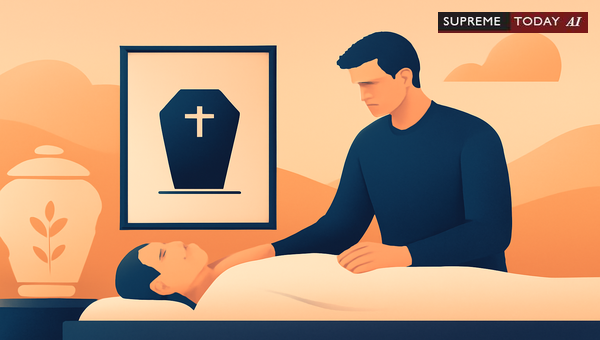
Losing a loved one is devastating, and complications arise when their body is in another state's jurisdiction. Imagine your family member passes away while traveling or working interstate—how do you claim the body for burial or cremation according to your customs? This is a common yet complex issue in India, governed by customary rights, constitutional protections, and state obligations.
In this guide, we explore the legal principles for claiming the dead body from another state jurisdiction, drawing from court precedents and statutory duties. While this provides general insights, consult a legal expert for your specific situation, as laws may vary by case.
The right to handle a deceased person's remains is not absolute but rooted in custom, religion, and dignity. Courts recognize the right to bury a dead body within a locality as a , which claimants must prove has existed from time immemorial 2017 0 Supreme(Ker) 1505.
Key principles include:- Customary and Religious Practices: Disposal rights often tie to cultural or religious norms, varying across regions. Courts acknowledge these but subject them to legal oversight 2006 0 Supreme(Del) 477.- : of the Constitution extends to the deceased in a limited sense. The word and expression ‘person’ in Art 21, would include a dead person in a limited sense and that his rights to his life which includes his right to live with human dignity, to have an extended meaning to treat his dead body with respect, which he would have deserved, had he been alive subject to his tradition culture and the religion, which he professed 2022 7 Supreme 714 2014 0 Supreme(P&H) 1480.- State's Role: The State Government must provide facilities for preserving and disposing of unclaimed or improperly handled bodies, ensuring dignity except in criminal, scientific, or medical cases 2009 0 Supreme(All) 932.
To claim a dead body from another state, you typically need to demonstrate a legal or customary entitlement:1. Proof of Customary Use: Show the practice of burying or claiming bodies from that jurisdiction has been followed traditionally 2017 0 Supreme(Ker) 1505.2. Relationship to Deceased: Next of kin (spouse, children, parents) usually have priority, but disputes may involve siblings or community leaders.3. No Unauthorized Disposal: If the body was moved or disposed without authority, your claim strengthens, but courts prioritize dignity and procedure 2017 0 Supreme(Ker) 1505 2009 0 Supreme(All) 932.
For instance, in cases of , the state conducts and promptly. Once an unnatural death is reported, it is the duty of the State machinery to complete the inquest and postmortem within a time frame and the body should be released to the bereaved family 2021 0 Supreme(Ker) 1049. Delays infringe on the right to dignity under .
Handling claims across states requires adherence to protocols:- Notify Authorities: Inform local police, magistrates, or hospitals in the death's jurisdiction immediately.- Obtain Permissions: Secure (NOCs) for transport, especially if crossing states. Comply with coroner or medical examiner rules.- Documentation: Provide death certificate, ID proofs, relationship affidavits, and proof of customary rights if contested.- Judicial Intervention: In disputes, approach the under . Courts may direct release if procedures are followed 1984 0 Supreme(Raj) 80.
Transportation involves embalming for long distances and compliance with the or airline/mortuary guidelines.
Disputes often arise from conflicting claims or state actions. Courts emphasize:- No Right to : Once buried, a body is in custody of law. is not a matter of right. is rare, only for crime detection or pressing needs, not rituals after delay. Dead should not be disturbed and some sanctity should be attached to grave 2022 7 Supreme 714. In a militant encounter case, the upheld burial with dignity via community aid, denying after 9 months due to public health risks.
Timely Release Duty: Families shouldn't queue at police stations post-inquest. No relatives, no politicians, and no well-wishers of the deceased need to stand in queue hereafter... The State must do the needful immediately and return the dead body to the residence of the deceased person at the cost of the State 2021 0 Supreme(Ker) 1049. Night autopsies may be mandated to avoid delays.
Criminal Contexts: In murder probes, confessions leading to body recovery are admissible under , but this doesn't override family claims post-investigation 2023 0 Supreme(Chh) 308. trigger state liability for compensation, ensuring medical care pre-death 2011 0 Supreme(Ori) 466.
Other cases highlight evidence chains in body concealment (, 201), but family rights persist post-probe 2009 0 Supreme(Mad) 5305.
The State bears responsibility for unclaimed bodies, but must respect claimants. The State Government is legally obliged to provide facilities for the preservation and disposal of unclaimed or improperly used dead bodies, respecting dignity and decency 2009 0 Supreme(All) 932.
favors grave sanctity: Law does not favour , based on the that should be maintained. Once buried, a body should not be disturbed 2022 7 Supreme 714. Religious rights under yield to public order.
Summary: Claiming a dead body from another state involves proving customary rights from time immemorial, state-facilitated dignified disposal, and procedural compliance. Unauthorized actions can be challenged, but courts prioritize justice and public health 2017 0 Supreme(Ker) 1505 2009 0 Supreme(All) 932 1984 0 Supreme(Raj) 80.
Disclaimer: This is general information based on precedents, not specific legal advice. Laws evolve, and outcomes depend on facts. Consult a qualified lawyer for personalized guidance.
Word count: Approximately 1050
#DeadBodyClaim, #BurialRightsIndia, #LegalGuideIndia


Take for instance that a murder was committed and the dead body was thrown into flowing tidal river or stream or burnt out. It is unlikely that the dead body may be recovered. ... Only on a ground that her dead body was not recovered, it could not be said that she is still alive. ... The Investigating Officer recorded statements of witnesses and made attempts to locate victim either aliv....

The matter was informed to the police, and postmortem examination was conducted by the Forensic Department of AIIMS and the dead body was taken back by Air, and the 1st defendant had incurred an expenditure of Rs.1.5 Lakh for that. ... STATE OF KERALA AND ANOTHER reported in 2009 (2) KLT 985, in which the learned single judge of this Court has held in paragraph 5 as follows:- “In Words and Phrases’, Permanent Edition, Vo. ....

dead body was recovered from a canal. ... PW.10 another V.R.O. who was a mediator for recovery of the dead body of the deceased and inquest. 15. On perusal of the entire material on record, goes to show that there were disputes between the accused and PW.2. ... The accused showed 5th gate of the Lock, where he threw the dead body of the boy. PWs.5 and 6 were asked to se....

And the third is that he would have been told by another person that it was concealed there. ... State of Maharashtra, (2021) 11 SCC 1 this Court has observed as under: “88........In the present case, the dead body was lying in a concealed place and that there was no possible explanation on behalf of the accused as to how the body came to be concealed ... Discovery of the dead ....
Thomas contended that no person has the right to bury a dead body in another person's property without express consent. It is argued that the buried body is liable to be removed forthwith, since the faith and custom of his client does not permit such burial. 4. Advocate T.K. ... State (UT of J&K), 2022 SCC Online SC 1203 also. Therein, the prayer for exhumation made by the relatives of a foreign terrorist....

between recovery of dead body and recording of memorandum. ... The Supreme Court in the matter of Mehboob Ali and Another v State of Rajasthan, (2016) 14 SCC 640 had an occasion to deal such mental state of fact wherein the Court observed that for application of Section 27 of the Evidence Act, the admissible portion of confessional statement ... The affirmation of the dead body....

The relevant paragraphs of the said judgment are reproduced hereunder: “From the above decisions, the law emerges clearly that the right to bury the dead body in accordance with one’s religious rites and customs is a part of thefundamental right to religion under ... The Constitution does not permit one section of society to impose its will on another in matters so personal and sacred. 17. ... The performance of post-death rituals ought to ....

On 22.03.2024 his dead body was found on a field and an FIR was lodged on the same date. A post mortem examination was done on the next date. There were photographs and videos of the dead body which showed that there were injuries inflicted, possibly by electric shock and cigarette stubs. ... Inquest Report showed that the body was in prone position, froth mixed with blood was found oozing out from nose, ....

There is yet another important aspect. ... State of Karnataka. Learned counsel also pointed out the discrepancies in the testimonies of PW-20 and PW-14 with respect to the time of recovery of dead body of the deceased. ... The dead body was of a young adult female individual in burnt and cooked up stage. ... There are a number of possibilities where a dead bod....
P - 1, dead body exhumation panchnama was prepared in the presence of panch witnesses and dead body was exhumed and thereafter, the offence was registered. ... David Rozario and Another 2002 (7) SCC 728 : (AIR 2002 SC 3272) the Supreme Court held as under: ... "5. ... State of Kerala (2023 LiveLaw (SC) 50 : (AIROnLine 2023 SC 50)) and it has been clearly held that in absence of confessio....

We thus find that the word and expression ‘person’ in Art 21, would include a dead person in a limited sense and that his rights to his life which includes his right to live with human dignity, to have an extended meaning to treat his dead body with respect, which he would have deserved, had he been alive subject to his tradition culture and the religion, which he professed. The State must respect a dead person by allowing the body of person to be treated with dignity and unless it i....

No relatives, no politicians, and no well-wishers of the deceased need to stand in queue hereafter in front of the Police Station or hospitals for an early release of the dead body, after the inquest, postmortem, and other legal formalities. The State must do the needful immediately and return the dead body to the residence of the deceased person at the cost of the State. The bereaved family members and the well-wishers of the deceased person need not go to the Police Station....

""We thus find that the word and expression 'person' in Art. 21, would include a dead person in a limited sense and that his rights to his life which includes his right to live with human dignity, to have an extended meaning to treat his dead body with respect, which he would have deserved, had he been alive subject to his tradition, culture and the religion, which he professed. The State, which allows the possession of the dead body to be taken by a person or group of persons for su....

The post-mortem examination was conducted in presence of his brother-in-law. They were requested to receive the dead body but they expressed their inability and requested the State Authorities to dispose of the dead body. Accordingly, the dead body of the husband of the Petitioner-Kamala Tadingi was disposed of by the Office of the Superintendent, District Jail, Koraput.

After conducting inquest on the dead body, the dead body was sent for autopsy. The time and cause of death as put forth by the prosecution was never questioned by the appellants before the trial Court or before this Court. After the case was registered by P.W.11, Sub Inspector of Police under section 302 I.P.C, investigation was taken up by P.W.12, Inspector of Police. On requisition made, P.W.6, doctor conducted autopsy on the dead body and gave opinion before the court as w....


An indispensable Tool for Legal Professionals, Endorsed by Various High Court and Judicial Officers
Please visit our Training & Support
Center or Contact Us for assistance

Scan Me!
India’s Legal research and Law Firm App, Download now!


For Daily Legal Updates, Join us on :



 Back to top


