


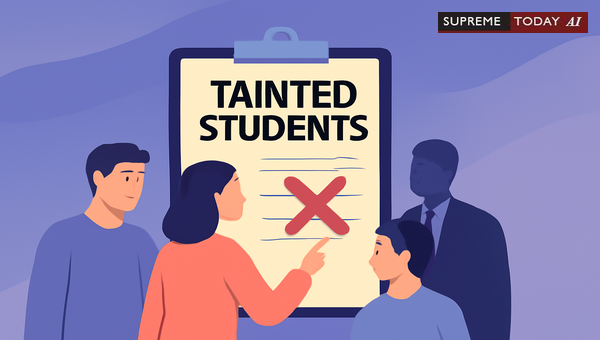
Court's Stance on Separating Tainted vs Untainted Students
In the realm of competitive examinations and recruitment processes, irregularities such as paper leaks, impersonation, or widespread malpractices can cast a shadow over the entire selection. A critical question arises: Court Stance on Separating Tainted Students from Untainted Students where it is Possible. Does the judiciary permit authorities to weed out only the guilty candidates, or must the whole process be scrapped? This blog delves into the courts' balanced yet context-driven approach, drawing from landmark judgments and legal precedents.
The integrity of public recruitment is paramount, affecting thousands of aspirants. Courts typically uphold the recruiting authority's discretion while ensuring fairness to innocent candidates. However, the feasibility of segregation depends on the scale of misconduct. Let's break it down.
Overview of Judicial Approach
The courts recognize that not all candidates in a flawed process are culpable. Where possible, separating 'tainted' (those involved in irregularities) from 'untainted' candidates preserves merit without punishing the innocent. Yet, if malpractices are systemic, segregation becomes impractical, leading to full cancellation. This stance prioritizes process integrity over individual claims. 2022 0 Supreme(Mad) 1111
As noted in key rulings, the recruiting authority has the discretion to determine whether the entire selection process is and whether a fresh selection process should be initiated. This discretion is based on the material available to them and must be exercised . 2022 0 Supreme(Mad) 1111
When Segregation is Feasible
Courts have directed separation in cases where inquiries pinpoint specific wrongdoers, allowing untainted candidates to proceed.
- Post-Inquiry Identification: In one instance, after an elaborate probe by and , the court found no difficulty in separating the untainted candidates i.e. the 6 Respondents herein, from the tainted ones. 2020 0 Supreme(Del) 67 This underscores that thorough investigations enable precise action.
- Document Scrutiny: The court mandated completing selection by proper scrutiny of the documents/certificates, separating the tainted from untainted. If shortfalls occurred, fresh ads were advised. 2019 0 Supreme(Raj) 786
- Apex Court Guidance: Where it is possible to segregate the tainted candidates from the untainted ones, cancellation of entire selection process would not be justified. 2019 0 Supreme(All) 910 This protects meritorious candidates pre-probation.
These examples show courts favoring segregation when evidence allows, avoiding blanket penalties.
Challenges and Limits to Segregation
Conversely, widespread irregularities often render separation impossible.
- Ziledari Qualifying Examination, : Gross malpractices made it impractical to separate candidates, resulting in total cancellation. 2023 0 Supreme(All) 938 2021 0 Supreme(SC) 355
- Head Clerk Recruitment: 's cancellation was challenged, but courts stressed distinguishing tainted from non-tainted to avoid . Failure to do so is deemed unfair. 2020 0 Supreme(Del) 67
- Student Interests Paramount: Even in teacher appointments, untainted staff were retained to prevent academic disruption: students undergoing study presently should not suffer on account of the lack of teachers. 2025 0 Supreme(Cal) 539
In such scenarios, courts lean towards fresh processes, as the integrity of the selection process is paramount. 2022 0 Supreme(Mad) 1111
Authority's Discretion and Judicial Review
Recruiting bodies hold significant leeway, subject to exercise. Courts intervene sparingly:
- Non-Interference Principle: The court would not lightly interfere with the authority's decision unless it is found to be unreasonable or disproportionate. 2022 0 Supreme(Mad) 1111
- No : Selected candidates lack absolute appointment rights; cancellation must stem from factual vitiation. 2020 0 Supreme(Del) 67 2019 0 Supreme(All) 910
- X-ray Technician Case: Process cancellation was upheld due to irregularities, affirming state discretion if reasoned. (Referenced precedents: , etc.)
Divergent judgments exist—some order fresh exams, others segregation—but significant flaws tilt towards cancellation. 2023 0 Supreme(All) 938
Precedents from Rajasthan and Beyond
In Safai Karamcharis recruitment, courts upheld lottery systems but struck improper inclusions, allowing vacancy mergers for fresh processes. This highlights fairness in categorization. 2019 0 Supreme(Raj) 786
Another ruling emphasized individual probes: candidates cannot be unfairly grouped with alleged wrongdoers, raising the necessity to investigate each case individually. 2020 0 Supreme(Del) 67
Key Takeaways for Aspirants and Authorities
- Conduct Thorough Probes: Assess irregularity extent early to gauge segregation viability.
- Prioritize Innocents: Where feasible, advance untainted candidates to uphold equity.
- Opt for Fresh Starts if Needed: Systemic issues demand restarts to restore trust.
- Legal Strategies: Challenge unreasonableness, but respect authority findings absent .
Conclusion
The court's stance is nuanced: segregation is preferred when possible, safeguarding untainted candidates' efforts. However, pervasive irregularities necessitate full cancellation to protect selection sanctity. Authorities wield discretion, with courts reviewing for fairness. This balance ensures meritocracy endures.
Disclaimer: This post provides general insights based on precedents and is not legal advice. Consult a qualified lawyer for case-specific guidance. Outcomes may vary by facts and jurisdiction.
References:- 2022 0 Supreme(Mad) 1111- 2023 0 Supreme(All) 938- 2021 0 Supreme(SC) 355- 2025 0 Supreme(Cal) 539- 2020 0 Supreme(Del) 67- 2019 0 Supreme(Raj) 786- 2019 0 Supreme(All) 910
#CourtRulings #ExamIrregularities #LegalInsights












