


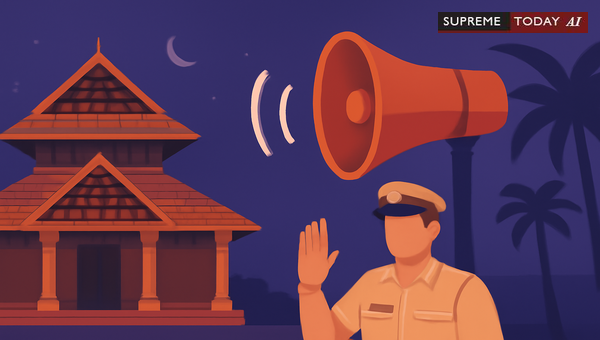
Can Kerala Temples Play Loud Songs Beyond 10 PM? Legal Limits Explained
Temples in Kerala are vibrant centers of culture and devotion, often hosting festivals with music, songs, and programs that draw large crowds. However, as night falls, a common question arises: whether temples can extend time beyond 10pm for playing loud songs and programs seeking direction from police in Kerala. Residents nearby frequently complain about noise disturbing sleep, health, and peace. This post dives into the legal framework, court rulings, and practical guidelines to clarify the boundaries.
Noise pollution isn't just an annoyance—it's a public health issue recognized under , which protects the . Courts have held that What is negatively the , is positively the . 2003 0 Supreme(Mad) 445 In Kerala, balancing religious traditions with environmental regulations is key.
Understanding Noise Pollution Regulations
The cornerstone of regulation is the , notified under the . These rules strictly control loudspeaker use during night hours.
Key Restrictions Under
- Night Hours Ban: No loudspeakers, public address systems, or musical instruments can be used from to in public places, except in enclosed premises. 2005 0 Supreme(Ker) 806
- Limited Exemption: State governments may permit use between and for cultural, religious, or festive occasions, but only for a maximum of 15 days per calendar year. This is not a blanket approval—terms and conditions apply to minimize pollution. 2005 0 Supreme(Ker) 806
Kerala's government aligned with this via , allowing loudspeakers till but no further. 2005 0 Supreme(Ker) 806 Exceeding this violates statutory limits.
Court Precedents: No Extensions Beyond
Kerala courts have consistently upheld these limits, rejecting pleas for extensions based on police directions or customs alone.
In multiple , judges directed authorities to permit loudspeaker use only up to , even for religious events. For instance:- Courts quashed attempts to go beyond, emphasizing statutory adherence. 2025 0 Supreme(Mad) 2304 2025 0 Supreme(Mad) 2307 2025 0 Supreme(Mad) 2637 2025 0 Supreme(Mad) 3298- The , explicitly restrict the use of loudspeakers during night hours ( to ). 2005 0 Supreme(Ker) 806
Police or district authorities cannot override these rules. While they regulate events and provide protection, permissions must stay within legal bounds. Courts note: police are empowered to stop performances if they exceed permitted time limits. 2025 0 Supreme(Mad) 2201
Customary Practices and Permissions
Temples often cite traditions like Aadal Padal programs during festivals. Courts recognize these as customary: It is beyond dispute that celebrations in such Temples are customary in nature. It is not as if the writ petitioner is seeking to introduce some new practice. What is being traditionally held and conducted has to be necessarily followed. 2025 0 Supreme(Mad) 2201 2025 0 Supreme(Mad) 2605 2025 0 Supreme(Mad) 2258 2025 0 Supreme(Mad) 2261
However, approvals come with conditions:- Timely police consideration of requests.- No double-meaning songs, political content, or vulgar performances.- Strict adherence to timing—police must halt if extended. 2025 0 Supreme(Mad) 2201 2025 0 Supreme(Mad) 2605- In one case, rejection of permission was quashed, but only with safeguards for public order, not time extensions. 2025 0 Supreme(Mad) 2261
Another ruling on temple festivals banned obscene songs and directed CCTV installation and police bundobust, reinforcing regulated conduct without time overrides. 2023 0 Supreme(Ker) 477
Role of Police Directions
Petitioners sometimes seek police nods for extensions, but this lacks legal backing. Police can:- Grant permissions aligned with rules (up to , 15 days/year).- Ensure public order during events.- Stop violations, like music beyond limits.
Courts stress: administrative orders cannot contravene statutes. Directions solely from police for post- use are unsustainable. 2005 0 Supreme(Ker) 806
Exceptions and Practical Limitations
- 15-Day Cap: Applies calendar-wide, not per event.
- Enclosed Premises: Possible without time limits, but temples typically use open spaces.
- Health Impacts: Noise affects the elderly and vulnerable; one petitioner highlighted an aged mother unable to bear the nuisance. 2003 0 Supreme(Mad) 445
No provisions allow indefinite extensions for traditions. Scheduling within - is advised.
Recommendations for Temples and Authorities
To avoid disputes:- Adhere Strictly: End by ; plan events accordingly.- Seek Formal Permissions: Apply early to police/district authorities, citing (3).- Conditions Compliance: Avoid objectionable content; ensure crowd control.- Alternatives: Use enclosed spaces or lower volumes.
Authorities should enforce rules uniformly, rejecting unlawful extension requests.
Key Takeaways
- Temples cannot extend beyond via police directions—statutory limit is firm. 2005 0 Supreme(Ker) 806
- Customs are protected but must fit legal windows. 2025 0 Supreme(Mad) 2201
- Violations invite court intervention and penalties.
- Prioritize community harmony alongside devotion.
Disclaimer: This is general information based on rules and precedents. Legal outcomes may vary by facts; consult a qualified lawyer for advice specific to your situation.
For more on Kerala environmental laws or temple regulations, stay tuned.
#KeralaLaw, #NoisePollution, #TempleFestivals












