


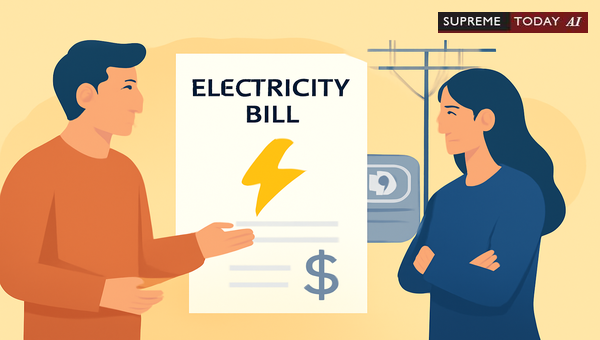
Is a Landlord Liable for a Tenant's Electricity Bills? Essential Legal Insights
In the world of renting, disputes over utility bills like electricity can quickly escalate into legal battles. Imagine this: a tenant vacates, leaving behind unpaid electricity dues, and suddenly the knocks on the landlord's door demanding payment. Does the landlord's acceptance of electricity bills from the tenant presume that rent is paid up to date? Or more critically, can landlords be held responsible for their tenants' electricity consumption? These questions lie at the heart of many landlord-tenant conflicts in India.
This blog post dives deep into the legal principles governing landlord liability for tenant's electricity bills, drawing from court rulings and statutory provisions. We'll explore general rules, exceptions, tenant rights, and practical recommendations. Note: This is general information based on precedents and not specific legal advice. Consult a qualified lawyer for your situation.
The Core Legal Question: Acceptance of Electricity Bills and Rent Presumption
The phrase often arises in . However, courts have clarified that while tenants are primarily responsible for utilities, landlords must take proactive steps to shield themselves from liability. Generally, landlords cannot be held liable for electricity bills incurred by tenants under , which deals with electricity theft. In one ruling, the court quashed an FIR against a landlord, stating no offense was made out against them for the tenant's actions. 2014 0 Supreme(Pat) 147
This principle underscores that landlords are not for tenant misconduct unless proven otherwise.
Key Legal Principles on Landlord Liability
1. General Rule: No Liability Without Connivance
Landlords are typically not responsible for tenants' electricity consumption or unpaid bills. Courts have repeatedly held that the landlord would not be liable for unless the has established his connivance that the tenant in theft of energy. 2022 0 Supreme(Mad) 2687 This protects property owners from being penalized for tenants' defaults.
In another case, where a tenant committed electricity theft, the landlord was acquitted, and the under Section 135 was set aside because the landlord had informed authorities beforehand. The court noted, the acquittal of the petitioner in the criminal case meant that the for invoking fell to ground. 2022 0 Supreme(Mad) 2687
2. Crucial Notification Requirement
A major caveat: Landlords must notify the about the tenancy in the prescribed manner. Failure to do so can lead to liability for tenant arrears. For instance, in a case where the landlord didn't provide a copy of the lease deed, they were held responsible for the tenant's unpaid bills. 2010 0 Supreme(Mad) 1825
Similarly, under the , and 17(4) require informing about tenancy changes. Non-compliance can expose landlords to demands, even if they aren't the consumers. Courts emphasize, the petitioner had continuously informed the authorities about the theft of energy by the tenant prior to the inspection, and therefore, the authorities could not hold the petitioner liable. 2022 0 Supreme(Mad) 2687
3. Tenants' Independent Rights and Responsibilities
Tenants enjoy the right to obtain electricity connections without landlord consent and are directly liable for payments. If dues remain unpaid, disconnection is permissible, but liability doesn't shift to the landlord. 1986 0 Supreme(Raj) 812
Even if the meter is in the landlord's name, if the tenant has , the landlord isn't deemed the consumer. In the present case meter is in the name of applicant and the other applicant is in or custody of the said meter... landlord could not be held to be a consumer and would not be liable to pay electricity charges. 2007 0 Supreme(Bom) 1078
4. Role of Lease Agreements
Standard lease contracts explicitly obligate tenants to pay utilities, reinforcing landlord non-liability. This contractual clarity helps in disputes. 1995 0 Supreme(Guj) 258
However, in rare cases where the landlord supplies power through their meter, tenants may have a legal obligation to pay those bills for proper and legal enjoyment of the leased premises. 2001 0 Supreme(Kar) 569
Exceptions and Risks for Landlords
While the default position favors landlords, exceptions arise from procedural lapses:- Failure to notify: Leads to for arrears. 2010 0 Supreme(Mad) 1825- Connivance in theft: possible under . Note that assessment under doesn't bar prosecution; does not speak of ... prosecution can be lodged against the persons who commit theft. 2007 0 Supreme(Bom) 1078- Post-termination demands: Landlords can't be forced to pay past tenant consumption after lease ends. The landlord cannot be asked to bear the electricity charges of the electricity consumed by the tenant in the past. 2008 0 Supreme(Del) 1055
In eviction scenarios, unpaid electricity by tenants can justify eviction, but landlords must pursue separate proceedings for recovery. 2011 0 Supreme(SC) 508
Integrating Other Judicial Insights
Courts have addressed related issues:- Eviction and Utilities: Non-payment of electricity doesn't always presume rent default. Mere non-payment within notice periods may not warrant eviction if disputed legitimately. 2001 0 Supreme(Kar) 569- Disconnections: Post-termination, tenants can't seek for restoration at landlord's cost. On termination of the lease, the lessee cannot demand the fulfillment of obligations from the lessor. 2008 0 Supreme(Del) 1055- Proof Issues: Unreliable evidence like tampered meter readings doesn't bind landlords. 2024 Supreme(Online)(Chh) 15477
These rulings from and tribunals consistently protect diligent landlords.
Practical Recommendations for Landlords and Tenants
To avoid pitfalls:- Landlords: - Notify electricity boards immediately upon tenancy commencement with lease copies. - Include clear utility payment clauses in agreements. - Monitor meters and report irregularities promptly. - Keep records of notifications to defend against claims.
- Tenants:
- Secure connections in your name where possible.
- Pay dues on time to prevent disconnections.
- Understand your sole responsibility for consumption.
Key Takeaways
- Landlords are generally not liable for tenants' electricity bills, but notification is key to avoiding traps. 2014 0 Supreme(Pat) 147 2010 0 Supreme(Mad) 1825
- Tenants bear primary responsibility, with independent rights to utilities. 1986 0 Supreme(Raj) 812
- Always document tenancy changes and contractual terms to safeguard interests.
By staying informed and compliant, landlords can focus on property management without utility worries. For personalized guidance, reach out to a legal expert familiar with the Electricity Act and local tenancy laws.
References: 2014 0 Supreme(Pat) 147 2010 0 Supreme(Mad) 1825 1986 0 Supreme(Raj) 812 1995 0 Supreme(Guj) 258 2022 0 Supreme(Mad) 2687 2007 0 Supreme(Bom) 1078 2008 0 Supreme(Del) 1055 2001 0 Supreme(Kar) 569 2011 0 Supreme(SC) 508 2024 Supreme(Online)(Chh) 15477
#LandlordTenantLaw, #ElectricityBills, #RentalDisputes












