


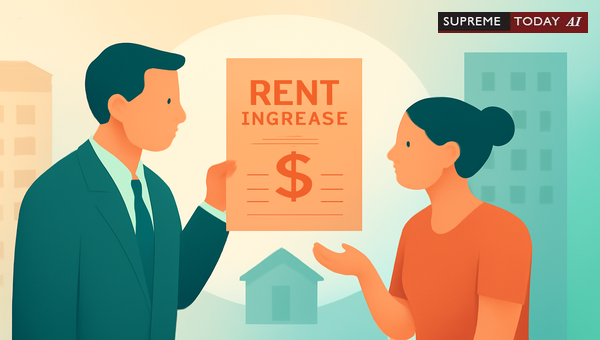
Can Landlord Increase Rent Without Notice? Essential Guide for Tenants
In today's rental market, disputes over rent hikes are common. Imagine receiving a sudden demand for higher rent without prior warning—can a landlord legally increase the rent of a tenant without giving notice? This question often arises under rent control laws in India, particularly in states like Maharashtra governed by the ().
While landlords have rights to fair returns, tenants enjoy strong protections against arbitrary increases. This post explores the legal framework, notice requirements, tenant defenses, and key case laws. Note: This is general information based on statutes and precedents; consult a legal expert for advice specific to your situation.
Understanding the Core Issue: Rent Increases and Notice
The question Without Giving Notice can Landlord Increase The Rent of Tenant highlights a frequent tenant concern. Under rent control regimes, rent isn't freely adjustable. Instead, it revolves around and . A landlord typically cannot unilaterally hike rent without following statutory procedures, which often include notice.
states: A landlord shall not be entitled to the of any premises so long as the tenant pays, or is , the amount of the and , provided the tenant observes the conditions of the tenancy. 2007 0 Supreme(Bom) 1533
This protection underscores that tenants paying the are shielded from eviction, implying landlords can't enforce unauthorized increases without due process. Arbitrary hikes without notice may not qualify as enforceable .
Legal Framework: Key Provisions on Rent and Notice
Rent control laws impose strict rules to prevent exploitation:
and
- is fixed based on historical rates, often requiring approval for changes.
- cover taxes, repairs, etc., but must be justified and notified.
mandates: No can be instituted until after a demanding the or has been served on the tenant. 1997 5 Supreme 62 This shows notice is crucial before any enforcement action, including for disputed increases.
From other precedents: No ordinarily to be made if tenant pays or is and . 2025 Supreme(Online)(Guj) 12951 Thus, if a landlord demands more without notice or basis, tenants can resist by paying the standard amount.
Notice Requirement for Demands
Landlords must serve for or increases before suits. allows eviction only if monthly rent exceed six months post-notice, and no dispute exists. 2007 0 Supreme(Bom) 1533
In one case: No shall be instituted by a landlord against the tenant on the ground of nonpayment of the or permitted increase due, until the expiration of next after notice in writing of the demand... 2011 0 Supreme(Bom) 1277 This reinforces that unnotified increases aren't immediately enforceable.
Tenant Protections: Readiness and Willingness to Pay
Tenants aren't defenseless. Demonstrating readiness and willingness to pay blocks eviction:- Timely payments of undisputed rent.- Efforts to resolve disputes, like depositing in .- Compliance with valid notices. 2012 0 Supreme(Bom) 2046 2009 0 Supreme(Bom) 1477
However, failure to inform landlords of deposits can constitute : A tenant's failure to inform the landlord of deposits and non-payment of rent constitutes , justifying eviction under the . This emphasizes communication duties.
protects non-monthly payers if they tender rent by the first hearing and continue. 2007 0 Supreme(Bom) 1533
Case Law Insights: What Courts Say
Judgments clarify limits on rent hikes:
: No eviction suit unless landlord proves tenant unwilling to pay for over six months. 2007 0 Supreme(Bom) 1533
: Landlord must prove tenant's payment failure. 2007 0 Supreme(Bom) 1533
: Inability due to lack of means doesn't show willingness. 2007 0 Supreme(Bom) 1533
Additional rulings:- Thus, if the tenant is found to have paid or if the tenant is found to be , it is not open to the landlord to recover possession. 2024 Supreme(Online)(Bom) 2478- In a case, tenants failing 90-day payment post-summons faced eviction, but only after proper demand. 2011 0 Supreme(Bom) 1277- Denial of landlord title must be , or eviction follows. 2018 0 Supreme(Mad) 2728
Water charges as require payment, or risk eviction under . 2008 0 Supreme(Bom) 930
Practical Implications for Landlords and Tenants
For Tenants:
- Document everything: Payments, communications, disputes.
- Pay into if disputed.
- Respond to notices within timelines to claim protection. 2012 0 Supreme(Bom) 2046 2009 0 Supreme(Bom) 1477
- If no notice for increase, continue paying original rent; challenge hikes legally.
For Landlords:
- Serve for any demand. 1997 5 Supreme 62 1970 0 Supreme(Bom) 110
- Prove basis for increases (e.g., taxes).
- Avoid suits without one-month notice post-demand.
In one instance, a tenant's reply to notice disputing rent within invoked protection, even without separate fixation application. 2003 0 Supreme(Guj) 180
Common Pitfalls and Additional Contexts
- Wilful : Unnotified non-payment or ignored deposits lead to eviction. E.g., since with unreported deposits justified possession.
- Needs: Landlords may seek eviction for own use, but rent disputes still need resolution. 2018 0 Supreme(Mad) 2728
- Sub-letting or Alterations: Separate grounds, but rent compliance remains key. 2005 0 Supreme(Guj) 4
Under parallels, wilful post-requests allows eviction, stressing notice and response. 2018 0 Supreme(Mad) 2728
Conclusion: Protect Your Rights Proactively
Generally, a landlord cannot effectively increase rent without notice under acts like the , as enforcement requires statutory demands and proof of tenant . Tenants paying or ready for enjoy robust safeguards, but must act diligently—document, communicate, and dispute .
Key Takeaways:- Notice is mandatory before suits or enforcing hikes. 1997 5 Supreme 62- Focus on + . 2007 0 Supreme(Bom) 1533- Maintain readiness to pay for protection.
Landlords: Follow procedures to avoid dismissed suits. Tenants: Records are your shield.
References: 2007 0 Supreme(Bom) 1533 2012 0 Supreme(Bom) 2046 1997 5 Supreme 62 2009 0 Supreme(Bom) 1477 1970 0 Supreme(Bom) 110 2025 Supreme(Online)(Guj) 12951 2024 Supreme(Online)(Bom) 2478 2018 0 Supreme(Mad) 2728 2011 0 Supreme(Bom) 1277 2008 0 Supreme(Bom) 930 2005 0 Supreme(Guj) 4 2003 0 Supreme(Guj) 180
Stay informed, and consider professional advice for your case.
#TenantRights, #RentControl, #LandlordLaw












