


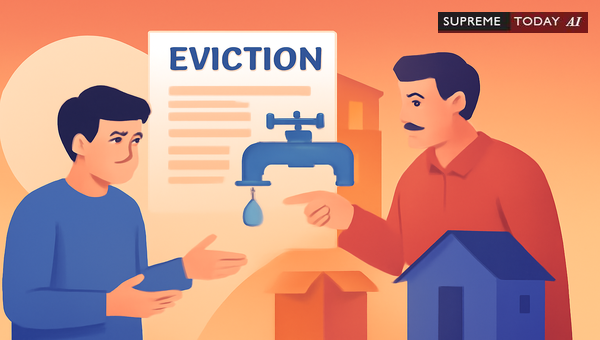
Can Landlords Legally Cut Off Water Supply During a Pending Eviction?
In the tense world of landlord-tenant disputes, few actions feel as aggressive as a landlord suddenly cutting off like water—especially when an eviction case is already underway. If you're a tenant facing this situation, or a landlord navigating , you might wonder: Can landlords cut water supply during pending eviction? This question strikes at the heart of tenant protections under Indian law. While eviction processes can be lengthy, landlords cannot resort to that endanger tenants' basic needs.
This article breaks down the legal framework, key provisions, tenant remedies, and insights from related cases. Note that this is general information based on statutes and precedents; it is not specific legal advice. Consult a qualified lawyer for your circumstances.
Understanding the Core Issue: Self-Help Evictions and
Landlords sometimes attempt to force tenants out by disconnecting utilities like water, viewing it as a quicker alternative to court proceedings. However, Indian rent control laws strictly regulate such actions to protect tenants from harassment or coercion.
Under typical rent control regimes, such as the , and similar state laws, are sacrosanct during tenancy—even amid eviction disputes. Cutting off water not only violates statutory duties but can be seen as an illegal tactic to compel vacation or rent hikes. 1989 0 Supreme(Del) 443
Key Legal Provisions Prohibiting Water Cut-Offs
1. : No Interference with Essentials
Section 45 explicitly prohibits landlords from cutting off or withholding essential supplies, including water, without just and sufficient cause. If violated, tenants can approach the for immediate restoration. The Controller may issue an without prior notice to the landlord if the cut-off aims to force the tenant to vacate or pay increased rent. 1989 0 Supreme(Del) 443
This provision underscores that eviction must proceed through legal channels, not by denying basics like water.
2. Landlord's Ongoing Responsibility for Water Supply
Landlords bear primary responsibility for maintaining . Even if tenants owe water charges, the landlord remains . Failure to pay bills leading to disconnection is the landlord's default, not the tenant's justification for retaliation. 1971 0 Supreme(Kar) 47
In practice, this means landlords must ensure continuous supply, regardless of disputes. Courts have reinforced that tenants cannot be punished via utility shutoffs.
3. Tenant Recourse Under Section 10
Tenants can file under , treating water cut-offs as coercive eviction attempts. The Controller can restore services and award compensation if the landlord lacks justification. 2016 0 Supreme(P&H) 469 1989 0 Supreme(Del) 443
Insights from Related Court Cases
Judicial precedents highlight the illegality of such tactics. For instance, in a case involving unauthorized occupation of government accommodation, allegations of cutting water and electricity supplies were raised, but the court scrutinized the punitive nature of such actions, emphasizing . The termination linked to these issues was quashed for lacking , signaling courts' intolerance for service disruptions as leverage. 2010 0 Supreme(All) 3878
You have alleged that Mr. Madan Mohan Sharma... cuts the water, electricity supply to your quarter. 2010 0 Supreme(All) 3878
In another context, disputes over water supply in housing projects underscored civic amenity failures, like erratic water, leading to regulatory interventions. Courts have stressed that promoters or landlords cannot delay or deny essentials, reinforcing undivided interests in common facilities. 2013 0 Supreme(All) 2606
Additionally, cases involving water allocation and royalties illustrate broader accountability for officials and landlords in maintaining supply, with abuse of position leading to legal scrutiny. 2016 0 Supreme(AP) 563
These examples show courts consistently prioritize service continuity, often quashing coercive measures.
Key Findings: Why Cutting Water is Typically Illegal
- Illegal During Pending Eviction: Actions under Section 45 make it unlawful, exposing landlords to restoration orders and penalties. 1989 0 Supreme(Del) 443
- Landlord Liability Persists: Joint responsibility for charges means cut-offs due to non-payment rebound on the landlord. 1971 0 Supreme(Kar) 47
- Swift Tenant Relief: Controllers can act immediately, bypassing lengthy hearings for essentials.
- Compensation Possible: Tenants may claim damages for hardship caused by unjust cut-offs. 1989 0 Supreme(Del) 443
Practical Recommendations
For Tenants:
- Document Everything: Keep records of communications, bills, and cut-off dates.
- File Promptly: Approach the for interim restoration—speed is key.
- Seek Compensation: If malice is evident, pursue damages alongside restoration. 2016 0 Supreme(P&H) 469
For Landlords:
- Follow Legal Eviction: Use courts, not self-help.
- Maintain Services: Pay dues proactively to avoid liability.
- Communicate: Resolve disputes amicably to prevent escalation.
In government or public housing contexts, similar rules apply, with additional oversight against punitive disconnections. 2010 0 Supreme(All) 3878
Broader Context: Rent Control and Tenant Protections in India
Rent control laws vary by state but share protections against essential service interference. For example, in urban areas under acts like the or , parallel provisions exist. Nationally, the , promotes balanced rights but retains service obligations.
Related disputes, such as those in Manipur over land and water projects, highlight how encroachments or delays in supply invite eviction scrutiny—but only through , not utility sabotage. 2022 0 Supreme(Manipur) 127
Corruption cases involving water connections further caution against manipulative delays or demands, applicable by analogy to landlord-tenant dynamics. 2019 0 Supreme(Telangana) 370
Conclusion and Key Takeaways
Generally, landlords cannot cut water supply during pending eviction without risking legal backlash. Tenants enjoy strong safeguards under rent control laws, with quick remedies available. Landlords must prioritize compliance to avoid compensation claims or reversed evictions.
Key Takeaways:- like water are protected by statute. 1989 0 Supreme(Del) 443- Seek Controller intervention for immediate relief. 2016 0 Supreme(P&H) 469- Document and act fast—justice favors the prepared.- This underscores balanced tenancy: rights for both, but no shortcuts.
Stay informed, protect your rights, and resolve disputes legally. For personalized guidance, contact a local legal expert.
#TenantRights, #EvictionLaw, #LandlordDuties












