


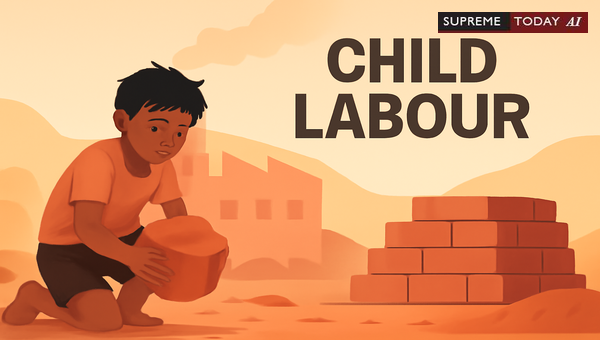
Landmark Child Labour Cases Shaping India’s Laws
Child labour remains a persistent challenge in India, affecting millions of young lives and prompting decisive judicial intervention. Despite legislative efforts like the , courts have played a crucial role in interpreting and enforcing laws to protect children from exploitation. If you're searching for Child Labour Landmark Cases, this post delves into pivotal and rulings that have redefined child protection, rehabilitation, and .
These cases not only highlight the judiciary's commitment to children's rights but also underscore the interplay between poverty, enforcement gaps, and legal remedies. Understanding these precedents can help businesses, policymakers, and advocates navigate compliance and advocacy. Note: This is general information and not specific legal advice; consult a qualified lawyer for personalized guidance.
Overview of Child Labour in India
India's legal framework prohibits child employment in , defining a child as anyone under 14 years. The , bans such work and imposes penalties on violators. Courts have consistently reinforced this, emphasizing rehabilitation over mere punishment. Landmark judgments have directed governments to create funds, action plans, and enforcement mechanisms, addressing root causes like poverty and lack of education. 1996 8 Supreme 450 2005 0 Supreme(Kar) 673
Key Landmark Cases
1. M.C. Mehta v. State of Tamil Nadu ()
This seminal case addressed child labour in the unorganized sector, particularly match and fireworks industries. The court recognized child labour as a byproduct of extreme poverty and lack of opportunities. It issued comprehensive directives:
- Creation of a Child Labour financed by employer contributions.
- Compulsory education for children and alternative adult employment to replace child workers.
- Ban on child employment in hazardous industries. 2010 0 Supreme(Ori) 32 2010 1 Supreme 227
The ruling set a precedent for state accountability, mandating surveys and rehabilitation schemes.
2. Anaj Mandi Fire Case
A tragic fire in a Delhi grain market killed several children working illegally in hazardous conditions. The court lambasted factory owners' negligence and ordered:
- Implementation of the Delhi Action Plan for Total Abolition of Child Labour.
- Immediate rescue and rehabilitation of children from hazardous sites. 2023 0 Supreme(Del) 2255
This case highlighted the dangers of non-enforcement, pushing for proactive government raids and welfare measures.
3. and Child Labour Case
Involving in a brick kiln, the court tackled complaints. It directed police to:
- Swiftly recover children and probe offenders.
- Reinforce duties under anti-trafficking laws. 2022 0 Supreme(Raj) 1863
The judgment stressed timely intervention, noting, the police's duty to act on complaints of child trafficking and labour. This integrates with broader anti-trafficking efforts.
4. Enforcement Under
Courts have upheld the Act's provisions rigorously. In one , a conviction for employing a 12-year-old was affirmed despite challenges on evidence and procedure. The court held that evidence from officials was sufficient, with no procedural irregularities. 2025 0 Supreme(AP) 211 Fine of Rs.10,000 was upheld, stating, The court upheld the conviction for employing child labour, affirming that evidence from officials was sufficient.
Another case exposed corruption: A demanded a bribe (Rs. 1,500) to avoid registering a child labour case in a Kushtagi unit. The 's acquittal was upheld due to lack of proof on demand and acceptance, reminding enforcers of accountability. 2021 0 Supreme(Kar) 886
5. Delhi Action Plan for Total Abolition of Child Labour
Accepting the plan, the court directed the to execute strategies for rescue, rehabilitation, and integration. It aligns with the 1986 Act, promoting coordinated legislative action. 2009 0 Supreme(Del) 756
Additional Judicial Insights and Enforcement Challenges
Courts have clarified nuances. For instance, punishes employers or those permitting child work, not the child. However, the employer or any person who permits the child to work as such is liable to punishment. 2014 0 Supreme(Del) 2776
In contexts, directions combat trafficking via placement agencies. Elaborate guidelines mandate registration and monitoring to prevent exploitation in domestic work or worse. 2010 0 Supreme(Del) 849
A service law case touched child labour peripherally, debating minors' appointments pre-1986 Act, but affirmed no employment below 14 in prohibited work. 2020 0 Supreme(SC) 382
These rulings reveal enforcement hurdles: contradictions in witness statements, bribe demands, and procedural lapses. Yet, revisional courts intervene only in cases. 2025 0 Supreme(AP) 211
Recommendations for Eradication
To build on these precedents:
- Strengthen Enforcement: Enhance raids and penalties, as in the Anaj Mandi directives.
- Awareness Campaigns: Educate on prohibitions and education's importance.
- Support Systems: Fund rehabilitation with education and vocational training, per M.C. Mehta.
NGOs and single-window agencies can streamline missing children cases. 2010 0 Supreme(Del) 849
Conclusion
India's judiciary has transformed child labour discourse through these landmark cases, from M.C. Mehta's welfare funds to action plans and convictions. They emphasize protection, education, and holistic rehabilitation. While progress continues, sustained enforcement is key. Businesses must comply to avoid fines and compensation; society must prioritize child rights.
Stay informed on evolving laws—child labour eradication demands collective action. For specific concerns, seek professional legal counsel.
(Word count: approx. 950)
#ChildLabourIndia #LandmarkCases #ChildRights















