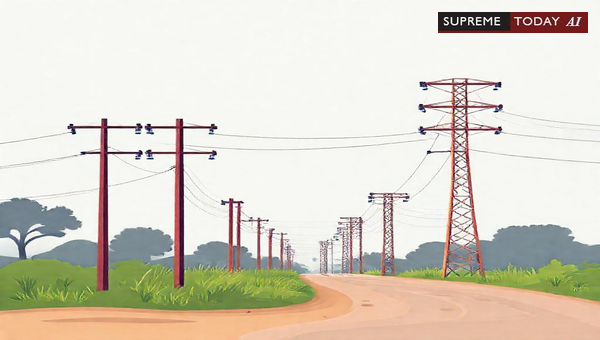
No Landowner Permission Needed for Electricity Poles: What Property Owners Must Know
Installing electricity poles, high-tension towers, or transmission lines often sparks disputes between utility companies and landowners. A common question arises: Is permission of the land owner required to install an electricity pole? The short answer, based on Indian law, is generally no. Electricity boards or licensees can enter private property to erect poles or lines without prior consent, prioritizing public interest. However, landowners are entitled to compensation for any damage caused. This post breaks down the legal framework, key judgments, and practical steps, drawing from Supreme Court and High Court rulings.
Disclaimer: This is general information based on legal precedents and not specific legal advice. Laws vary by case, and you should consult a qualified lawyer for your situation.
Legal Framework Governing Electricity Installations
Electricity infrastructure falls under two key statutes:
Indian Telegraph Act, 1885
- Section 10: Grants telegraph authorities (including electricity licensees via notifications) the power to enter private land, lay lines, erect poles, or towers. No prior notice or consent is needed. The authority must cause as little damage as possible and pay full compensation for losses 2016 0 Supreme(All) 1395.
- Section 16: If the landowner resists or obstructs, the District Magistrate can authorize entry. A mere objection doesn't trigger this; actual resistance does 2014 0 Supreme(Mad) 1594.
Electricity Act, 2003
- Section 164: Empowers the government to notify licensees with Telegraph Act powers for transmission lines. No land acquisition occurs—it's a limited easement for public use 2022 0 Supreme(Guj) 162.
- Section 67 & Works of Licensees Rules, 2006 (Rule 3): Licensees must minimize damage and compensate. For poles/towers, prior consent isn't mandatory unless specified; permission from District Magistrate suffices if disputed 2025 0 Supreme(Gau) 1986.
These laws balance public welfare (reliable power supply) with property rights under Article 300A of the Constitution. Courts emphasize no ownership transfer—just temporary use with compensation.
Key Court Rulings: Permission Not Required
Indian courts have consistently upheld that permission of the land owner is not required for electricity poles or lines. Here's a breakdown:
Supreme Court Precedents
- In cases involving high-tension lines, the apex court ruled: For laying down high tension line no land is acquired—It is only making use of land... No notice is required to owner nor any consent is required from them 2016 0 Supreme(All) 1395. Landowners can claim compensation via the District Magistrate.
- Another ruling clarified: Electricity boards can enter property, dig pits and install towers under Telegraph Act Section 10, with compensation under Section 16 1996 0 Supreme(Mad) 563.
High Court Decisions
- Madras High Court: In multiple writs, courts permitted towers without notice, directing compensation assessments. The respondents had the power to enter and erect the tower without prior notice but must pay for crop/land damage 2014 0 Supreme(Mad) 1594 and 2014 0 Supreme(Mad) 1521 and 2014 0 Supreme(Mad) 1582.
- Gujarat High Court: For 400 KV lines, no alteration of route needed despite objections if permissions exist. Deviation of 200 meters was minimal; 95% work completed upheld 2022 0 Supreme(Guj) 162. Entry is legally authorised, with payment of compensation 2021 0 Supreme(Guj) 554.
- Jharkhand High Court: Distinguished poles (no consent) from towers (may need process), but generally, no prior permission for lines 2011 0 Supreme(Pat) 244.
| Aspect | Requirement | Legal Basis ||--------|-------------|-------------|| Prior Notice | No | Telegraph Act Sec 10 2016 0 Supreme(All) 1395 || Landowner Consent | No | Electricity Act Sec 164 2022 0 Supreme(Guj) 162 || If Obstruction | DM Permission | Telegraph Act Sec 16 2014 0 Supreme(Mad) 1594 || Compensation | Mandatory | Full for damage/loss 2025 0 Supreme(Gau) 1986 |
Compensation: The Landowner's Key Right
While permission isn't needed, compensation is non-negotiable:- Covers crop damage, land devaluation, tree removal, etc.- Process: File with District Magistrate/Collector under Telegraph Act Section 16. They assess and award 1996 0 Supreme(Mad) 563.- Courts direct: Petitioner to file application for compensation... Respondents to assess considering damage 2014 0 Supreme(Mad) 1521.- In one case, for 220 KV lines, LARR Act 2013 applied even without formal acquisition, entitling fair compensation 2020 Supreme(Online)(KER) 42620.
Tip: Document damage with photos/videos before/during installation. Approach the Electricity Regulatory Commission if unsatisfied.
Exceptions and Practical Considerations
When Permission Might Be Needed
- Transmission Towers vs. Poles: Some courts differentiate—towers may require more process if permanent structures 2011 0 Supreme(Pat) 244. But lines/poles generally don't.
- Urban/Private Buildings: Rule 3(1)(a) of Works Rules may need consent for supports on buildings, appealable to authorities 2014 0 Supreme(Gau) 447.
- Resistance: Verbal objection alone isn't enough; physical obstruction triggers DM involvement 2025 0 Supreme(Mad) 3006.
Public Interest Override
- Projects are for national importance—can't be stalled by individuals. Courts quash stays if procedural compliance exists 2025 Supreme(Online)(Tel) 39698.
Recent Trends
- Solar/transmission projects: Minimal deviation allowed; focus on least damage 2023 0 Supreme(Guj) 286.
- No remedy-less—always claim via DM or courts 2021 0 Supreme(Guj) 554.
Steps for Landowners
- Object Early: Inform licensee in writing, but don't physically obstruct.
- Demand Compensation: Apply to District Magistrate post-installation.
- Legal Recourse: Writ under Article 226 if no compensation or illegal entry.
- Alternative Route: Suggest if feasible, but not binding on licensee.
Conclusion and Key Takeaways
Permission of the land owner is not required to install an electricity pole or line in most cases, as affirmed across judgments. Public utility trumps individual consent, but compensation protects property rights. Utilities must act responsibly—minimize harm and pay promptly.
Key Takeaways:- No prior notice/consent for poles/lines/towers.- Compensation mandatory for all damage.- DM resolves disputes/obstructions.- Public interest prevails, but rights aren't ignored.
Stay informed, document everything, and seek professional advice. Power infrastructure builds the nation, but fairness ensures justice for all.
Word count approx. 1050. Sources cited from legal databases.