


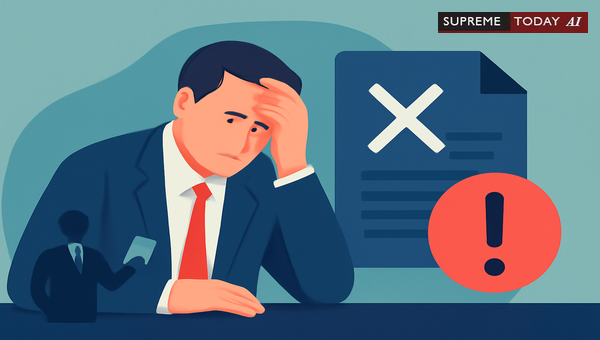
Lawyer Liable for Wrong Legal Opinion?
In the complex world of legal practice, clients often rely heavily on their lawyers' expertise. But what happens when a lawyer provides a legal opinion that turns out to be incorrect? Are they automatically responsible? The question Lawyers is Not Responsible for Wrong Opinion captures a common concern for both attorneys and clients. Generally, courts have ruled that lawyers are not liable for merely giving a wrong opinion unless there's evidence of active participation in fraud or conspiracy. This post explores the legal nuances, backed by key judgments, to clarify when liability arises—and when it doesn't.
Note: This article provides general information based on case law and is not legal advice. Consult a qualified attorney for your specific situation.
Main Legal Finding
The established legal position is clear: a lawyer is not responsible for providing a wrong legal opinion unless it can be shown that they actively participated in a conspiracy or fraudulent scheme. Simply giving an incorrect opinion, without evidence of active involvement in criminal activity, does not trigger . 2012 7 Supreme 33 2022 0 Supreme(Raj) 568
This principle protects the professional nature of legal advice, recognizing that lawyers exercise judgment based on available facts and law at the time. As one judgment states: The liability against an opining advocate arises only when the lawyer was an the . 2022 0 Supreme(Raj) 568
Key Points on Lawyer Liability
Here are the core takeaways from relevant case law:
- A lawyer's liability arises only when they are an or commit a crime. 2012 7 Supreme 33 2022 0 Supreme(Raj) 568
- Giving wrong legal advice or an incorrect opinion, without or active involvement in a criminal conspiracy, generally does not amount to or . 1979 0 Supreme(SC) 254 2022 0 Supreme(Raj) 568
- The standard for or is whether the lawyer acted with , not whether the advice was ultimately correct. 1979 0 Supreme(SC) 254
- Courts recognize that legal opinions may later prove wrong, but this alone does not impose absent proof of fraudulent activities. 2012 7 Supreme 33 2022 0 Supreme(Raj) 568
These points stem from precedents like K. Narayana Rao and Pandurang Dattatraya Khandekar, emphasizing that professionals aren't guarantors of perfect outcomes. 1979 0 Supreme(SC) 254 2022 0 Supreme(Raj) 568
Detailed Analysis: When Is a Lawyer Liable?
Liability for Wrong Legal Opinions
Lawyers have a professional duty to exercise . However, the has held that liability for wrong advice requires proof of . For instance: Mere unaccompanied by any on the part of a legal practitioner... does not amount to . 1979 0 Supreme(SC) 254
This protects attorneys from , where outcomes determine advice quality. Without evidence of deliberate wrongdoing, courts typically dismiss claims at the , assessing only . 2012 7 Supreme 33
Professional Responsibility and
alone rarely leads to . Jurisprudence distinguishes between and . Lawyers act as responsible, dignified spokespeople for their clients, providing professional judgments not subject to automatic disclosure or liability if responsibly formed. 2022 0 Supreme(Ker) 681 2024 0 Supreme(Kar) 376 2024 0 Supreme(Cal) 771
Related cases reinforce this: Courts caution against attributing faults solely to lawyers. It will also not be fair to attribute everything to the lawyers for any sort of fault. 2017 0 Supreme(Raj) 1885 Parties shouldn't suffer for lawyers' non-appearance due to genuine issues, highlighting leniency for professional lapses without misconduct. 2021 0 Supreme(Del) 2160
A wrong opinion doesn't constitute misconduct if based on sound reasoning, even if clients later disagree. No follows absent fraud. 2024 0 Supreme(Kar) 376 2022 0 Supreme(Ker) 681
No Liability for Mere Errors
Courts consistently hold that incorrect opinions, without deliberate fraud, fall under . The legal profession's noble, demands ethical conduct but shields reasonable judgments. Lawyers are , upholding justice without bias. 2025 0 Supreme(SC) 654 2024 0 Supreme(All) 1730
during proceedings further protect open discourse, though not absolute against misconduct. 2024 0 Supreme(Del) 300 Like medical professionals, lawyers aren't liable for differing opinions if standards are met and clients are satisfied.
Barnali Chowdhury VS Woodlands Medical Centre Ltd. -
In commercial contexts, mis-delivery or errors by others don't implicate lawyers unless directly involved—paralleling opinion liability.
SANJAYA BESAN & OIL MILL (P) LTD. VS NARENDRA KUMAR RAY CHOUDHURY -
Exceptions: Active Participation in Fraud
The key exception? Clear evidence of conspiracy or fraud. If proven, liability attaches. Otherwise, protection holds. This balances accountability with encouraging fearless advice. Public perceptions of lawyers as a law unto themselves underscore the need for ethical model behavior, but don't alter core protections. 2009 0 Supreme(Mad) 4524
Insights from Broader Legal Context
The legal profession stands apart from commercial activities—lawyers' offices aren't . 2023 0 Supreme(Del) 3460 2022 0 Supreme(Ker) 681 This distinction emphasizes service over profit, reinforcing immunity for good-faith opinions.
Overall, sources affirm: Lawyers aren't automatically responsible for wrongful opinions absent misconduct or fraud. Their independence is vital for justice. 2022 0 Supreme(Ker) 681 2024 0 Supreme(Mad) 1630 2024 0 Supreme(Kar) 376
Practical Recommendations
To navigate this area:
- For Lawyers: Document advice thoroughly, citing bases for opinions to prove and reasonable skill.
- For Clients: Differentiate from conspiracy; seek for errors rather than .
- For Courts/Prosecutors: Require of active fraud before proceeding—avoid chilling professional advice.
These steps promote fairness while upholding standards.
Conclusion and Key Takeaways
In summary, lawyers typically are not responsible for wrong opinions unless actively complicit in fraud. This protects the profession's integrity, allowing competent advice without fear of undue liability. Key takeaways:
- Focus on reasonable skill, not perfect outcomes. 1979 0 Supreme(SC) 254
- Demand proof of active participation for liability. 2022 0 Supreme(Raj) 568
- Ethical conduct remains paramount. 2025 0 Supreme(SC) 654
Understanding these boundaries empowers clients and safeguards attorneys. For tailored guidance, consult a legal professional.
References:1. 2012 7 Supreme 33: Liability only for active conspiracy.2. 1979 0 Supreme(SC) 254: No misconduct for mere .3. 2022 0 Supreme(Raj) 568: Active fraud required.4. Additional: 2022 0 Supreme(Ker) 681, 2024 0 Supreme(Kar) 376, 2017 0 Supreme(Raj) 1885, 2021 0 Supreme(Del) 2160, 2025 0 Supreme(SC) 654, 2024 0 Supreme(All) 1730, 2024 0 Supreme(Del) 300,
Barnali Chowdhury VS Woodlands Medical Centre Ltd. -
#LawyerLiability, #LegalOpinion, #ProfessionalMisconduct















