


Valid in Accidents? Key Court Judgments Explained
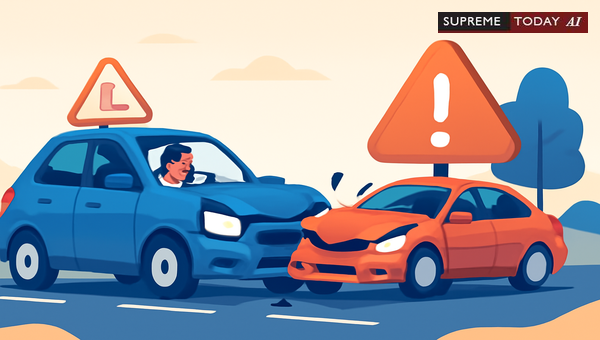
Imagine you're a new driver with a freshly issued , practicing on the road under supervision, when suddenly an accident occurs. A common worry arises: Prarthi ke pass mein learning licence hai, achanak se accident hota hai, kya vah vaidh mana jaega? (If the plaintiff has a and an accident happens suddenly, will that be considered invalid?) This question often troubles drivers, insurers, and courts alike. The good news? Indian courts have clarified that a valid does not automatically invalidate your driving or deem the accident rash or negligent. But validity at the time of the incident is key.
In this post, we break down the legal position based on landmark judgments, Motor Vehicles Act provisions, and practical insights. Note: This is general information, not specific legal advice. Consult a lawyer for your case.
What is a Under Indian Law?
A (LL) is a provisional document issued under . It allows aspiring drivers to practice under certain conditions, like supervision by a licensed holder, 'L' board display, and restrictions on speed/time. It's valid for 6 months and a stepping stone to a permanent license.
The Act recognizes LL as a legitimate authorization to drive, provided conditions are met. However, myths persist that LL holders are inherently negligent in accidents. Courts disagree—focusing instead on facts like license validity and driving conduct. 1967 0 Supreme(SC) 349
Main Legal Finding: Validity Trumps Mere Possession
Holding a learner’s license does not automatically render a person’s driving act as unlawful or negligent under law; the validity of the license at the time of the accident is crucial. Courts emphasize:
- Mere possession of an LL does not establish rashness or negligence. 1967 0 Supreme(SC) 349
- Driving legality hinges on whether the license was valid and effective during the accident. 1967 0 Supreme(SC) 349 2006 0 Supreme(Raj) 783
- Valid LL driving is permissible and not inherently reckless, absent other evidence. 1967 0 Supreme(SC) 349
In one pivotal case, the judgment explicitly states: the mere fact that the appellant held only a did not make him guilty of a , as there was evidence that he had driven the jeep to various places on the day previous to the occurrence. This underscores that prior safe driving and license validity matter. 1967 0 Supreme(SC) 349
Detailed Court Analysis on LL Validity
1. Validity at Time of Accident
The cornerstone is whether the LL was current and compliant. If valid:- It's treated as a under the Motor Vehicles Act.- Insurance liability often extends to such accidents, unless invalidated otherwise. 2006 0 Supreme(Raj) 783
Courts probe expiry, forgery, or non-compliance. A valid LL shields against automatic negligence claims.
2. Not Rash or Negligent by Default
Judges distinguish LL possession from reckless behavior. In 1967 0 Supreme(SC) 349, no evidence showed driving without a full license was rash, given prior experience and no recklessness proof. This sets precedent: LL alone ≠ negligence.
3. Insurance and Third-Party Implications
Insurers can't deny claims solely due to LL if valid. 2006 0 Supreme(Raj) 783 clarifies: a learner’s license is a under the Motor Vehicles Act, and the insurance liability can extend to accidents involving such licenses unless the license is disqualified or invalid. This protects victims and drivers alike.
Exceptions: When LL Driving Becomes Problematic
While valid LLs are protected, exceptions apply:
- Invalid, Expired, or Forged License: Driving then is rash/negligent, impacting liability. 2007 0 Supreme(SC) 1344 2001 3 Supreme 84
- Beyond License Scope: E.g., no supervisor, wrong vehicle class—deems act unlawful. 1967 0 Supreme(SC) 349
- : Valid LL presumes lawful driving; proof of invalidity reverses this.
In unrelated but illustrative contexts, courts stress document authenticity (e.g., in property or copyright disputes), mirroring vehicle license scrutiny. For instance, unauthorized possession leads to eviction under , akin to invalid license consequences. 2006 0 Supreme(All) 2349
Broader Legal Context from Related Judgments
Indian jurisprudence reinforces evidence-based decisions. In labor disputes, courts limit interference absent perversity, similar to accident cases needing proof of negligence. 2014 0 Supreme(All) 3307 Under , committees must pragmatically assess bonds without presuming commercial motives—echoing no automatic suspicion for valid LLs. 2012 0 Supreme(Del) 1421
These principles highlight: Courts demand concrete evidence, not presumptions, whether in accidents, contracts, or authorizations.
Practical Recommendations for Drivers
To avoid complications:
- Verify Validity: Check expiry before driving. Renew promptly.
- Comply with Conditions: Always have a supervisor, 'L' board, and stick to rules.
- Post-Accident Steps:
- Inform police/insurer of LL status.
- Gather proof of validity (original + prior driving logs if possible).
- Seek legal help to argue non-negligence.
- For Authorities: Scrutinize licenses for forgery/expiry in claims. 2007 0 Supreme(SC) 1344
Insurers and courts should prioritize facts over license type.
Key Takeaways
| Aspect | Ruling | Key Citation ||--------|--------|--------------|| Valid LL in Accident | Not negligent by default | 1967 0 Supreme(SC) 349 || Insurance Coverage | Extends if valid | 2006 0 Supreme(Raj) 783 || Exceptions | Invalid/forged = liable | 2007 0 Supreme(SC) 1344 2001 3 Supreme 84 |
In summary, a valid generally holds up in accidents—courts focus on circumstances, not the license type alone. Drive responsibly, keep documents current, and remember: law favors evidence over assumptions.
This analysis draws from judgments like 1967 0 Supreme(SC) 349 and 2006 0 Supreme(Raj) 783. For personalized advice, contact a motor vehicles law expert.
#LearnersLicense #RoadAccidentLaw #MotorVehicleAct












