


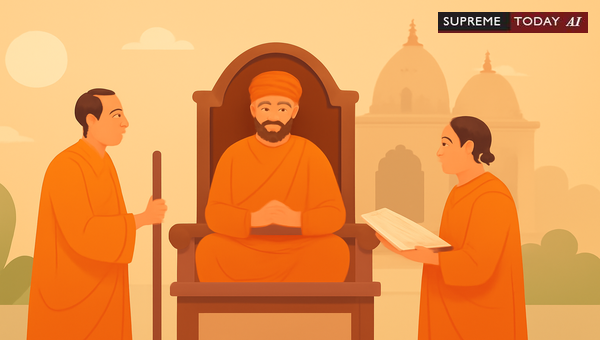
Who Can Be Appointed as of a Hindu Temple? A Comprehensive Legal Guide
In the rich tapestry of Hindu religious traditions, the role of a holds profound spiritual and administrative significance. As the head of a temple or (monastic institution), the oversees worship, property management, and community welfare. But who qualifies for this esteemed position? The question Who can be Appointed a of Hindu Temple often arises amid succession disputes, legal challenges, and evolving statutory frameworks.
This blog post delves into the legal criteria, customs, and court precedents governing appointments. Drawing from judicial rulings and religious practices, we'll explore eligibility, procedures, and key considerations. Note: This is general information based on case law and not specific legal advice. Consult a qualified lawyer for your situation.
Understanding the Role of a
A is typically the spiritual leader and manager of a Hindu temple or endowment. The position demands not just administrative acumen but unwavering devotion to religious tenets. Courts have consistently emphasized that appointments must align with the sect's customs and practices, ensuring the appointee upholds the institution's sanctity
In Reference VS . - Rajasthan (1900)
.For instance, in cases involving public temples, the utilizes temple income for maintenance while supporting personal needs, as seen in rulings where The income thus received by the was utilised by him primarily to meet the expenses of the temple and the balance went to support the and his family 2025 Supreme(Online)(Mad) 73326. This underscores the dual spiritual-managerial role.
Key Legal Criteria for Appointment
1. Sect and Celibacy Requirements
Eligibility often hinges on the temple's sect. For sects of (ascetics who renounce worldly life), the must be unmarried and lead a celibate life. The has ruled that a married person is not competent to be appointed as in such sects, as the office involves sacred duties including adherence to celibacy and renunciation of worldly ties 1989 0 Supreme(J&K) 106.
Scriptures of traditions like the Ramanand Sampradaya reinforce this, specifying that a should not be married, emphasizing the spiritual and celibate nature of the role (integrated from sect-specific analyses). This criterion prevents dilution of ascetic ideals.
2. Customs and Practices Governing Appointment
Appointments vary by institution but are rooted in customs. Common methods include:- Hereditary succession: The office devolves to the chief disciple, eldest son, or heir, confirmed by the fraternity (). Courts require evidence of appointment as a for validity
In Reference VS . - Rajasthan (1900)
1957 0 Supreme(HP) 1 1988 0 Supreme(Raj) 93 2009 0 Supreme(J&K) 230.- Election or nomination: By an assembly of Mahants, ruling power, or endower, always needing fraternity confirmation 1957 0 Supreme(HP) 1In Reference VS . - Rajasthan (1900)
.In one case, plaintiff pleaded that he was duly appointed and the respondents denied the fact... According to the defendants, plaintiff Ram Dayal Ji was never of the Gaddi, rather, he was just a Manager 2025 0 Supreme(Raj) 1433, highlighting the need for proven custom adherence.
Hereditary examples abound, such as where The office of of said trust was succeeded by the persons from amongst the heirs and ultimately the petitioner was appointed and declared as of the temple trust 2023 Supreme(Online)(Pat) 7336.
3. Role of the (Disciple)
Successors are typically disciples (chelas) initiated through religious rites and confirmed by the community. The successor to a is generally appointed from among the disciples (chelas), who must be duly initiated and confirmed by the fraternity. The appointment as a and subsequent confirmation are critical steps. Mere nomination without such confirmation is insufficient 1957 0 Supreme(HP) 1 2009 0 Supreme(J&K) 230.
This is echoed in traditions where the previous selects a shishya (disciple), as in the Galta Gaddi case, appointed by state authorities post-demise, emphasizing heir or disciple status 2024 Supreme(Online)(RAJ) 578 2024 Supreme(Online)(RAJ) 574.
4. Legal and Statutory Framework
While customs prevail, statutes like the or influence processes. Appointments may require trustee or board approval, especially for public temples declared as trusts 1907 0 Supreme(SC) 3 1992 0 Supreme(AP) 281 2024 0 Supreme(Pat) 462.
Courts uphold fraternity authority if procedures are followed
In Reference VS . - Rajasthan (1900)
1980 0 Supreme(Mad) 216. In disputes, interim fit-persons or administrators (e.g., government officers) manage until resolution, but permanent appointments favor customs 2017 0 Supreme(Mad) 1538 1999 0 Supreme(Ker) 649. For example, After construction of the temple, the Hindu Religious and Charitable Endowment department appointed a for the said temple 2017 0 Supreme(Mad) 1538.The has recognized temples via donations, impacting roles 2023 0 Supreme(Pat) 1031.
Additional Considerations and Disputes
- Family and Property Ties: Mahants may support families from surplus income, but core duties remain spiritual 2025 Supreme(Online)(Mad) 73326. Attempts to grab temple land via connivance are scrutinized 2025 Supreme(Online)(MP) 6095.
- Authority Involvement: States or boards appoint in vacancies, but challenges arise if bypassing customs, e.g., No person shall be appointed... under certain acts 1999 0 Supreme(Ker) 649.
- Dispute Resolution: Courts query, Whether Jai Bans defendant No. 1 is duly appointed of the temple and can act as Manager? 2000 0 Supreme(P&H) 818, prioritizing religious norms.
In one instance, on in presence of many Holy persons and Mahants, he appointed Shri Morari Babu (Manjhle) as the of the temple 2014 0 Supreme(Raj) 1721, validating community-endorsed processes.
Key Takeaways and Recommendations
- Celibacy is paramount in ascetic sects 1989 0 Supreme(J&K) 106.
- Customs dictate methods: Hereditary, election, or nomination with confirmation
In Reference VS . - Rajasthan (1900)
1957 0 Supreme(HP) 1. - Disciples preferred, properly initiated 1957 0 Supreme(HP) 1 2009 0 Supreme(J&K) 230.
- Statutes support but don't override traditions 1992 0 Supreme(AP) 281 1980 0 Supreme(Mad) 216.
Recommendations:- Verify sect customs thoroughly.- Document initiation and confirmations.- Involve trustees or boards as needed.- Seek court intervention in disputes, where religious practices typically prevail.
In conclusion, appointing a blends ancient customs with modern law, safeguarding temple legacies. Understanding these nuances prevents conflicts and ensures continuity. For tailored guidance, professional legal counsel is essential.
#MahantAppointment, #HinduTempleLaw, #ReligiousCustoms












