


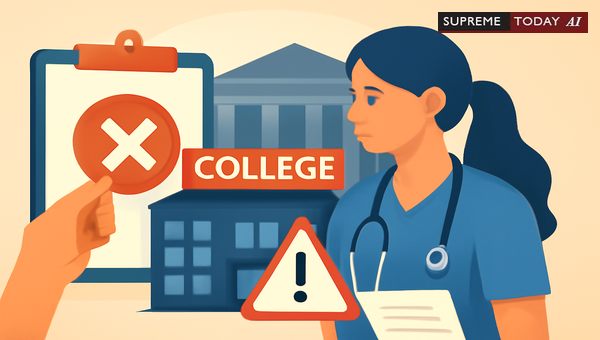
Fraudulent Nursing College? Legal Steps to Take Now
Disclaimer: This article provides general information based on legal precedents and is not a substitute for professional legal advice. Consult a qualified lawyer for your specific situation.
Enrolling in a nursing college is a significant step toward a rewarding career in healthcare. However, what happens when you discover the institution is fraudulent—perhaps lacking proper recognition, misrepresenting affiliations, or engaging in deceptive practices? The question on many students' and parents' minds is: Nursing College is Fraud then what Legal Step One should Take?
In India, nursing education is strictly regulated by bodies like the and . Fraudulent colleges often operate without valid approvals, leading to invalid degrees, wasted fees, and shattered dreams. This comprehensive guide outlines a multi-pronged approach to address such issues, drawing from key judicial precedents and regulatory guidelines. We'll cover immediate actions, legal proceedings, evidence collection, and student protections to help you navigate this challenging scenario effectively.
Recognizing Signs of Fraud in Nursing Colleges
Before diving into actions, identify red flags:- Lack of INC or State Nursing Council recognition.- False claims about university affiliations or course approvals.- Irregular admission processes or unverified faculty credentials.- Complaints from current or former students about unrecognized degrees.
Cases like affiliation disputes highlight these issues. For instance, in a matter involving extension of affiliation for BSc Nursing courses, the petitioner secured approvals from the Indian Nursing Council and Karnataka State Nursing Council, underscoring the necessity of such verifications 2025 Supreme(Online)(Kar) 36388. Similarly, courts have intervened when universities demanded unwarranted prior state permissions for additional nursing courses, affirming that INC guidelines prevail 2009 0 Supreme(Mad) 5689.
Step 1: Immediate Administrative and Regulatory Action
Your first move should generally be to report the fraud to the relevant authorities. This halts further damage and triggers investigations.
Report to the and State Nursing Council: These bodies oversee recognition and compliance. File a detailed complaint with evidence of misrepresentation. As noted in precedents, recognition issues are central to fraud cases 2022 0 Supreme(MP) 462.
Notify the University or Educational Authority: Request they halt admissions, exams, or certifications pending investigation, especially if fraud is evident 2023 0 Supreme(Kar) 368.
Regulatory lapses, such as improper affiliations, have led courts to direct timely considerations. In one case, the court set aside a university's denial of affiliation for Post Basic B.Sc. (Nursing) due to absent legal requirements for prior state permission 2009 0 Supreme(Mad) 5689.
Step 2: Initiate Legal Proceedings
Parallel to administrative steps, pursue judicial remedies for accountability.
File a Criminal Complaint: Approach the police under (IPC) sections like and others for deception. This targets the college management for fraudulent inducement 2006 0 Supreme(Kar) 337
IND_HC_KLHC010062052007
.or : Seek a court declaration that the college's recognition is null and void if obtained fraudulently. Request relief like admission cancellations or refunds 2022 0 Supreme(MP) 462 2016 0 Supreme(Mad) 2573.
Courts emphasize evidence in such matters. For example, in admission eligibility disputes for B.Sc. Nursing, strict norms were upheld, refusing leniency that could discriminate 2010 0 Supreme(Kar) 215.
Step 3: Evidence Collection and Investigation
Strong evidence is crucial for success.
Gather Documents: Collect receipts, admission letters, recognition certificates (or lack thereof), and correspondence proving misrepresentation 2024 0 Supreme(Cal) 472.
Engage Authorities for Formal Probe: Involve police and regulators to verify credentials and procedures 2023 0 Supreme(Kar) 368.
In fraud-related acquittals under (analogous evidentiary standards), courts demanded substantial proof, like medical evidence, rejecting unsubstantiated claims 2013 0 Supreme(MP) 813. Apply this rigor to build your case.
Step 4: Protecting Students' Interests
Students are often the primary victims, facing risks like invalid qualifications.
Seek Interim Court Relief: Courts may order exam stays or certification halts to prevent irreparable harm 2023 0 Supreme(Kar) 368.
Claim Refunds or Compensation: Through civil suits or administrative channels, pursue financial recovery.
Precedents protect vulnerable groups. In near educational institutions, courts balanced state interests with citizen rights, respecting community sentiments 2013 0 Supreme(Mad) 2824. Though not directly on nursing fraud, this principle supports student protections.
Additional Insights from Case Law
Judicial trends reinforce regulatory compliance:
Affiliation and Permissions: Universities cannot impose extra hurdles beyond INC guidelines. One ruling directed affiliation consideration within weeks after quashing improper demands 2009 0 Supreme(Mad) 5689. Quote: The first respondent University by a further order dated granted provisional affiliation to the petitioner to start the first year B.Sc (Nursing) course 2009 0 Supreme(Mad) 5689.
Equity in Admissions: No relaxation of eligibility norms, even for marginalized students, to avoid discrimination 2010 0 Supreme(Kar) 215. Quote: , Learned Counsel for the 1st Respondent University contends that no equity lies in favour of the petition, who fell short of 0.25% marks 2010 0 Supreme(Kar) 215.
Broader Justice Principles: Justice must be visible and socially accepted 2013 0 Supreme(Del) 1730. Quote: Hence the oft –quoted aphorism ?.
These cases illustrate courts' roles in upholding standards, aiding your strategy.
Potential Challenges and Tips
- Time Sensitivity: Act swiftly to preserve evidence and seek interim orders.
- Group Actions: Unite with other affected students for stronger petitions.
- Documentation: Maintain records of all communications.
Challenges include proving intent in fraud, but precedents like IPC 420 applications provide pathways 2006 0 Supreme(Kar) 337.
Key Takeaways
- Report Immediately to INC/State Councils and authorities 2022 0 Supreme(MP) 462.
- File Criminal and Civil Actions under IPC 420 and writs 2006 0 Supreme(Kar) 337.
- Collect Evidence rigorously 2024 0 Supreme(Cal) 472.
- Protect Interests via interim relief 2023 0 Supreme(Kar) 368.
- Leverage Precedents for affiliations and recognitions 2025 Supreme(Online)(Kar) 36388 2009 0 Supreme(Mad) 5689.
In summary, a primary legal step involves reporting the fraud to regulatory authorities and initiating criminal proceedings for cheating. Concurrently, pursue civil remedies to nullify fraudulent recognitions, always prioritizing evidence and student safeguards. This approach aligns with Indian legal principles, ensuring accountability while minimizing harm.
If facing this issue, document everything and seek expert counsel promptly. Your rights matter—don't let fraud derail your future.
Word count: Approximately 1050
#NursingCollegeFraud, #LegalStepsIndia, #StudentRights















