


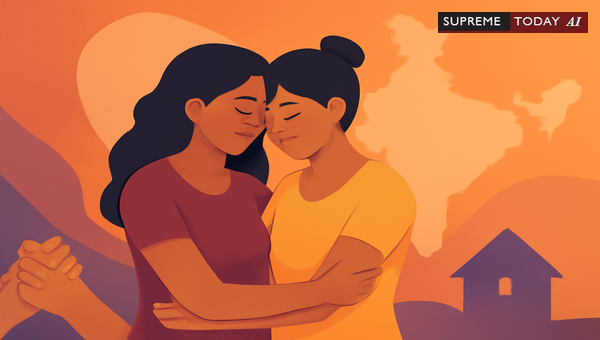
Rescuing Lesbian Couples: Legal Rights in India
In India, the question of whether courts can intervene to rescue a lesbian couple by reuniting them after they were forcibly separated by their parents and family members has gained prominence amid evolving recognition of LGBTQIA+ rights. Families sometimes resort to coercion, violence, or police involvement to enforce separation, raising critical issues of , privacy, and the right to choose one's family. This blog post examines the legal framework supporting such interventions, drawing from landmark judgments and judicial principles. Note that this is general information and not specific legal advice—consult a qualified lawyer for personalized guidance.
The Core Legal Issue: Forcible Separation vs. Fundamental Rights
Forcible separation of same-sex couples often involves threats, physical restraint, or collusion with authorities, violating constitutional protections. The has consistently upheld that is an essential aspect of identity, protected under Article 21 of the , which guarantees the right to life, , and privacy. In , the Court emphasized that is an intrinsic part of an individual’s identity and protected under fundamental rights, including the right to privacy, dignity, and autonomy
01000054622
.This right extends to the autonomy to live with a partner of one's choice, including same-sex partners. Courts have ruled that the family is not confined to biological ties but includes , particularly vital for LGBTQIA+ individuals facing rejection 2024 0 Supreme(Ker) 521.
Judicial Recognition of and Autonomy
Expanding the Definition of Family
The concept of family has evolved significantly. In , the Court highlighted that the concept of family extends beyond biological ties to include , especially for LGBTQ+ individuals who often face familial rejection and violence 2024 0 Supreme(Ker) 521. This recognition underpins the legal basis for protecting queer relationships from interference.
The State's obligation is clear: it must shield individuals from violence and discrimination based on , rather than perpetuating familial coercion 2023 0 Supreme(SC) 1046. Judicial directives, such as those in , affirm dignity for all gender identities, extending to family life.
Real-World Case: Protection for Fleeing Lesbian Couple
A poignant example is seen in a case where a lesbian couple fled Madurai to Chennai, supported by NGOs. Their parents filed 'girl-missing' complaints, leading to police interrogation. The petitioners sought protection from harassment and threats. The Court held: Petitioners, a lesbian couple whose relationship was being opposed by their parents... apprehending threat to their safety and security, Petitioners approached this Court seeking a direction to police not to cause harassment and protection from any form of threat or danger 2021 0 Supreme(Mad) 2775. The bench framed guidelines for LGBTQIA+ rights recognition, issuing a to ensure safety and societal integration. This illustrates courts' willingness to intervene for reunification and protection.
Challenges: Familial Violence and Discrimination
LGBTQIA+ individuals frequently endure pervasive issues, including forced marriages, familial rejection, , and police collusion with family members to forcibly separate couples 2023 0 Supreme(SC) 1046. Other cases echo this pattern:
- In one instance, families staged after failed rescue attempts, with no lodged despite pleas: of the victim to rescue her persuading family members of Mukunda failed, still no was lodged house of Mukunda to rescue the victim
.
- Harassment and wrongful detention by families opposing inter-community marriages further highlight separation tactics: the petitioner and the co-accused harassed them and forcibly separated them. They administered threats and assaulted the deceased and his family members 2025 Supreme(Online)(Guj) 8148.
These acts contravene fundamental rights, prompting judicial scrutiny. Courts assess evidence like victim statements and circumstances, as in acquittal appeals where prosecutrix conduct was pivotal: The prosecutrix was dropped at some distance near the market and since respondent No.1/accused had threatened her of life, she felt frightened 2023 0 Supreme(Del) 3742.
Legal Pathways for Rescue and Reunification
Challenging Separation in Court
Couples can file under , citing violations of , 15, 21. Courts may direct police to:- Refrain from harassment.- Provide protection from family threats.- Facilitate safe reunification, prioritizing consent and safety.
Balancing Intervention with
While rights are robust, rescues must follow legal procedures. Exceptions include ensuring no unlawful detention occurs, and interventions balance safety without endorsing coercion. As noted in police duty cases: It is not necessary for the police to go into detail and verify whether the accused are innocent or not which is the function of the Court 2017 0 Supreme(Bom) 577.
Recommendations and Broader Implications
To address these issues:- Initiate legal action challenging separation as a privacy and liberty violation
01000054622
.- Seek judicial recognition of and protection from violence 2024 0 Supreme(Ker) 521.- Direct authorities for safe reunification and sensitization 2023 0 Supreme(SC) 1046.- Promote public awareness to prevent discrimination.Related family law contexts, like divorce waivers for irretrievable breakdowns, underscore mutual consent's importance but contrast with coerced separations: The under can be waived off if there is no chance of reconciliation 2018 0 Supreme(P&H) 4228. However, for LGBTQ+ couples, the focus remains on autonomy over reconciliation with rejecting families.
Key Takeaways
- Fundamental Rights Prevail: Forcible separation violates Article 21's privacy and liberty protections
01000054622
. - Matter: Courts recognize non-biological bonds, especially amid violence 2024 0 Supreme(Ker) 521.
- Judicial Support Exists: Cases like the Chennai lesbian couple petition show active protection 2021 0 Supreme(Mad) 2775.
- Act Promptly: Approach High Courts for interim relief, but always through .
In summary, Indian law generally supports rescuing and reuniting lesbian couples from familial separation, emphasizing dignity and choice. As society progresses post-Navtej Singh Johar, expect stronger safeguards. For tailored advice, reach out to LGBTQ+-friendly legal experts or organizations.
References:- 2023 0 Supreme(SC) 1046: Familial violence and queer community violations.-
01000054622
: Privacy and autonomy rights.- 2024 0 Supreme(Ker) 521: and State obligations.- 2021 0 Supreme(Mad) 2775: Protection for lesbian couples.(Word count: approx. 1050)
#LGBTQRightsIndia #ChosenFamily #Article21















