




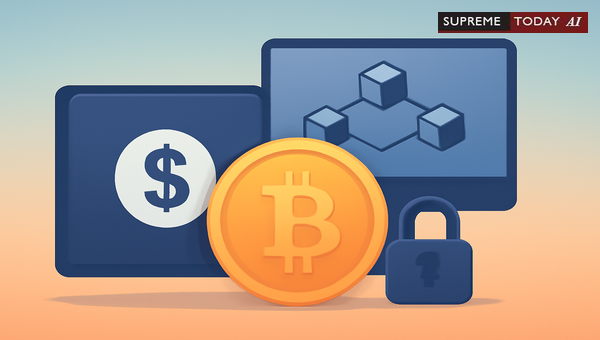
What Are ? Legal Definition Guide
In today's digital economy, terms like and are everywhere, but what do they really mean from a legal standpoint? If you've ever wondered, What are ?, you're not alone. These intangible resources are reshaping , finance, and even criminal proceedings. This post dives into their elusive nature, legal recognition as property, and the challenges they pose, drawing from key legal documents and cases.
often evade tidy definitions due to their mutable and electronic essence, but courts and statutes are catching up. We'll explore their characteristics, legal treatment, and practical implications—generally speaking, as laws vary by jurisdiction.
The Elusive Nature of
are or resources that exist in electronic form, frequently involving cryptographic representations. Their inexact and inexpressible nature makes precise definitions challenging 2020 0 Supreme(SC) 228 2024 0 Supreme(Guj) 1682. As one document notes, virtual currencies embody a conundrum akin to the Vedic principle of neti neti—not this, not that—refusing to fit neatly into categories like , , or 2020 0 Supreme(SC) 228.
This elusiveness stems from the digital world's susceptibility to manipulation and alteration. Unlike physical assets, digital objects such as images or data can be easily manipulated, altered, merged, or divided, complicating authenticity verification 2020 0 Supreme(SC) 228 2018 7 Supreme 129.
Legal Definitions and Recognition as Property
Under certain laws, fall within broad property definitions. They encompass , including currency, bank credits, deposits, and other financial resources evidenced by electronic or digital instruments2020 4 Supreme 405
.
For instance, property is defined to include assets of every kind—whether , , —evidenced by electronic or digital documents2020 4 Supreme 405. Similarly, any property which is wholly or partly used in, or in connection with, the commission of any unlawful activity explicitly covers electronic or digital forms
. This recognition allows to be owned, transferred, or subject to legal proceedings.
In blockchain contexts, enable without requiring the recipient to consent, potentially creating liability issues, as seen in sanctions-related cases involving tools like 2024 Supreme(US)(ca5) 39. A simple vendor might assign ownership of upon Ether transfer, highlighting their programmable nature.
in Tax and Commercial Law
often align with , which include business or commercial rights of similar nature. Courts have interpreted similar as corresponding to or resembling in many aspects2012 0 Supreme(Del) 910. For example, in , assets like business claims, business information, business records, contracts, skilled employees, and knowhow qualify for under , as they resemble commercial rights 2012 0 Supreme(Del) 910.
, too, may be depreciable if viewed plausibly by assessing officers, provided it's not merely labeled as such without substance 2011 0 Supreme(Del) 57. Even licenses, like for FM radio or channels, are treated as generating future economic benefits, though excluded from certain net worth calculations 2007 0 Supreme(Del) 2770.
These precedents suggest —much like software or crypto—may qualify as depreciable intangibles, depending on context.
Challenges: Manipulation, Authenticity, and Evidence
The inherent mutability of poses hurdles. Electronic or digital documents evidencing property title or interest are legally recognized, but proving originality is tough 2020 4 Supreme 405 2018 7 Supreme 129. In telecom analogies, while not directly , concepts like (DSL) illustrate how electronic signals carry value without physical form 2011 0 Supreme(Kar) 151. Courts have ruled that light energy in telecom services isn't goods due to lack of marketability, abstraction, or consumption—parallels for ' intangible status 2011 0 Supreme(Kar) 151.
Legally, this means transactions require robust verification. can be intangible, moveable, or immovable, but their electronic nature demands safeguards
2020 4 Supreme 405.
Exceptions, Limitations, and Practical Considerations
While broadly property, ' mutable nature raises issues regarding authenticity, ownership, and legal treatment. Courts emphasize careful handling in evidence and disputes 2020 0 Supreme(SC) 228.
- Authenticity challenges: Manipulation risks necessitate blockchain immutability or .
- Ownership disputes: can imply unintended liability 2024 Supreme(US)(ca5) 39.
- Tax implications: eligibility hinges on resembling commercial rights 2012 0 Supreme(Del) 910.
Key Takeaways and Recommendations
- are generally recognized as property, especially when electronically evidenced, but their elusive definition persists 2020 4 Supreme 405 2020 0 Supreme(SC) 228.
- Implement technological safeguards like blockchain for integrity.
- Develop clear legal standards for transfer and ownership.
- Consult frameworks treating them as intangibles for tax or commercial purposes.
In summary, bridge the physical-digital divide, legally akin to but demanding nuanced handling. Their growth—from crypto to smart contracts—urges evolving laws.
Disclaimer: This post provides general information based on referenced documents and is not legal advice. Consult a qualified attorney for your specific situation. Laws vary by jurisdiction and evolve rapidly.
References
- 2020 0 Supreme(SC) 228: Inexpressible nature of virtual currencies.
- 2020 4 Supreme 405: as electronic property.
: Electronic property in unlawful contexts.
- 2024 Supreme(US)(ca5) 39: Blockchain transfer liabilities.
- 2012 0 Supreme(Del) 910: and .
- 2011 0 Supreme(Kar) 151: Electronic signals in telecom.
- 2011 0 Supreme(Del) 57: .
- 2007 0 Supreme(Del) 2770: Licenses as intangibles.















