


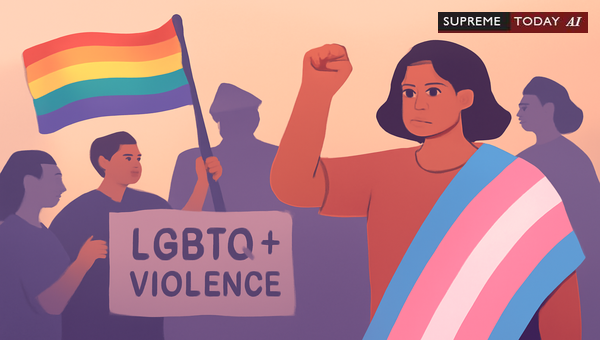
Indian Courts on Violence Against LGBTQ+: Key Cases
Violence against LGBTQ+ individuals remains a pressing concern in India, where societal prejudices often translate into harassment, , and physical harm. Transgender persons and other queer community members face heightened vulnerability due to with traditional norms. If you've been searching for case laws or court orders dealing with violence against LGBTQ+, Indian judiciary has issued significant rulings recognizing these issues and mandating protections. This post examines landmark judgments, judicial directives, and broader principles, drawing from key legal documents to highlight the evolving legal landscape.
While these rulings affirm the of LGBTQ+ persons under , 15, and 21 of the , they emphasize proactive measures against violence. Note that this is general information based on public judgments and not specific legal advice—consult a qualified lawyer for personalized guidance.
Recognition of Societal Violence and Marginalization
Indian courts have repeatedly acknowledged the pervasive harassment, violence, and socio-economic exclusion faced by transgender and LGBTQ+ individuals. In a pivotal ruling, the explicitly noted that transgender persons often face violence due to with societal norms and stressed the urgent need for their protection and mainstreaming 2015 0 Supreme(Del) 2632. This case, , marked a turning point by directing authorities to safeguard against such acts rooted in discrimination.
The judgment further highlighted issues like and societal harassment, providing relief to individuals like Shivani by ordering the State not to harass or illegally confine anyone within its jurisdiction unless in accordance with law 2015 0 Supreme(Del) 2632. These observations underscore that violence against LGBTQ+ persons disrupts the nation's secular and inclusive fabric.
Similarly, courts have linked family and societal rejection to broader safety concerns. In , the expanded the concept of family support beyond natal families, recognizing the societal violence and lack of safety LGBTQ+ individuals may encounter from their own kin 2024 0 Supreme(Ker) 1694. This reinforces legal duties to protect vulnerable queer persons from hostility.
Judicial Directives Against and Violence
often incites violence against minorities, including LGBTQ+ communities. A key judgment directed law enforcement to take prompt action against under relevant penal provisions, emphasizing its role in perpetuating discrimination 2022 0 Supreme(SC) 1755. The court mandated immediate intervention to prevent escalation into physical harm, upholding for marginalized groups.
These directives align with principles, where courts have clarified that PIL forums are reserved for protection of basic human rights of weak and marginalized persons 2022 0 Supreme(J&K) 225 2022 0 Supreme(J&K) 50. Though not exclusively LGBTQ+-focused, this framework supports petitions addressing queer violence, distinguishing genuine public interest from personal agendas, as seen in dismissals of commercially motivated PILs on women welfare schemes.
Broader Protections and Limitations in Case Law
Protection of Women from Domestic Violence Act Insights
While direct LGBTQ+ violence cases are sparse in the provided materials, parallels emerge from domestic violence rulings. The , has been critiqued for gaps, such as inadequate coverage of male child abuse, yet courts stress uniform application to curb ever bourgeoning problem of domestic violence 2019 0 Supreme(P&H) 2736. This egalitarian approach, rooted in and 15, indirectly bolsters arguments for extending protections to queer victims facing familial violence.
In divorce proceedings involving allegations, courts define narrowly as conduct endangering life, limb, or health, rejecting isolated quarrels as grounds 2018 0 Supreme(Raj) 465. For LGBTQ+ individuals in hostile households, such precedents may guide claims of stemming from identity-based abuse.
International and Comparative Notes
Though primarily Indian-focused, global contexts like U.S. immigration cases highlight similar disbelief in state protection for LGBTQ+ persons. One ruling noted that despite discrimination against LGBTQ individuals, authorities were expected to shield against homophobic abuse, discounting police intimidation reports
. This mirrors Indian challenges in sensitizing police, as recommended in women violence cases: Sensitize police personnel dealing with violence against women cases 2022 0 Supreme(J&K) 225 2022 0 Supreme(J&K) 50. Extending this to LGBTQ+ could enhance enforcement.
Key Takeaways from Rulings
- Societal Harassment Acknowledged: Transgender and LGBTQ+ face violence and marginalization; courts mandate mainstreaming and protection 2015 0 Supreme(Del) 2632.
- Crackdown: Immediate police action required to prevent incitement 2022 0 Supreme(SC) 1755.
- Family Beyond Blood: Legal recognition of alternative support amid societal rejection 2024 0 Supreme(Ker) 1694.
- PIL for Marginalized: Reserved for genuine human rights protection, not commercial interests 2022 0 Supreme(J&K) 225 2022 0 Supreme(J&K) 50.
- Uniform Legal Application: Ensures objectives of anti-violence laws are met without distortions 2019 0 Supreme(P&H) 2736.
Recommendations for Enhanced Protection
Courts have outlined actionable steps:- Implement directives to prevent harassment, violence, and of LGBTQ+ persons.- Promote police sensitization programs, akin to those for women violence cases 2022 0 Supreme(J&K) 225.- Develop specific legislation building on NALSA principles 2015 0 Supreme(Del) 2632.- Foster awareness to combat discrimination, ensuring judicial orders like those against false claims guard against misuse while prioritizing genuine victims 2017 0 Supreme(All) 1866.
Conclusion
Indian courts demonstrate a commitment to shielding LGBTQ+ individuals from violence through recognition of vulnerabilities, directives against , and emphasis on . Cases like NALSA2015 0 Supreme(Del) 2632 and rulings 2022 0 Supreme(SC) 1755 set precedents for action, though explicit violence prosecutions remain limited in these documents. As society evolves, stronger implementation and sensitization will be key.
References:1. 2024 0 Supreme(Ker) 1694: Family support for LGBTQ+.2. 2015 0 Supreme(Del) 2632: Harassment and violence against transgender.3. 2022 0 Supreme(SC) 1755: Action against .4. Other supporting: 2022 0 Supreme(J&K) 225, 2022 0 Supreme(J&K) 50, 2019 0 Supreme(P&H) 2736,
.
This analysis draws solely from cited documents. For legal matters, seek professional advice. Stay informed on #LGBTQRightsIndia.
#LGBTQRightsIndia, #ViolenceAgainstLGBTQ, #IndianCourts















